This job was a call-out to a home in Ilford, Essex (IG2), where water was leaking from the shower. It was booked in as a likely sealant or grouting problem, and the homeowner asked us to repair it on the spot if we could. Shower leaks are rarely as simple as they look, so here is what our engineer checked, what he found, what we fixed on the day, and how you can spot the same warning signs at home.
Why shower leaks are hard to pin down
A shower has several places where water can escape, and most of them are hidden once the shower is fitted:
- the silicone sealant where the tray meets the walls and floor
- the waste, the drain fitting under the grate, which is sealed to the tray with a rubber washer
- the grout between the wall tiles
- the seals on the shower door
- the sealant behind the enclosure frame, where the glass panels fix to the wall
- the shower valve and pipework behind the wall
Water from any of these can end up in the same place: a damp patch on a ceiling below, a stained skirting, or a puddle outside the tray. That is why we check each one in turn instead of just running a new bead of silicone and hoping.
What we found
There were two shower trays in the property, and our engineer started by checking them both.
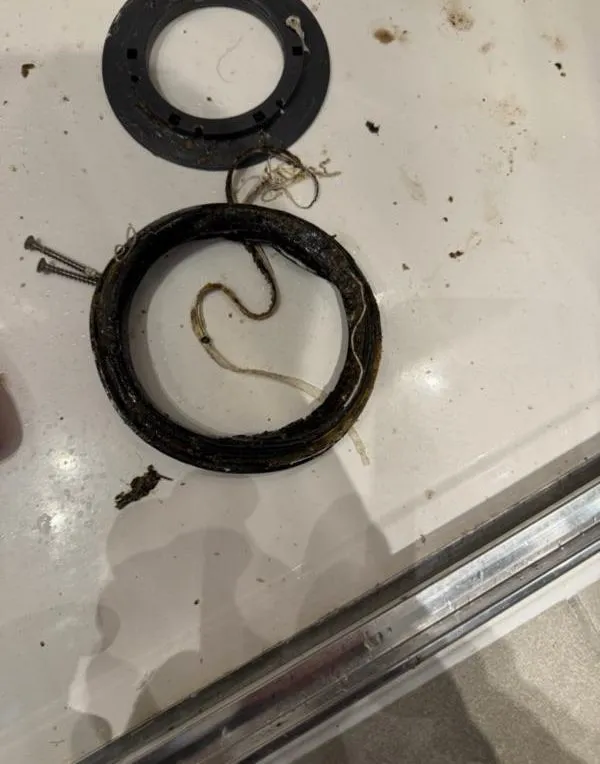
The most likely culprit was the shower waste. When our engineer checked it, the waste was moving in the tray. A waste should be held firm, with its rubber seal pressed tight against the tray. Once it moves, water running down the drain can find its way past the seal and under the tray, where nobody can see it. You can see from the photo how dirty and worn the old seal was once it came out.
He also found a few other things worth knowing about:
- The shower door seals were letting water pass through the door when the shower was in use.
- A small crack in the grout at the lower level of the tiling. When he water tested it, no leak showed, but a crack like this can take time before it starts letting water through.
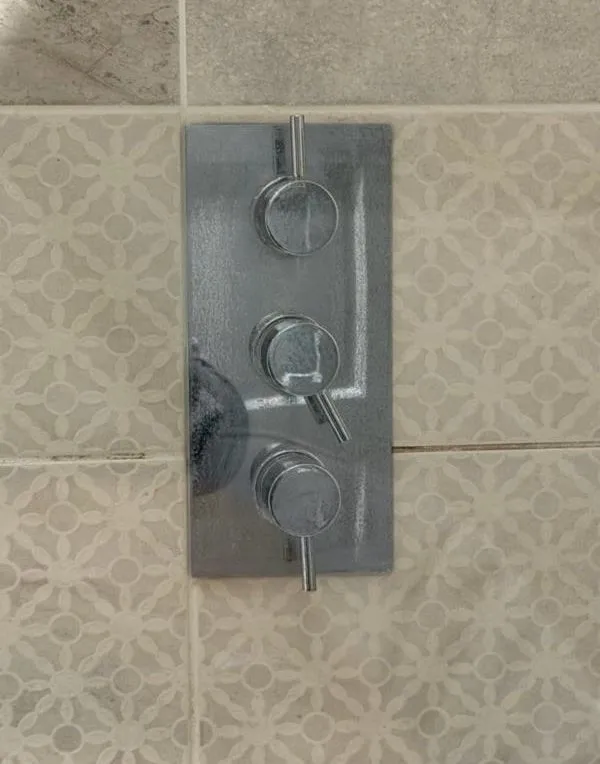
- The leak could also be coming from behind the enclosure frame if there is missing or not enough sealant there, or from the shower valves when they are turned on.
What we did
On the day, our engineer:
- Supplied and fitted a new rubber seal on the shower waste, so the waste sits tight in the tray again.
- Applied new silicone around the outside of both shower trays.
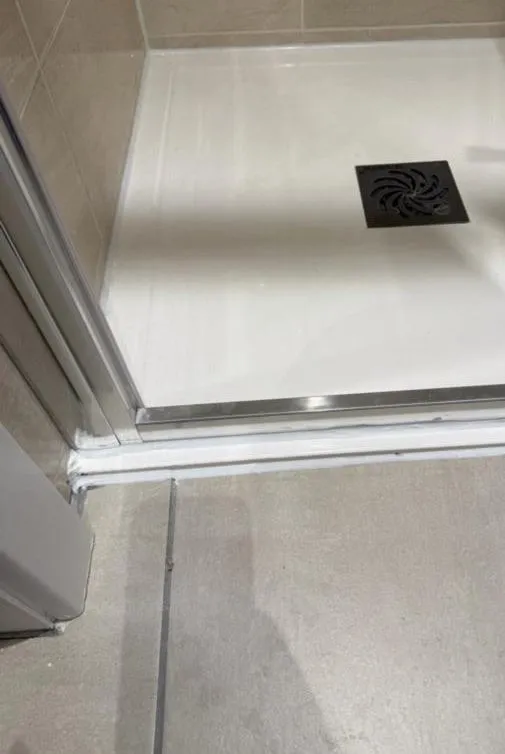
Because a loose waste was the clearest fault, fixing it and resealing the trays was the right first step. The other possible causes were written up for the homeowner, with a quote for the further work so they can decide what to do next:
- New shower door seals, which our engineer recommends because the current ones let water through.
- Raking out and redoing the grout lines where the crack was found.
- If the leak comes back, taking down and refitting the shower enclosure with new sealant behind the frame. This is a bigger job, so it only makes sense once the simpler causes have been ruled out.
Why it matters
A slow shower leak can go on for months before anyone notices. By the time a stain appears on the ceiling below, water may have been soaking into the floor, joists or wall for a long time. Fixing the cause early is far cheaper than repairing a ceiling, a rotten floor or mould later on. If you let the property, a leak left too long can also turn into damp and disrepair problems for your tenants.
How to spot the same problem at home
Look out for:
- A wobbly or loose drain grate or waste. If the waste moves when you press on it, the seal underneath may not be doing its job.
- Black, cracked or peeling silicone around the tray, or gaps where the sealant has pulled away.
- Water on the floor outside the shower after use, even with the door shut. Worn door seals are a common cause.
- Cracked or missing grout, especially near the bottom of the walls where water sits longest.
- A damp patch, stain or bubbling paint on the ceiling below the bathroom, or on the skirting next to the shower.
- A musty smell that won’t go away, even with good ventilation.
A simple check: run the shower straight down the drain for a few minutes, without hitting the walls or door, then look below or around the tray. Then try the walls, then the door. Testing one area at a time helps narrow down where the water is getting out. Our guides to bath and shower resealing and shower tray repairs explain more, and you can see another real job in our shower tray reseal and wall repair case study.
Need a shower leak fixed in Ilford?
We find and fix shower leaks for homeowners, landlords and letting agents. See our leak detection service, sealant and silicone service, handyman service and bathroom fitting service, or read about all our work in Ilford. Landlords can also book EICRs in Ilford from £175 + VAT.
Our office is in Chigwell and our engineers work across Essex and east London every day, including Romford, Woodford, Chigwell and Hainault. Call 020 8227 0035 or request a quote.