

Shower sealant is a small thing, but when it fails, water finds its way out, often into the wall right next to the enclosure, where it can’t be seen until the damage is done. This job is a clear example of what happens and how it’s put right.
What we found
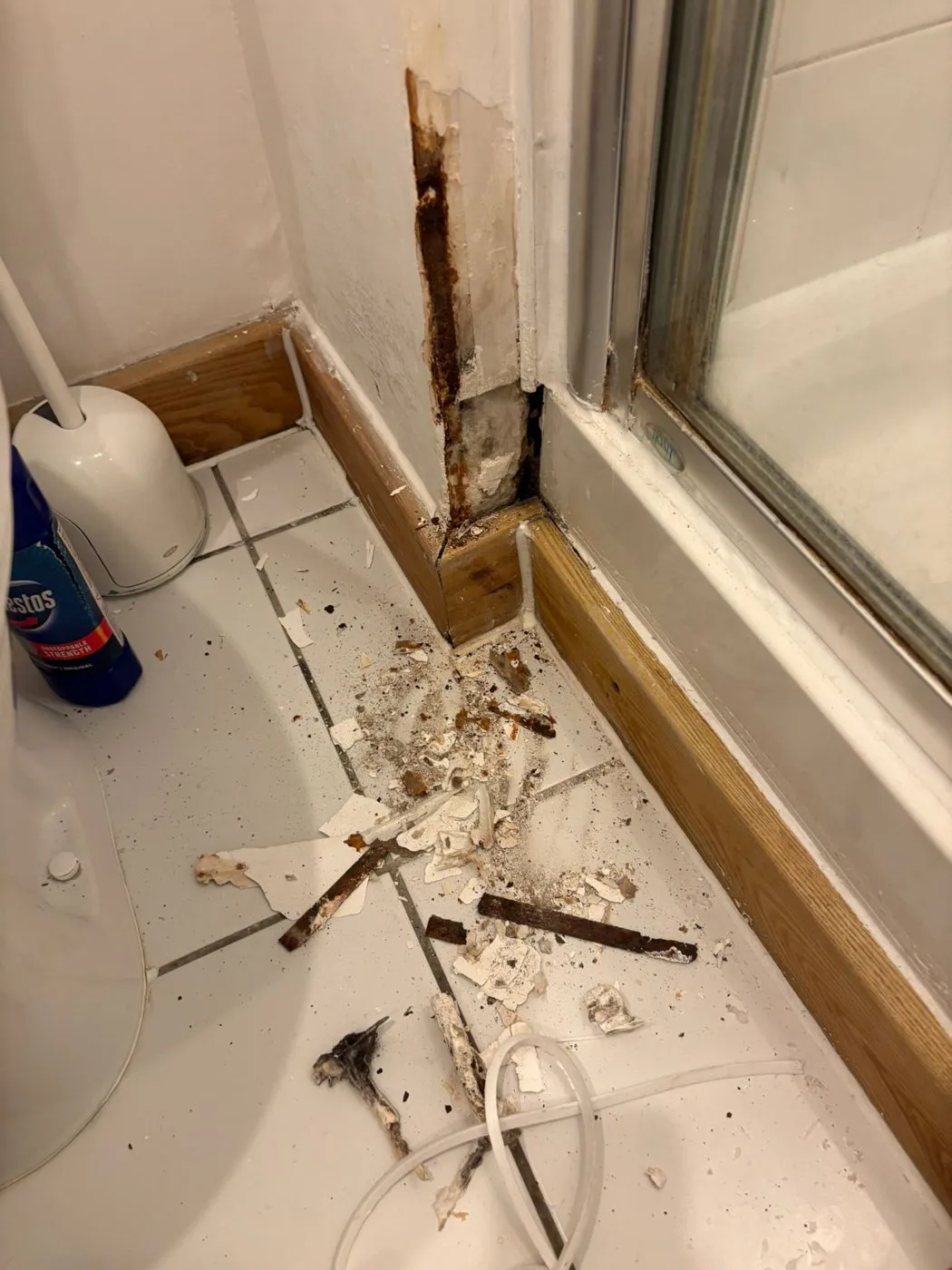
Next to the shower enclosure, the paint had bubbled and the corner felt soft. Once we opened it up, the metal corner bead inside the plaster had rusted badly, and the plaster behind it was blackened and crumbling. Water had been getting past the failed sealant at the base of the enclosure and soaking into the wall for some time. Even the skirting at the bottom was stained.
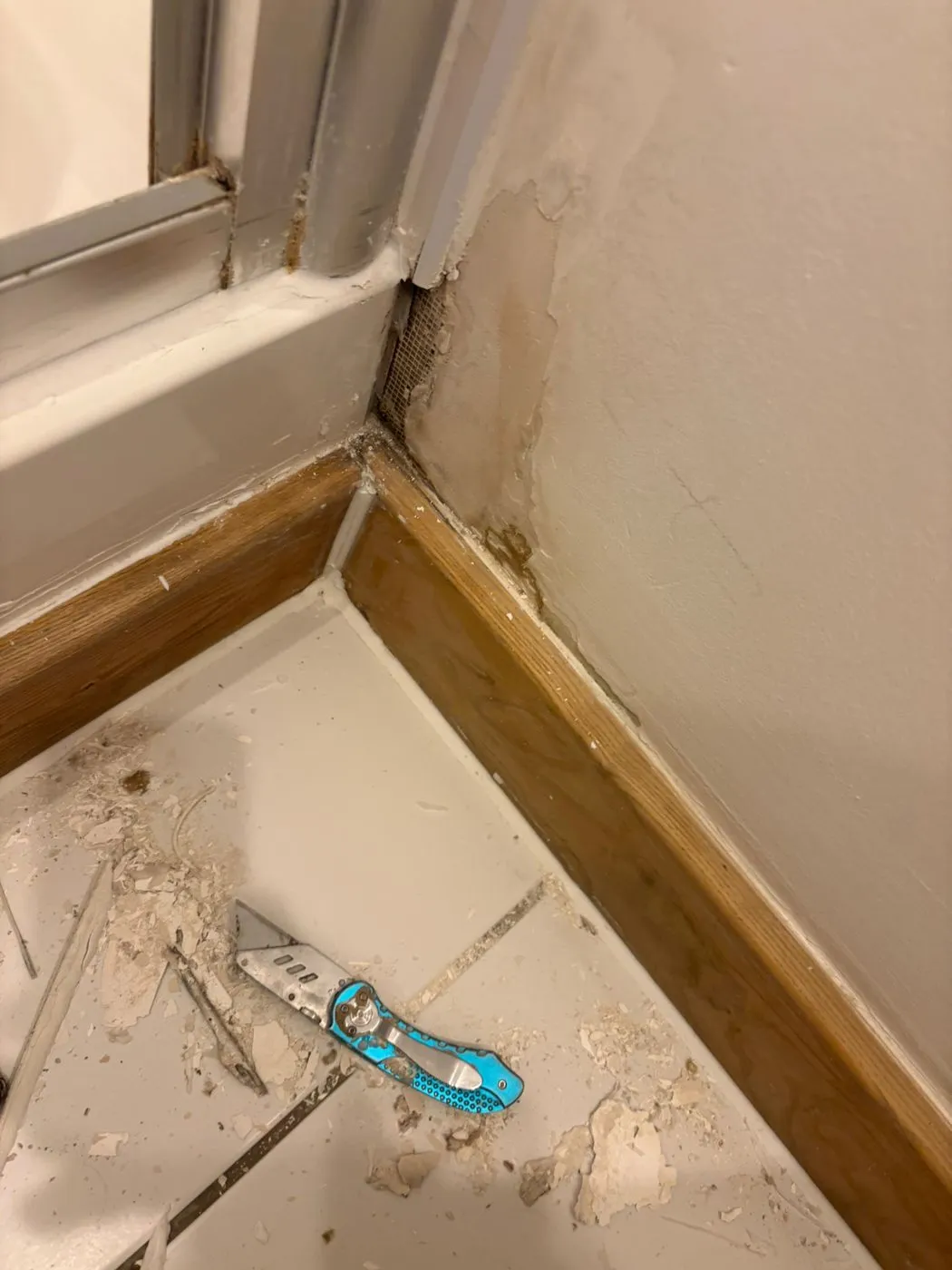
The water staining spread well out across the wall from the corner. All the soft, damaged plaster had to come off back to sound material.
The repair
- Strip out the rusted corner bead and all the damaged plaster
- Let the wall dry before rebuilding anything
- Rebuild the corner with a new, rust-resistant bead, then fill and skim back to a flat finish
- Redecorate with a moisture-resistant bathroom paint
- Remove all the old sealant from the shower tray and enclosure, then reseal with mould-resistant sanitary silicone, the step that stops it happening again
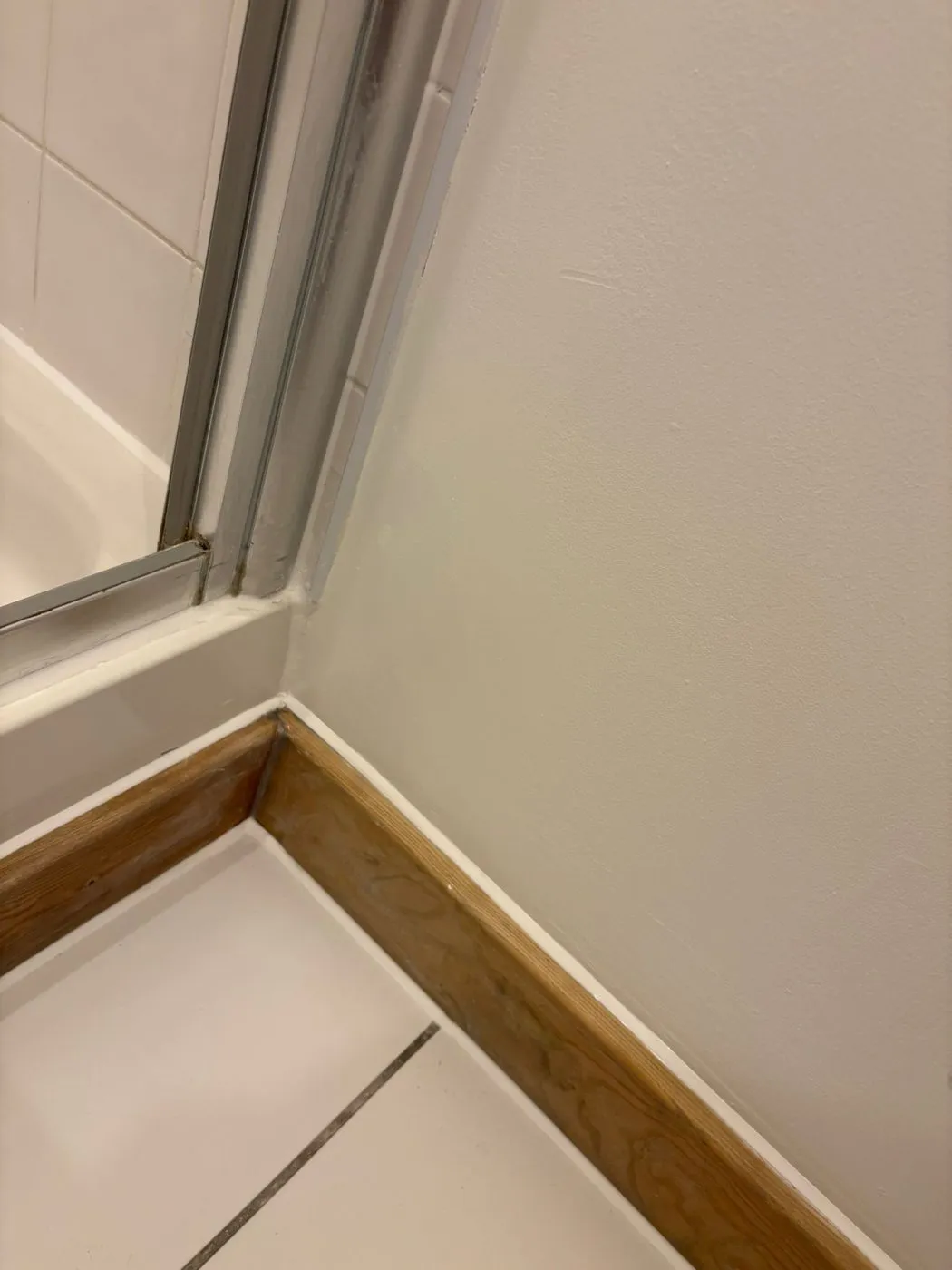
The repaired corner is straight, smooth and dry, with no sign of the damage underneath.
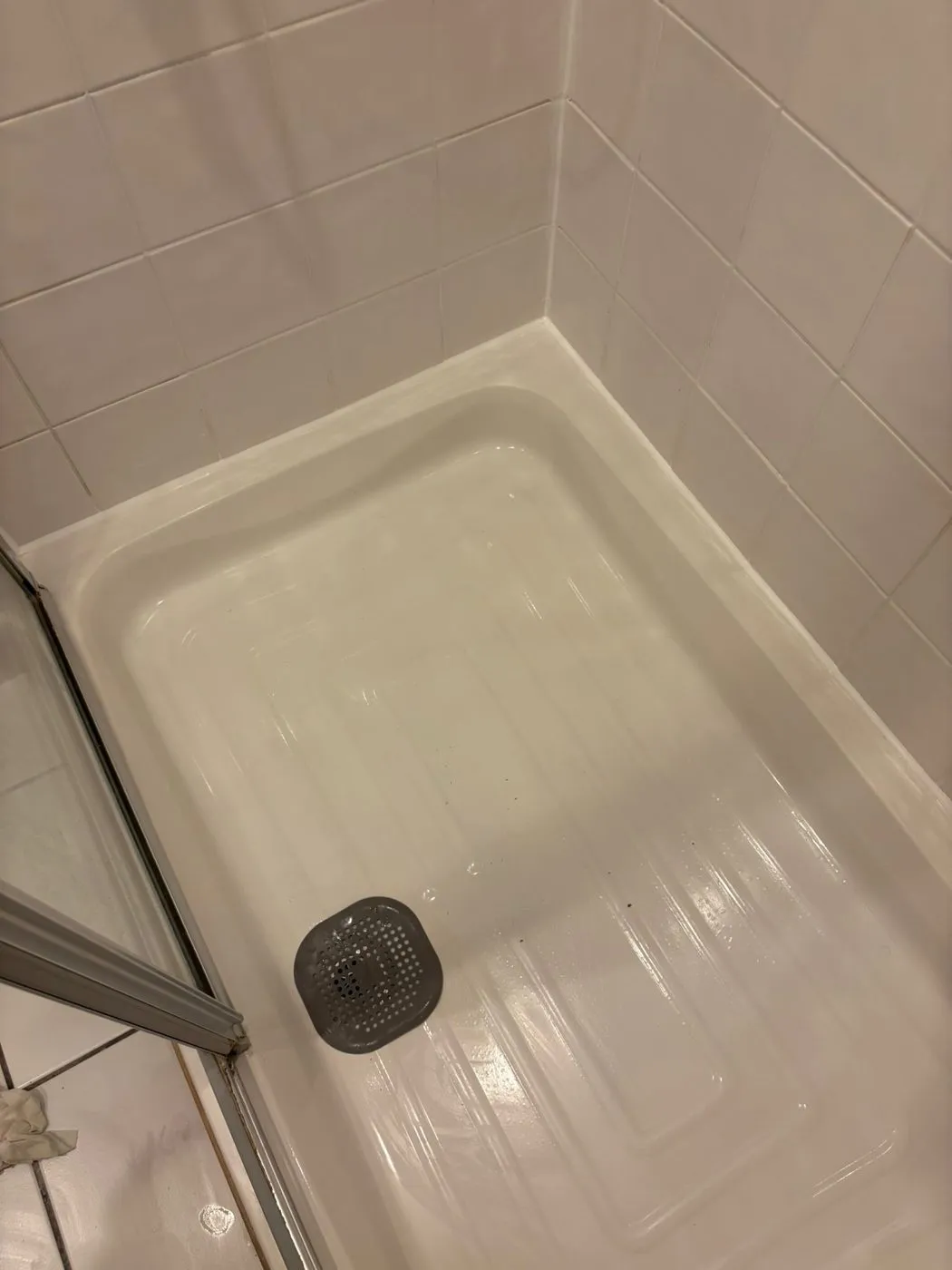
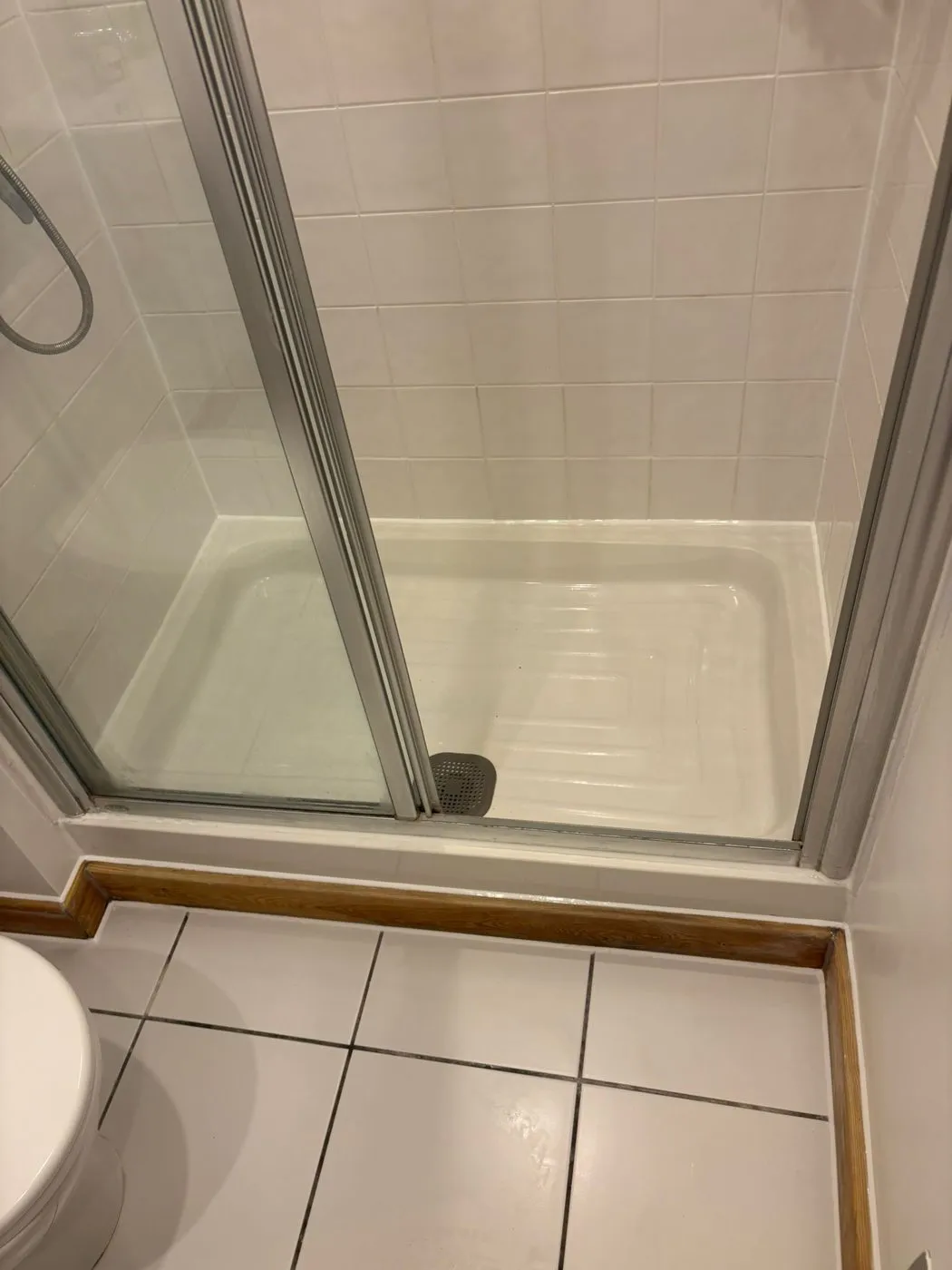
Inside the enclosure, fresh sealant runs continuously along the joint between the tray and the tiles. Our resealing guide explains how a proper reseal is done.
Signs to look out for
- bubbling or peeling paint on the wall beside a shower or bath
- soft or crumbling plaster near the enclosure
- brown or rust-coloured streaks at wall corners, a sign that a metal corner bead is rusting
- dark, mouldy or lifting sealant inside the shower
- staining on skirting or the ceiling below
Catching it at the sealant stage is a quick, low-cost job. Leaving it means plaster, decorating, and sometimes flooring as well. If water has spread under the floor, see our bathroom floor replacement case study.
Landlords and agents
Failed shower sealant is one of the most common causes of hidden damage in rental bathrooms. Resealing at every change of tenancy, and acting quickly on reports of bubbling paint, prevents repairs like this. See our property maintenance service.
We cover London and Essex, with our own engineers working every day across Chigwell, Loughton, Buckhurst Hill, Woodford, Ilford, Romford, Brentwood and Epping. Call 020 8227 0035 or request a quote.