
The shower tray is the part of the bathroom that does the most work and gets the least attention. Slow draining, bad smells, black marks around the edges and water appearing in the room below can all start at the tray and its waste. This shower, with a removable slatted duckboard over the tray, shows how much can build up out of sight.
What looked fine on top
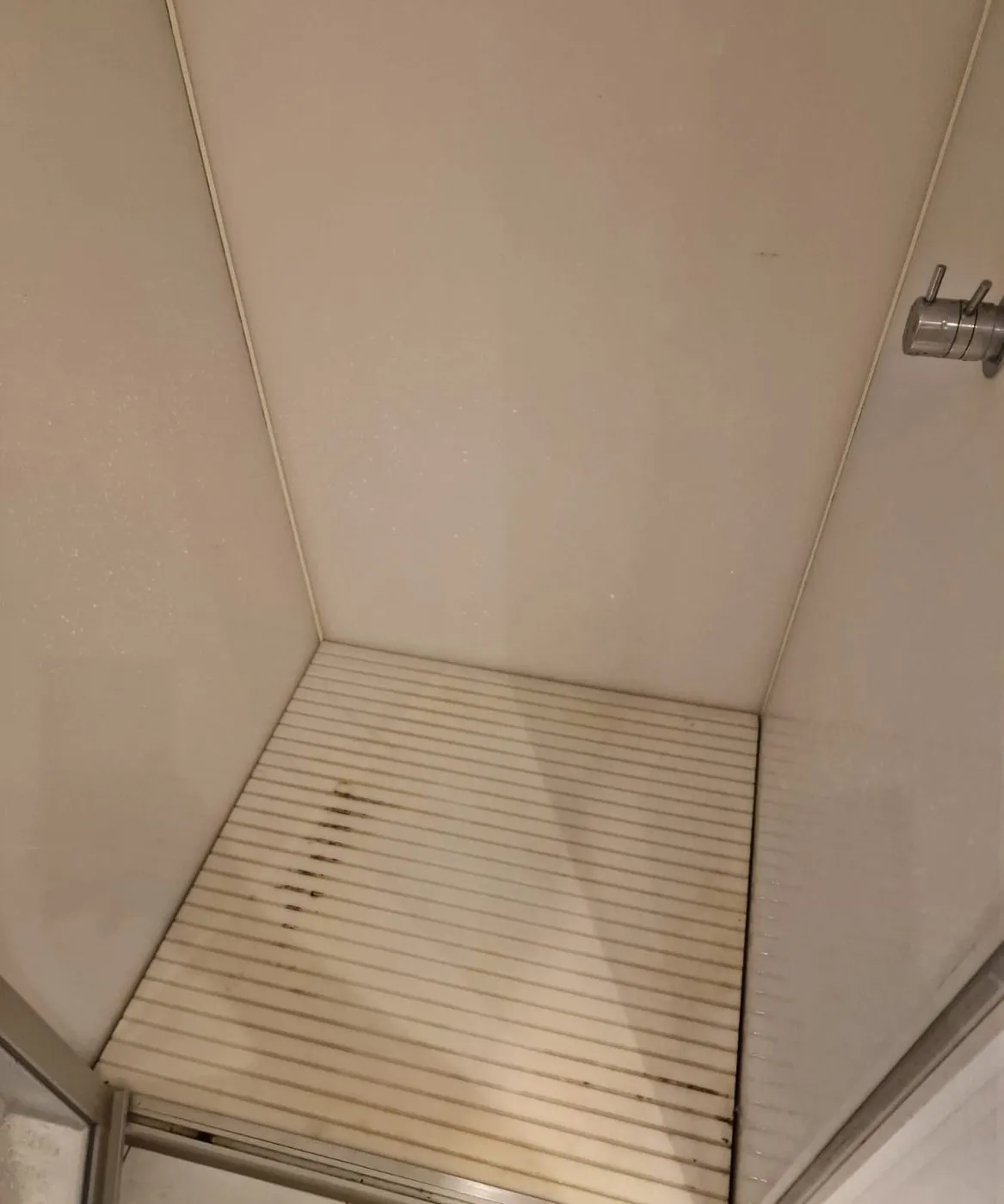
From the doorway, the shower looked reasonably clean. Apart from some dark marks between the slats, there was nothing obvious to see.
What was underneath
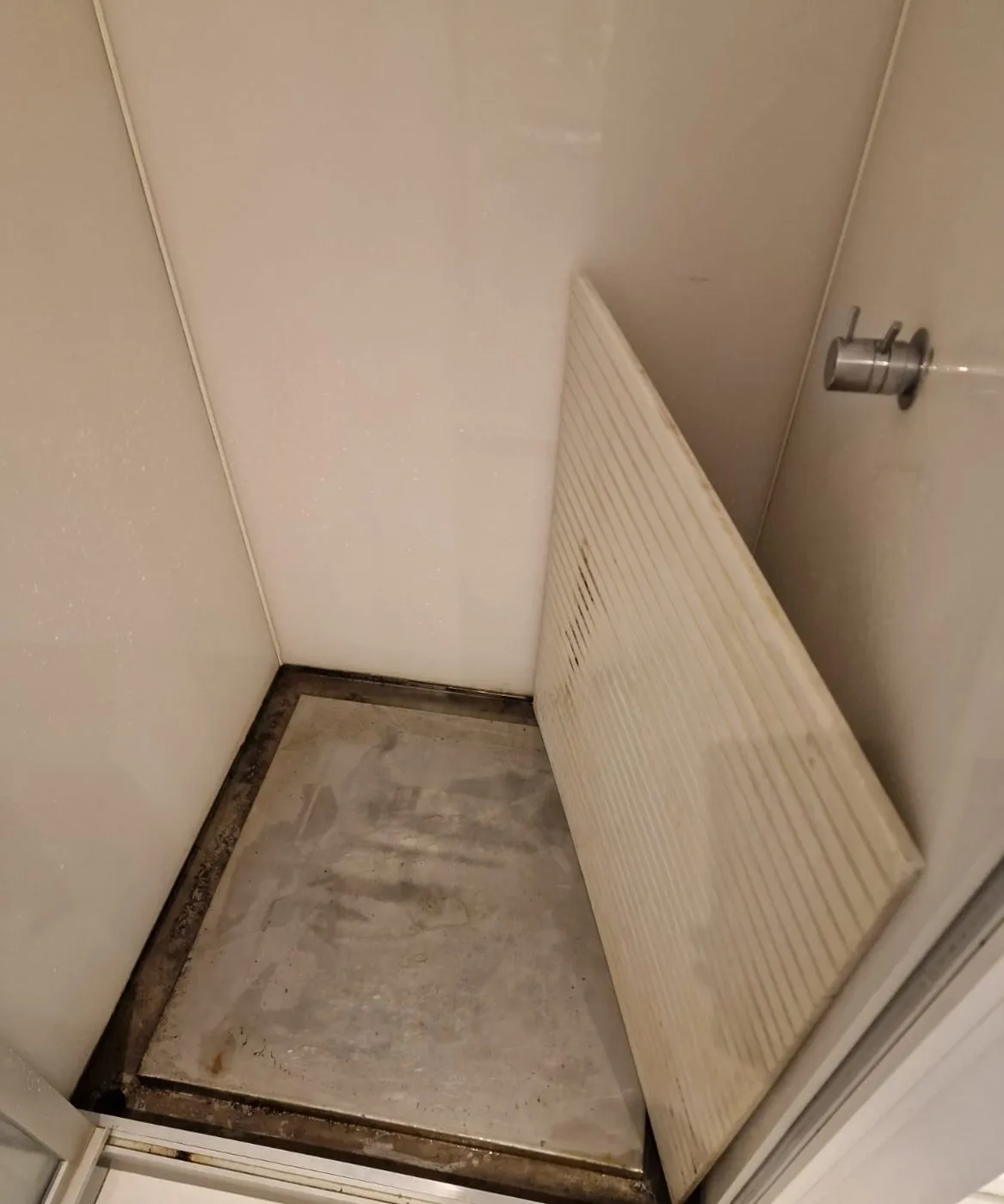
With the duckboard lifted, the problem was clear: grime, soap scum, hair and black mould had built up across the tray and around its edges, where water sits and never fully dries.
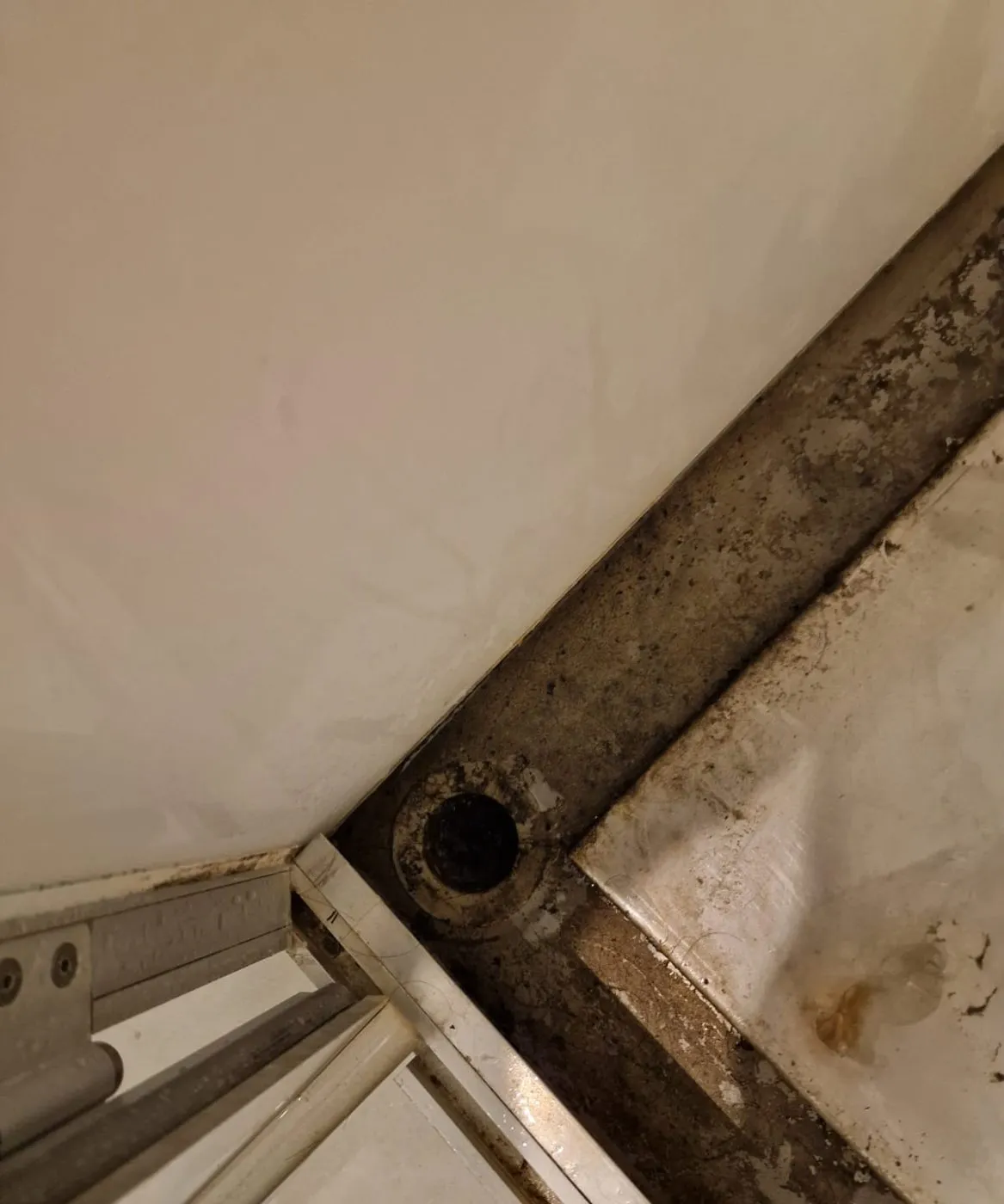
The perimeter channel and the waste outlet in the corner were coated in residue. Build-up like this slows drainage and causes smells. Left long enough, debris like this can block the waste completely, and standing water can find its way past old or failed seals.
Common shower tray problems
- Slow draining: hair and soap build-up in the waste and trap
- Smells: a dirty waste, a dried-out or poorly fitted trap, or debris rotting under the tray or duckboard
- Black marks and mould: at the edges, where sealant has failed or water never dries
- Leaks into the room below: a failed waste seal, a cracked tray, or a tray that has moved, breaking the sealant line between tray and wall
- Cracks and flexing: trays that weren’t bedded properly on a solid, level base can crack over time
How we repair them
- Lift and clean, removing duckboards and trays where possible, and cleaning back to the surface
- Clear the waste and trap, removing hair and build-up, and checking the trap seal holds water
- Check for leaks, testing the waste connection and looking for staining or damp around and below the tray
- Repair or replace the waste if the seals have failed
- Reseal between the tray and the walls once everything is dry. See our resealing guide
- Replace the tray if it’s cracked, unstable or the leaks keep coming back, bedding the new tray properly so it doesn’t flex
Keeping a shower tray healthy
- lift duckboards or mats regularly and clean underneath
- clean the waste cover and hair trap every couple of weeks
- run the extractor fan so the tray dries between uses. See our extractor fan guide
- act on smells or slow draining early, before a blockage or leak develops
Landlords and agents
Shower trays are a common source of hidden leaks and mould complaints in rented flats, and a frequent cause of ceiling damage in the flat below. A clean, reseal and check at each change of tenancy prevents most of it. See our void property checklist and plumbing and heating service.
We cover London and Essex, with our own engineers working every day across Chigwell, Loughton, Buckhurst Hill, Woodford, Ilford, Romford, Brentwood and Epping. Call 020 8227 0035 or request a quote.