
Concealed showers with a sleek plate on the wall and the valve hidden in the wall or boxing look fantastic. But because the workings are out of sight, a small fault can do a lot of damage before anyone notices. This job shows how a failing shower control cartridge and hidden water can go together.
The problem
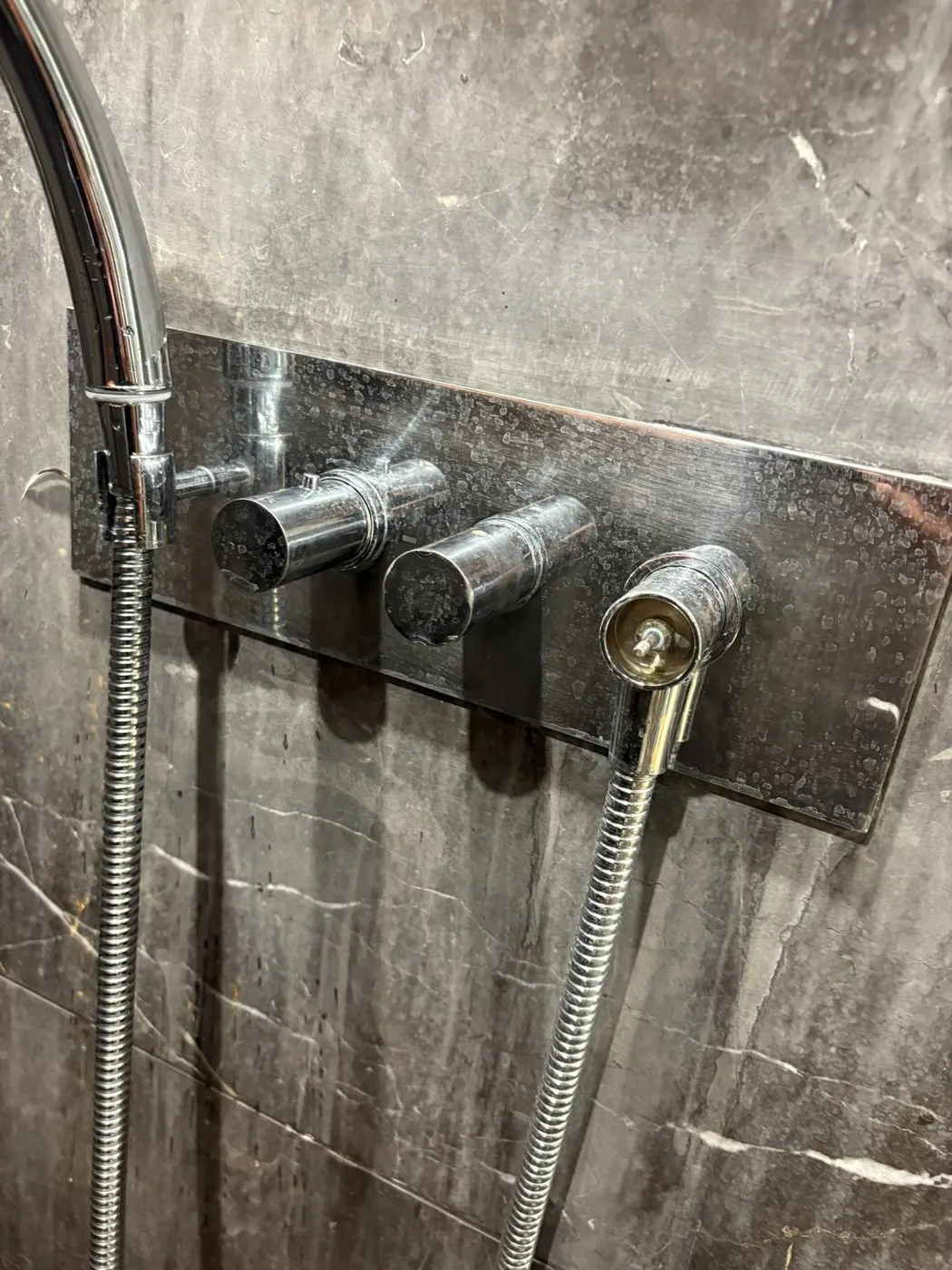
The shower’s controls had become unreliable, which is a typical sign of a worn cartridge: the part behind each handle that actually opens, closes or diverts the water. Over time, limescale and wear stop the cartridge sealing properly, so the control becomes stiff, won’t shut off fully, or lets water past.
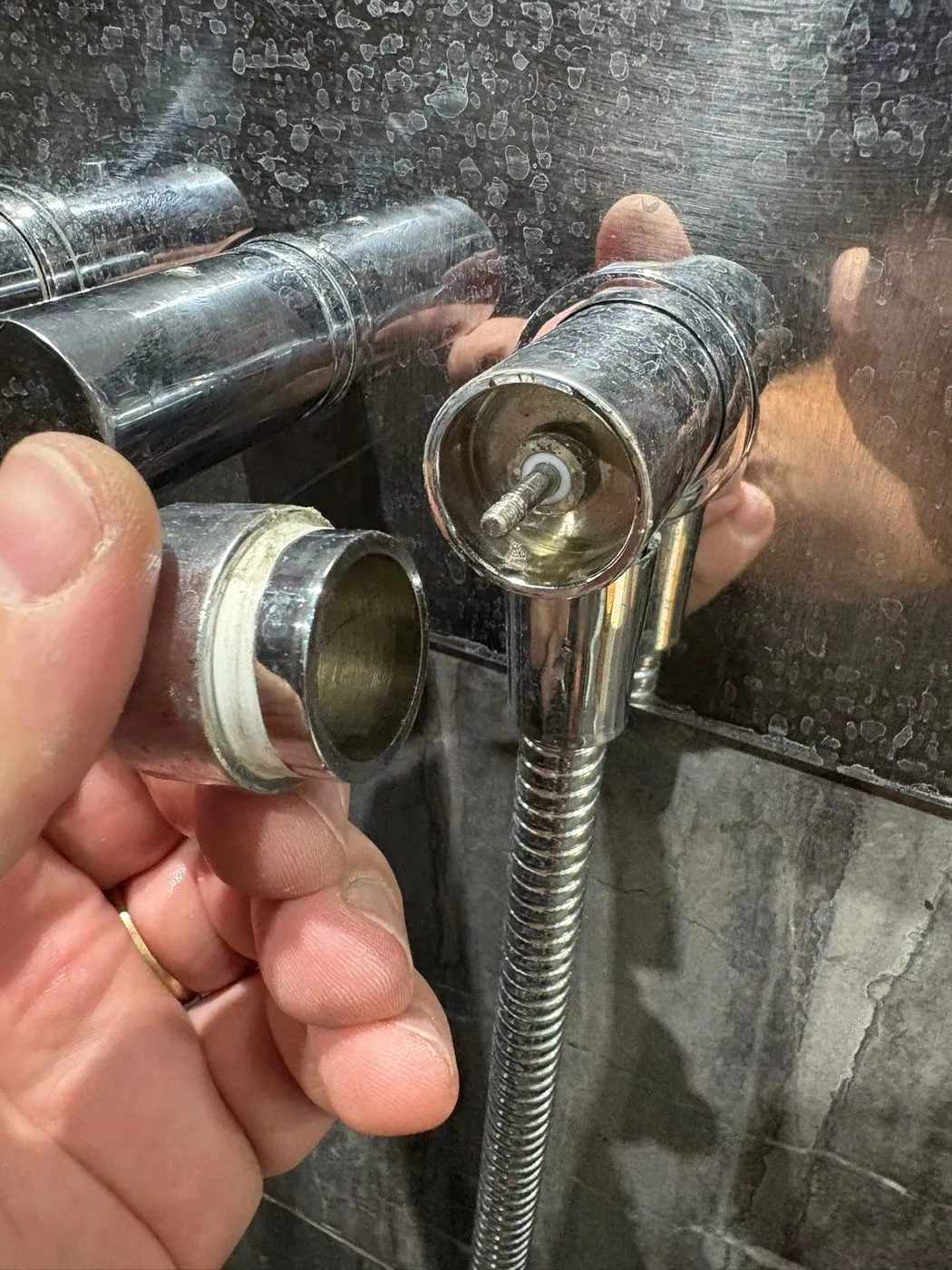
With the handle cover removed, the cartridge spindle is exposed. Cartridges are usually specific to the make and model of valve, so the right replacement has to be identified before it’s swapped.
What we found in the boxing
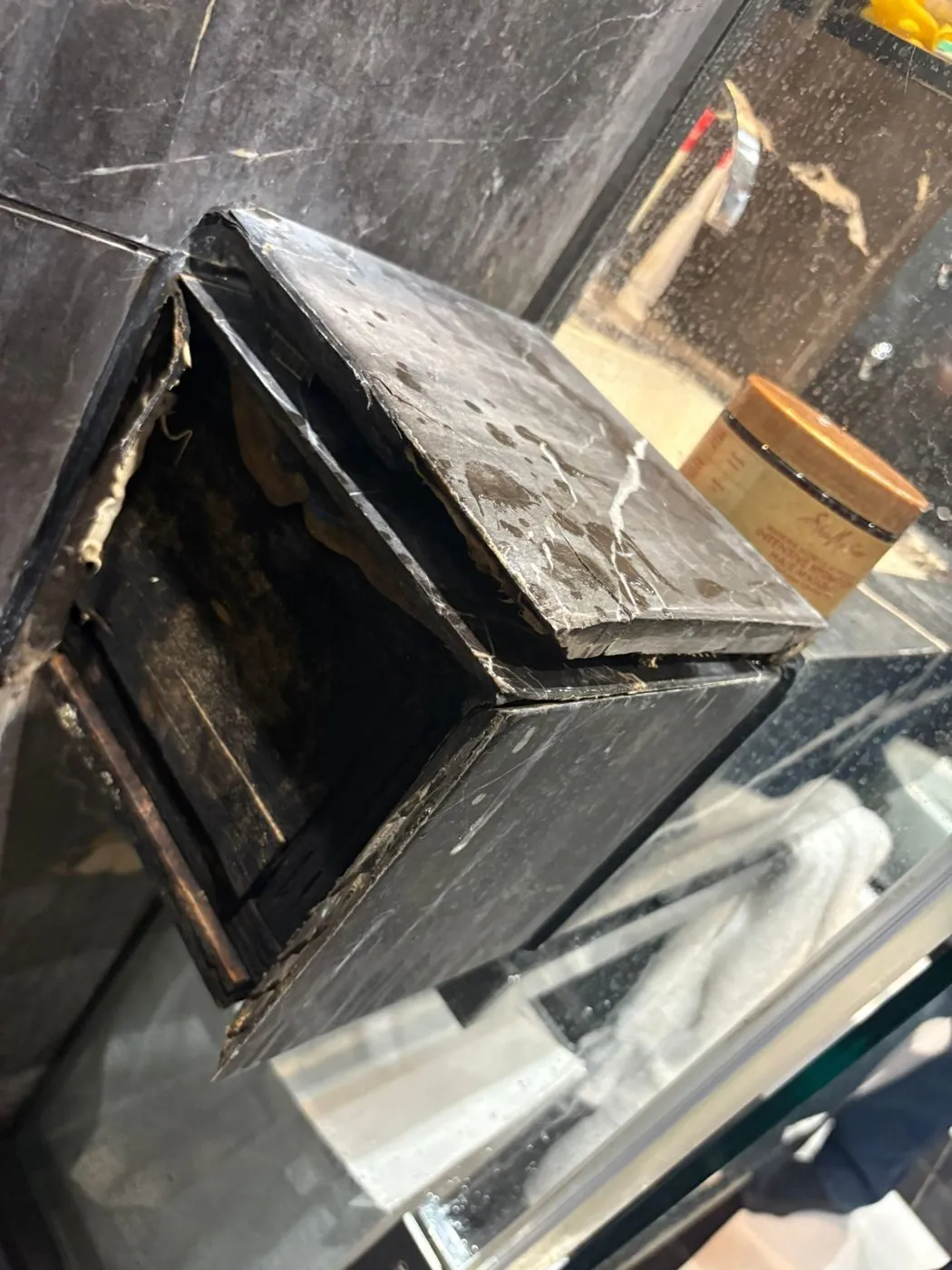
The shower had a marble-clad box built around the pipework. When we opened it, the inside was dark, wet and water-stained, with the timber and board showing signs of long-term moisture. Water had been getting into the boxing, from the shower area or from the fittings within it, for some time without showing on the outside.
This is why we always check behind access panels and boxing on shower jobs. Fixing the control alone would leave hidden damage, and potentially an ongoing leak, behind.
The repair
- Isolated the water and removed the control handles and covers
- Replaced the faulty cartridge with the correct part for the valve
- Opened and inspected the boxing, checking the pipework and fittings inside for leaks
- Repaired the source of the water, dried the boxing out and rebuilt the damaged boxing, so the whole area was put right
- Tested the shower at full flow, checking the controls shut off cleanly and watching for any water escaping
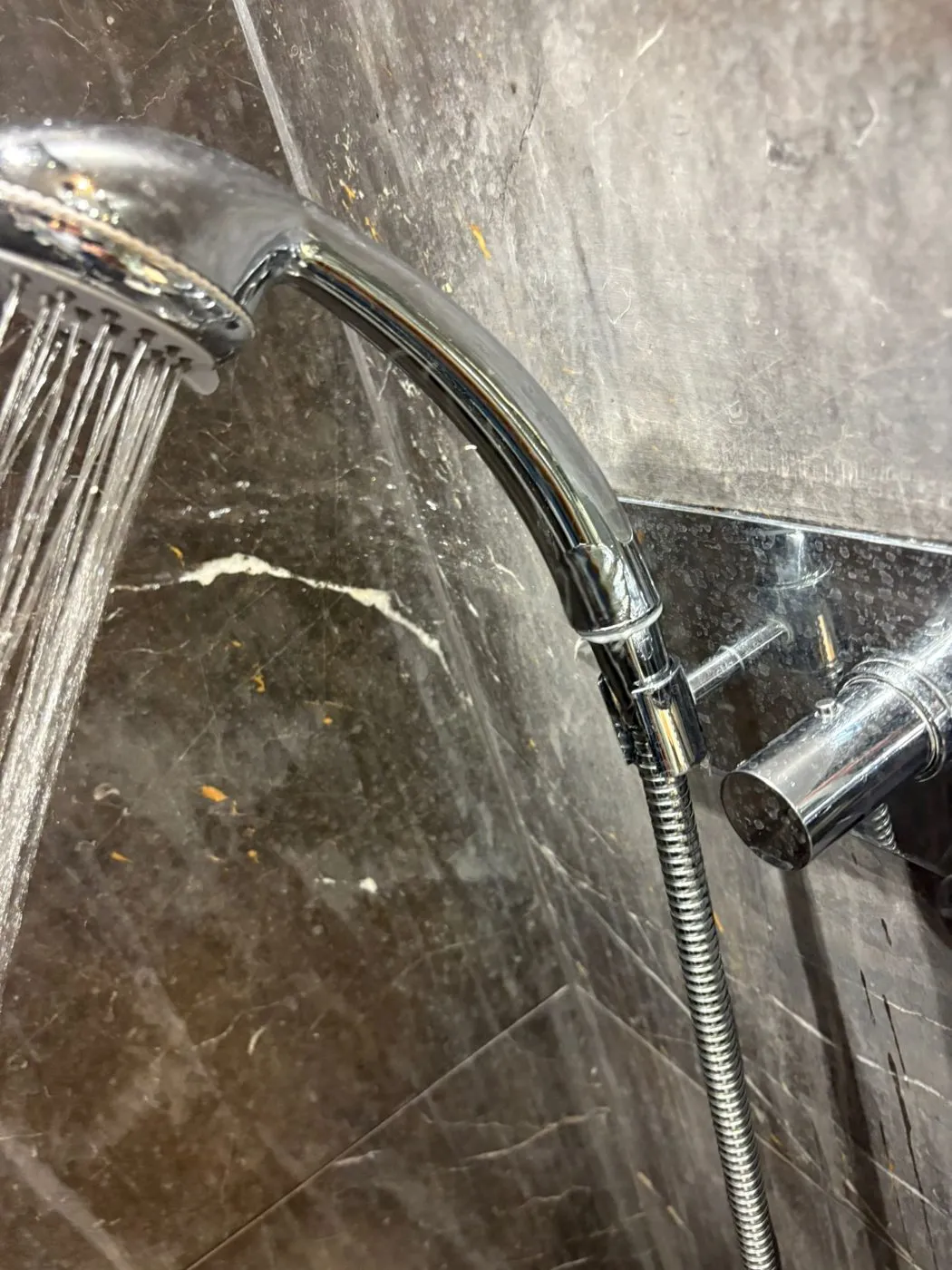
Warning signs to watch for
- shower controls that are stiff, loose or won’t shut off fully
- a shower that drips after it’s turned off
- staining, swelling or loose sections on boxing, tiles or stone around the shower
- a musty smell in the bathroom that doesn’t go away
- marks on the ceiling of the room below
Plan for access
Concealed showers and stone-clad boxing look great, but they need a way in. A removable panel or access hatch makes cartridge changes, leak checks and future repairs far quicker and cheaper. See our related guides: shower mixer valve replacement, concealed cistern repairs and damp and leak investigation.
Book a shower repair
Our plumbing team repairs concealed showers, replaces cartridges and traces hidden leaks for homeowners, landlords and letting agents. See our plumbing and heating service.
We cover London and Essex, with our own engineers working every day across Chigwell, Loughton, Buckhurst Hill, Woodford, Ilford, Romford, Brentwood and Epping. Call 020 8227 0035 or request a quote.