
A shower that suddenly runs scalding hot or freezing cold, keeps dripping after it’s turned off, or has controls that barely move is a sign the mixer valve is on its way out. The good news is that a failed valve doesn’t have to mean a new bathroom. In most cases the valve can be repaired or replaced without disturbing the tiles.
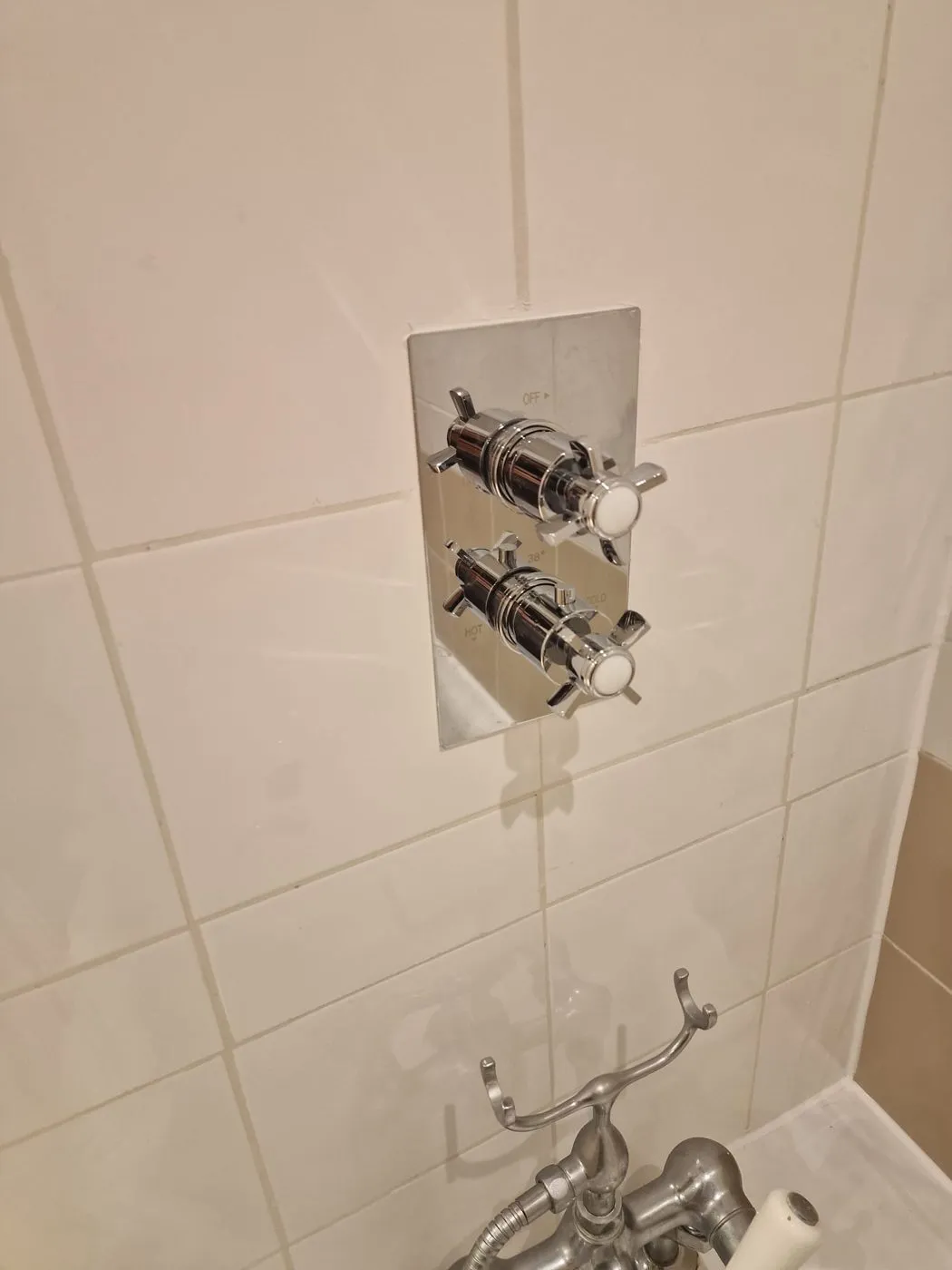
How a thermostatic shower valve works
A thermostatic mixer blends hot and cold water to the temperature you set, and keeps it there even when someone flushes a toilet or turns on a tap elsewhere in the house. Most have:
- a temperature control with a safety stop at around 38°C, which you press to go hotter, reducing the risk of scalding
- a flow control to turn the shower on and off, or a diverter between the shower head and a bath filler or handset
Inside is a thermostatic cartridge that does the mixing, plus small filters and check valves on the inlets.
Signs the valve needs attention
- the temperature fluctuates or won’t stay where you set it
- the shower only runs hot or cold, whatever the setting
- it drips constantly after being turned off
- the controls are stiff, loose or spin without doing anything
- the flow is weak, even though water pressure elsewhere is fine
- water is leaking behind the tiles. Look for staining on the ceiling below or loose grout around the valve.
Repair or replace?
Repair: if the valve is relatively new and parts are available, cleaning or replacing the cartridge, the inlet filters and the check valves often brings it back to life. Limescale is a frequent culprit, especially in the hard-water areas of London and Essex.
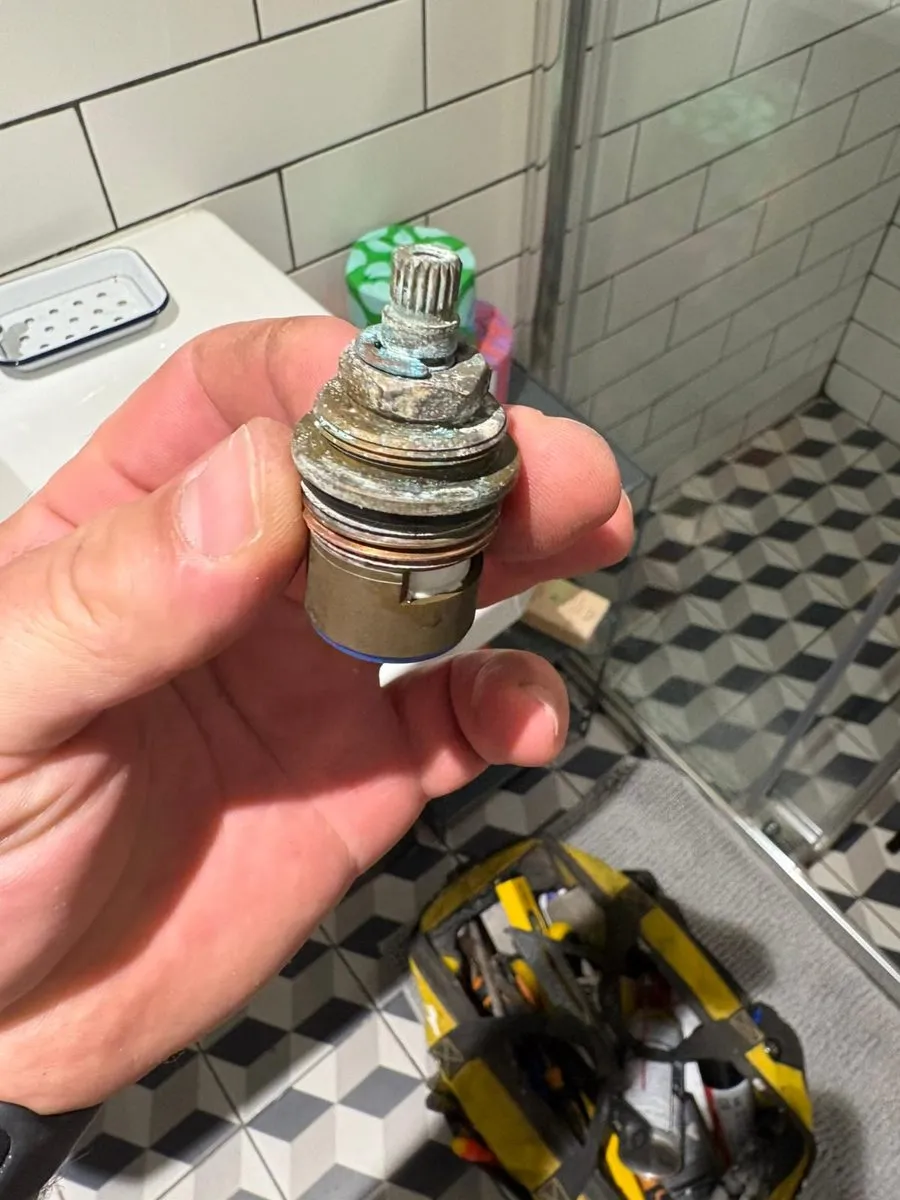
This is a cartridge we removed from a shower that had become stiff and wouldn’t shut off properly. You can see the limescale and green corrosion built up around the spindle, threads and seals. Once a cartridge is this far gone, cleaning won’t save it. Fitting a new matching cartridge restores smooth control and stops the drip, usually without touching the tiles or the valve body. See also our case study on a faulty shower cartridge and the hidden water damage behind it.
Replace: if the valve is old, the cartridge is discontinued, the body is damaged, or the valve keeps failing, replacement is the better long-term fix. That was the case on this job, where we fitted a new thermostatic valve to match the bathroom’s traditional crosshead style.
Replacing a concealed valve without retiling
The biggest worry with a concealed shower valve is the tiles. A good replacement keeps disruption to a minimum:
- Match the valve to the existing pipework. Hot and cold inlet centres, outlet positions and wall depth all matter. Choosing a valve that suits what’s already in the wall avoids moving pipes.
- Use a cover plate that hides the old opening. New valves come with a faceplate, and a well-chosen plate covers the area around the old valve, as in the photo above, so no retiling is needed.
- Check it suits your water system. Some valves need balanced hot and cold pressures, and others are designed for combi boilers, unvented cylinders or gravity-fed systems. Fitting the wrong type causes temperature problems from day one.
- Flush the pipes and fit filters so debris doesn’t damage the new cartridge straight away.
- Set the temperature stop and test thoroughly, checking for leaks behind the plate before it’s sealed.
Keeping a shower valve working
- Descale shower heads and handsets regularly, and consider water treatment in very hard-water areas.
- Use the full range of the controls occasionally, so cartridges don’t seize in one position.
- Get drips looked at early. A dripping valve wastes water and usually gets worse.
- Reseal around the bath or tray when silicone starts to fail. See our resealing guide.
Book a shower repair
Our plumbing team repairs and replaces shower valves, mixers, bath fillers and shower heads for homeowners, landlords and agents. See our plumbing and heating service, or for a combined visit read how we replaced a leaking toilet and cleared a blocked basin in one trip.
We cover London and Essex, with our own engineers working every day across Chigwell, Loughton, Buckhurst Hill, Woodford, Ilford, Romford, Brentwood and Epping. Call 020 8227 0035 or request a quote.