

Mould in a bath or shower area builds up slowly: a bit of discoloured grout here, a dark corner there, until the whole area looks grubby and smells damp. This bathroom is a typical example, and the before and after photos show how much difference a proper deep clean and reseal makes.
Before
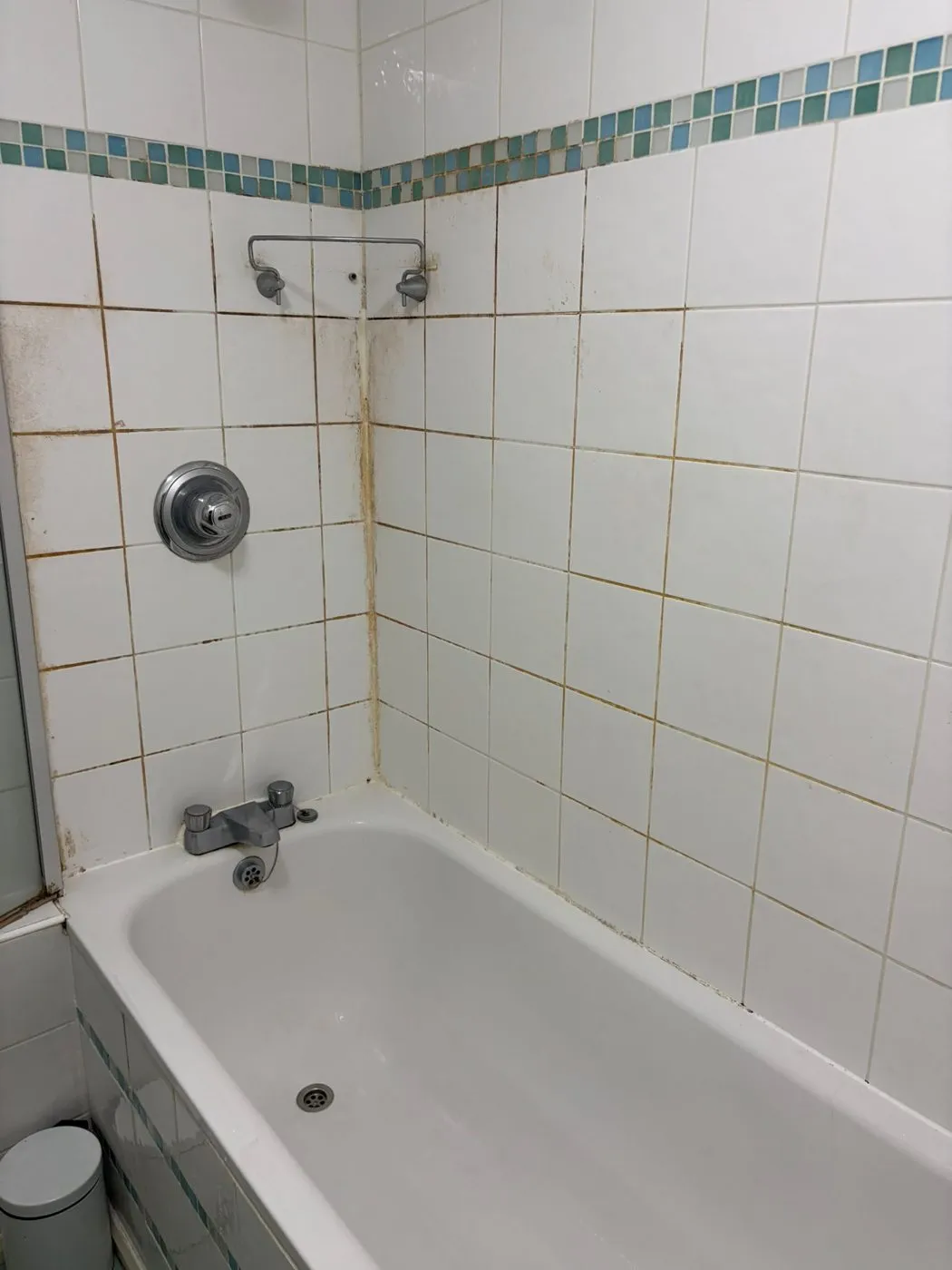
The grout lines across the tiled wall were stained orange and brown, the internal corner had mould running down the joint, and the sealant along the bath edge was discoloured.
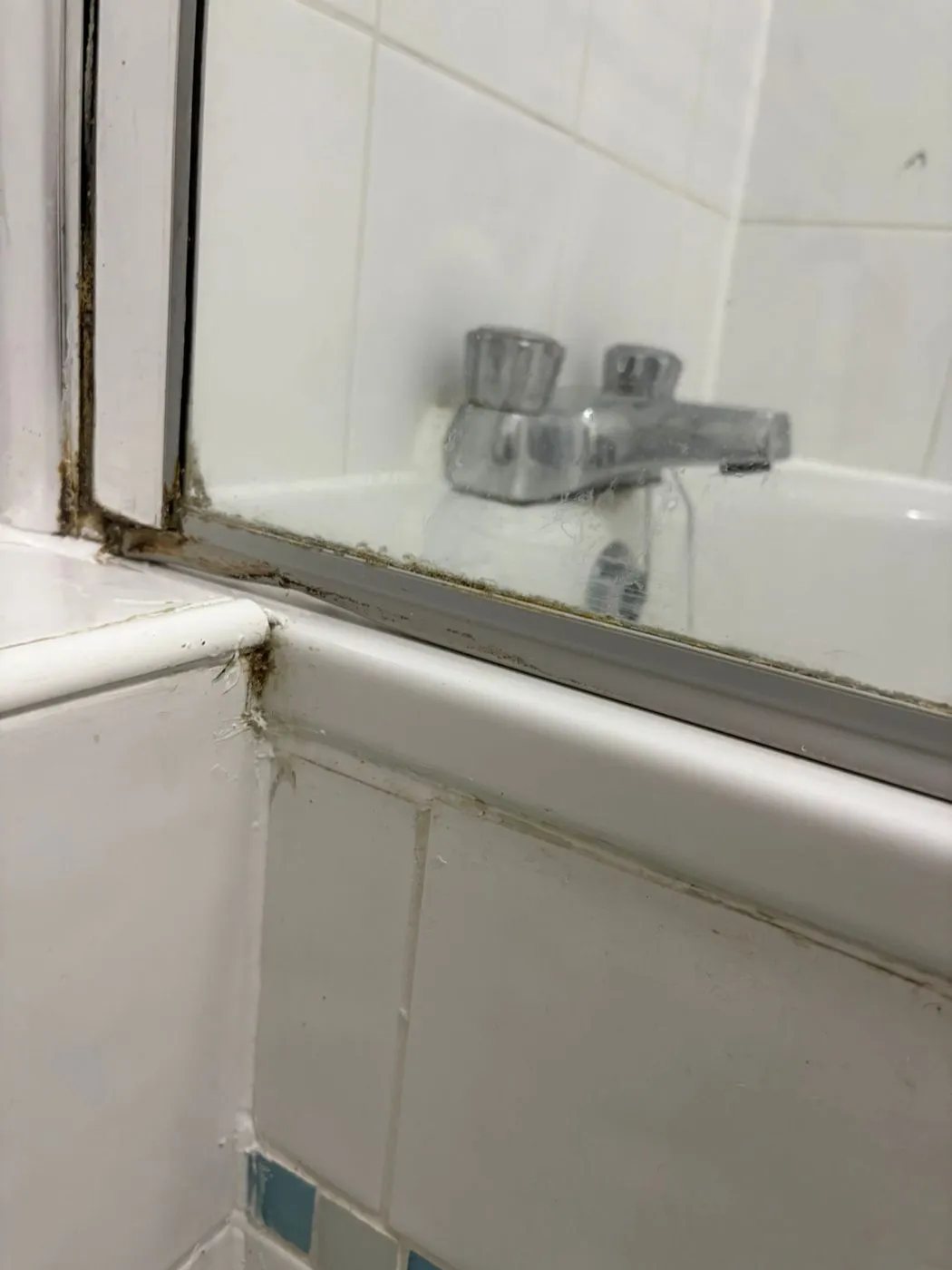
Around the bath screen, mould had taken hold in the sealant and in the joints of the frame, where water collects after every shower.
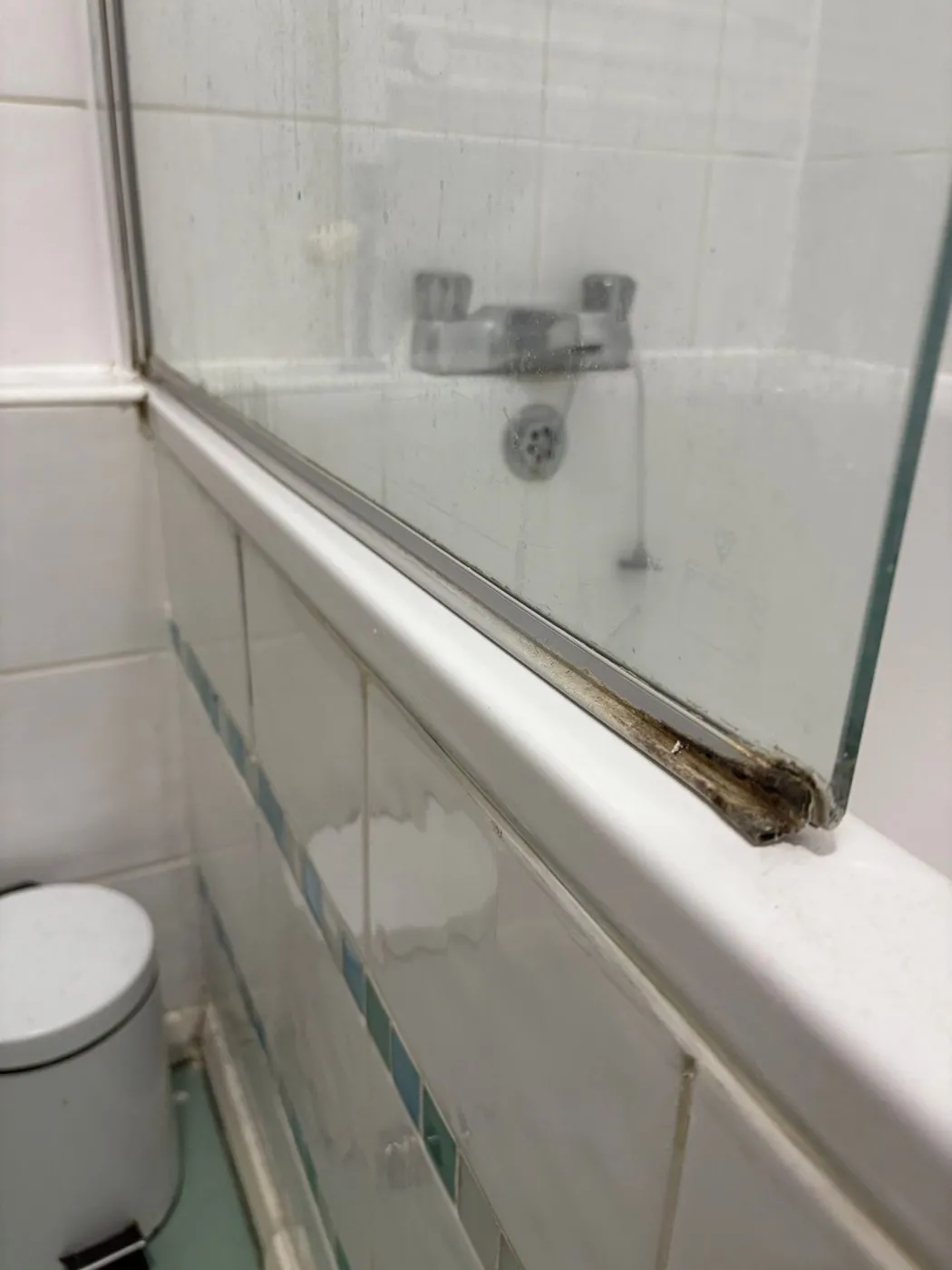
The screen’s bottom seal was blackened and breaking down, which doesn’t just look bad: once a seal fails, water can get out of the bath and into the surrounding wall and floor.
What we did
- Deep cleaned the tiles and grout with a fungicidal mould treatment, working it into the grout lines and corners
- Scrubbed and rinsed the whole area, removing the staining and residue
- Regrouted where the old grout was too stained or porous to clean back
- Cut out the old, mouldy sealant along the bath and around the screen. Mould grows into silicone, so it can’t be cleaned out
- Dried the joints fully before resealing
- Resealed with mould-resistant sanitary silicone. See our resealing guide for how it’s done properly
After
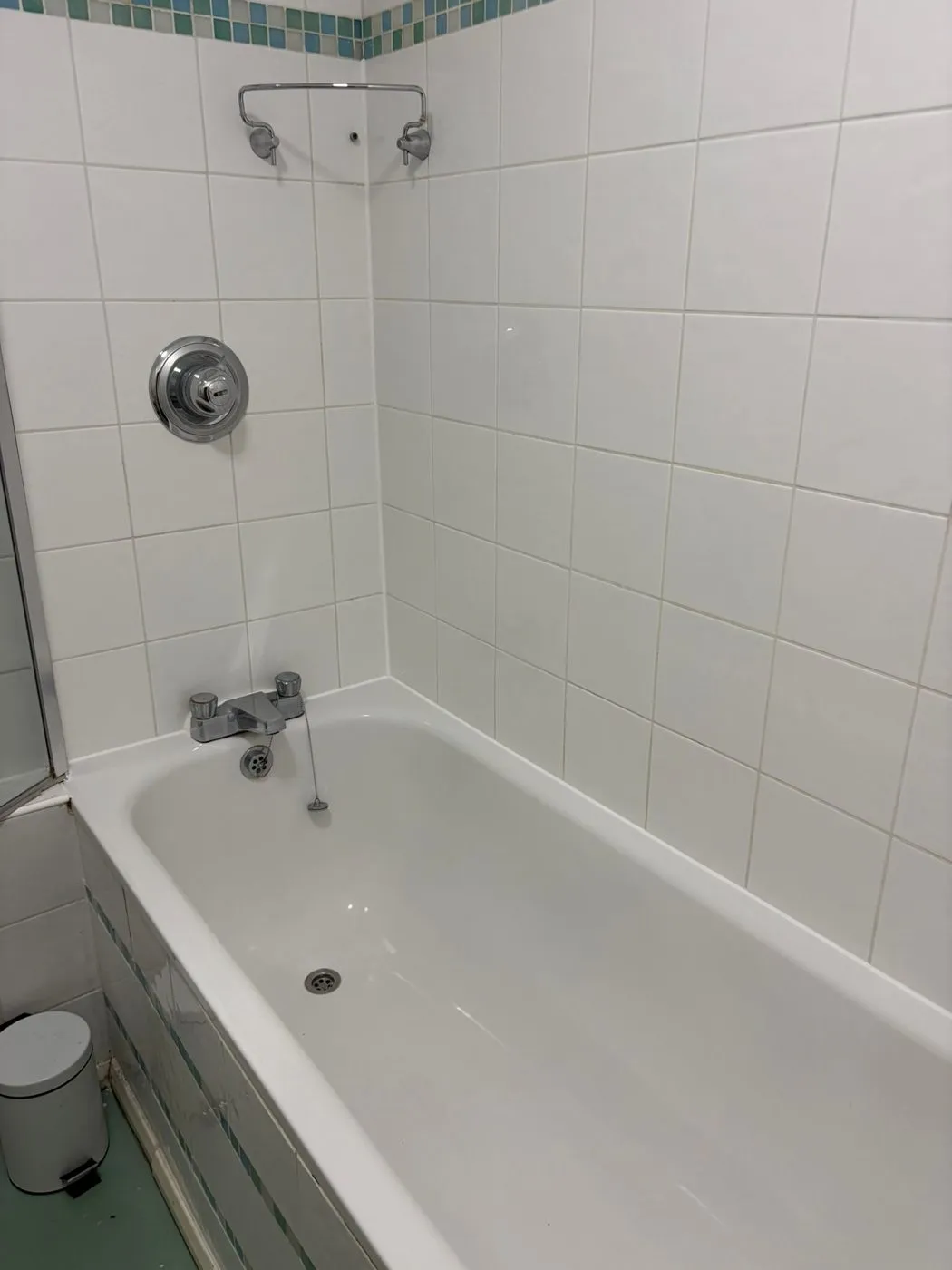
The tiles and grout are bright again, the corner joint is clean, and fresh sealant runs neatly along the bath, with no replacement tiles or new bathroom needed.
Why mould keeps coming back
Cleaning removes the mould you can see, but it returns if the conditions stay the same:
- steam with nowhere to go: a weak or unused extractor fan. See our extractor fan guide
- water left sitting on tiles, screens and sealant after showers
- old, porous grout and sealant that soak up moisture
- cold walls, where steam condenses. See our guide to black mould around windows
Keeping it clean
- run the extractor fan during and for 15 to 20 minutes after showering
- squeegee the screen and tiles after use
- leave the screen open so the bath can dry
- spray a mould inhibitor on corners and seals every week or two
- reseal as soon as sealant starts to turn dark or lift
Landlords and agents
Mould in bathrooms is one of the most common causes of tenant complaints, and damp and mould in rented homes is taken seriously by councils. A deep clean and reseal at the start of each tenancy, with a working extractor fan, prevents most of it. See our damp and leak investigation guide and property maintenance service.
We cover London and Essex, with our own engineers working every day across Chigwell, Loughton, Buckhurst Hill, Woodford, Ilford, Romford, Brentwood and Epping. Call 020 8227 0035 or request a quote.