

Damp is one of the most common problems in UK homes and rental properties, and one of the most often misdiagnosed. Paint over it, and it comes back. Treat the wrong cause, and you’ve spent money for nothing. The key is a proper investigation to find where the water is coming from before anything is repaired.
The four usual causes
1. Condensation. This is the most common by far. Moisture from cooking, showers, drying clothes and breathing settles on cold surfaces: windows, external walls, corners and behind furniture. It shows as black mould spots, streaming windows and musty smells, usually worst in winter. See our guide to black mould around windows.
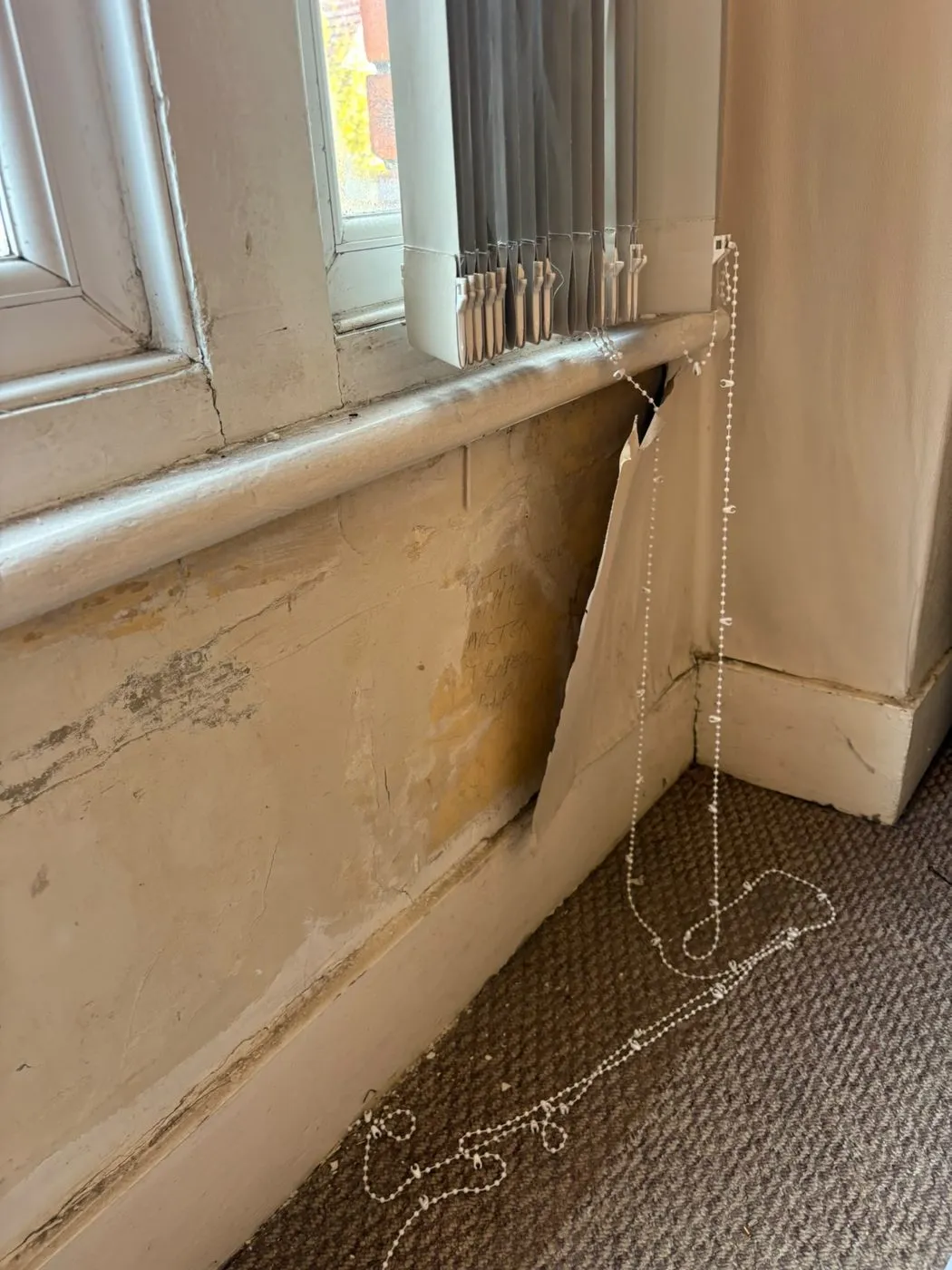
2. Penetrating damp. Water gets in from outside through defects such as blocked or leaking gutters and downpipes, failed window seals, cracked render, defective pointing or damaged sills. It often appears as patches that get worse after heavy rain, typically around windows, as in the photo above.
3. Plumbing leaks. Leaking pipes, radiator valves, waste pipes, shower trays or sealant can soak walls, floors and ceilings, often well away from where the leak actually is. Water travels along pipes and joists before it shows.
4. Rising damp. Moisture rising from the ground into walls, usually limited to around the first metre above floor level. It’s often blamed for damp when the real cause is something else, such as high external ground levels, bridged damp-proof courses, leaks or condensation.
How we investigate
Moisture readings
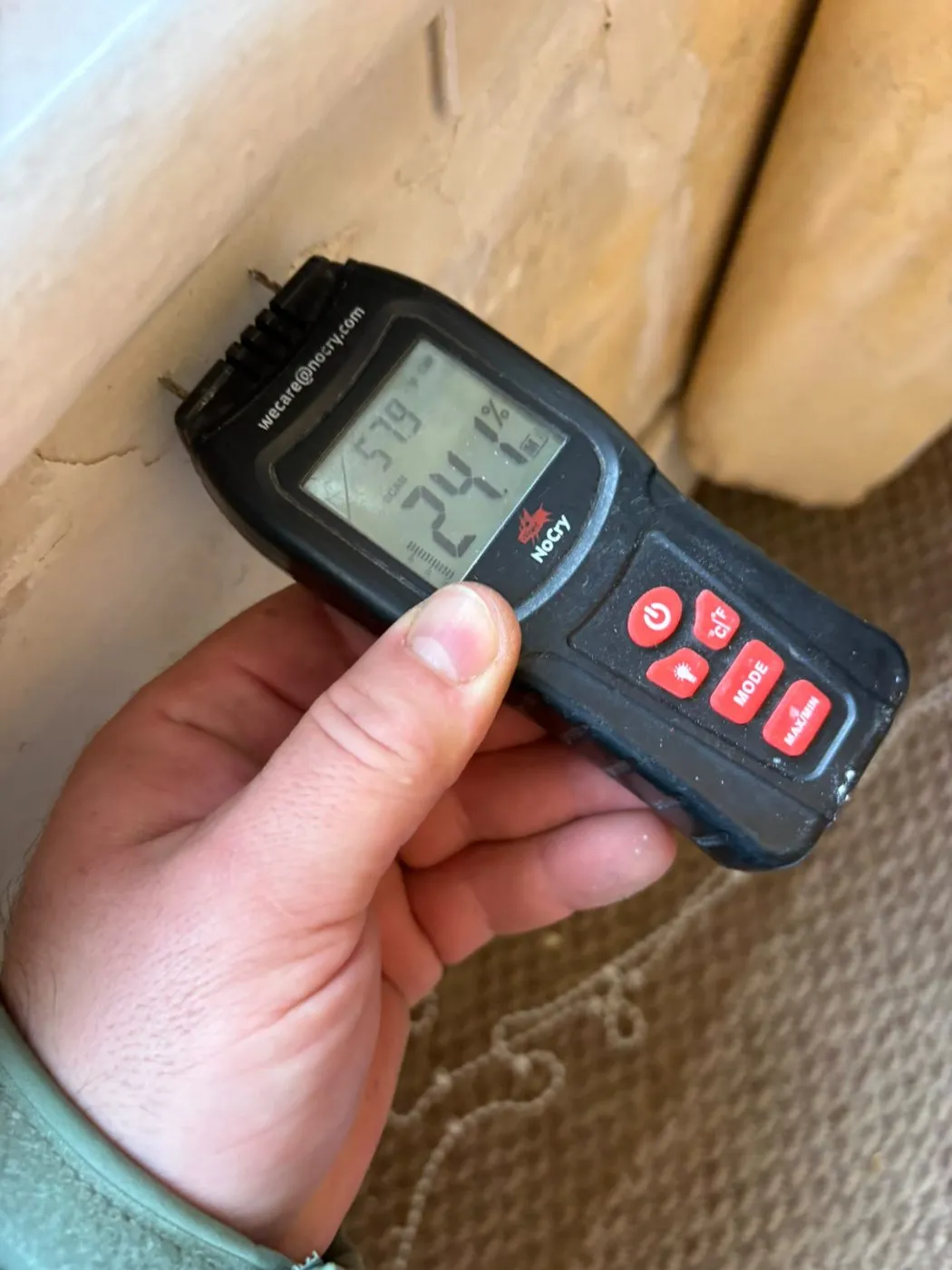
We use moisture meters to map how wet a wall is, taking readings across the area, at different heights and in dry areas for comparison. The pattern tells us a lot:
- readings highest beneath a window or around a sill point to water coming in from outside
- a tight wet patch near pipework suggests a leak
- dampness on cold surfaces with no clear source points to condensation
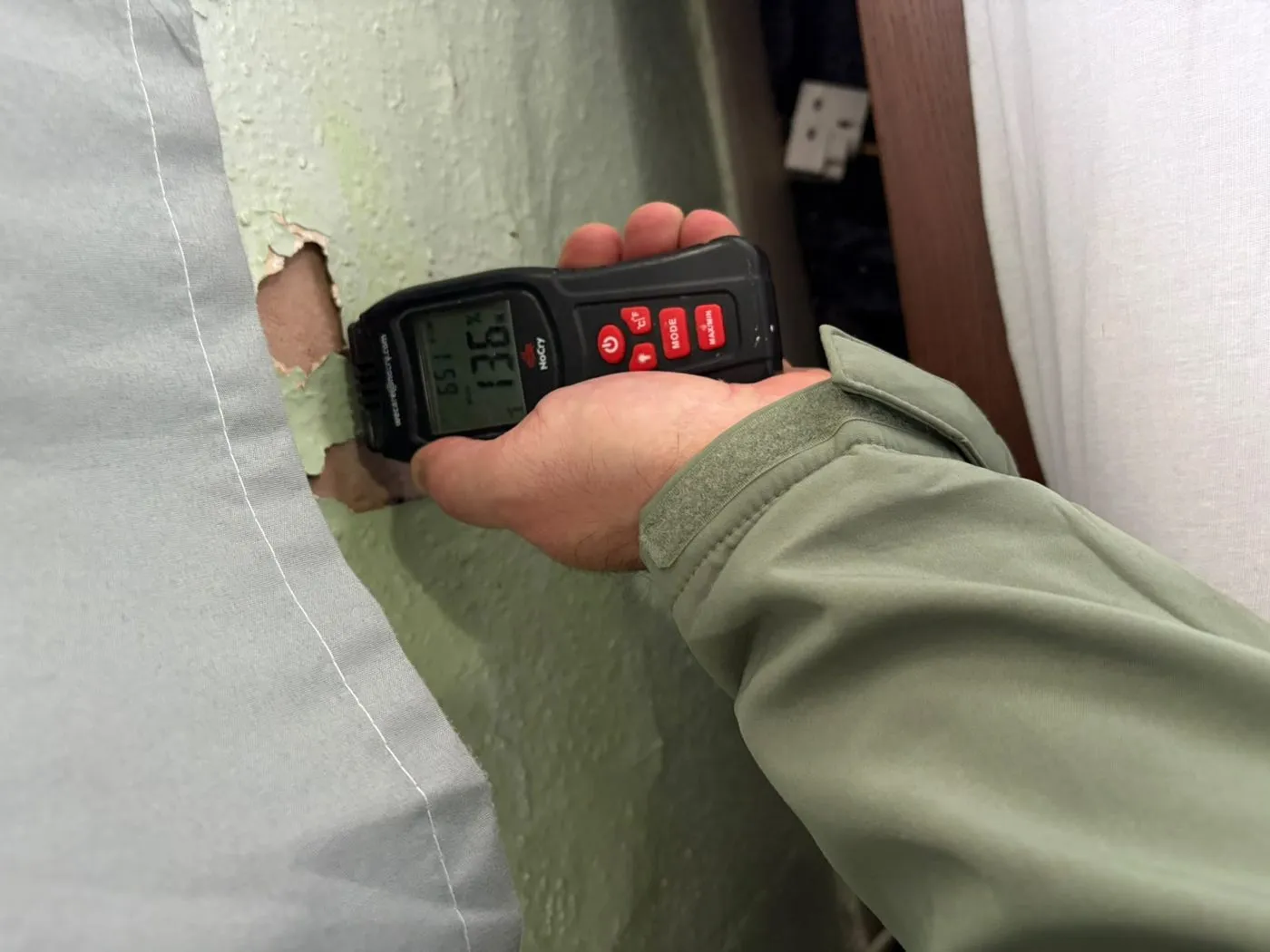
Flaking, blistering paint like this is a common sign of moisture in the wall behind it. We take readings at several points around the affected area and compare them, so we can see where the wall is wettest and which way the moisture is spreading.
Meter readings on plaster and masonry are a guide rather than an exact moisture content, so we always interpret them alongside what we can see. A single high reading is never the whole story.
Checking the outside
Gutters, downpipes, window frames and sills, pointing, render and ground levels are checked for anywhere water could be getting in. Many “damp walls” are fixed from the outside.
Checking the plumbing
We look for leaks at pipes, valves, radiators, toilets, baths and showers, including the sealant around baths and showers, which is a common source of leaks into ceilings below.
Looking at ventilation and lifestyle
Are the extractor fans working and powerful enough? Are windows opened? Is washing dried indoors? Condensation problems are often solved with better ventilation, such as properly sized extractor fans or whole-house ventilation.
Fix the cause, then the damage
Once the source is found and fixed, the repair can begin: removing blown plaster, letting the wall dry out, re-plastering with suitable materials, and redecorating. Repairing the finish before the cause is fixed just wastes money. The damage will come back.
Landlords: don’t delay
Damp and mould in rented homes is a serious health and legal issue. Landlords are expected to investigate promptly and put things right, and inadequate responses can lead to enforcement action and claims. A documented investigation, with readings, photos and the cause identified, protects both the tenant and the landlord. Our damp and mould guide for landlords explains your responsibilities.
Book a damp and leak investigation
Our maintenance team investigates damp and leaks for homeowners, landlords and letting agents. We find the cause, fix it, and repair the damage, with photos and readings sent to you at every stage. See our property maintenance service and plumbing service.
We cover London and Essex, with our own engineers working every day across Chigwell, Loughton, Buckhurst Hill, Woodford, Ilford, Romford, Brentwood and Epping. Call 020 8227 0035 or book an investigation.