

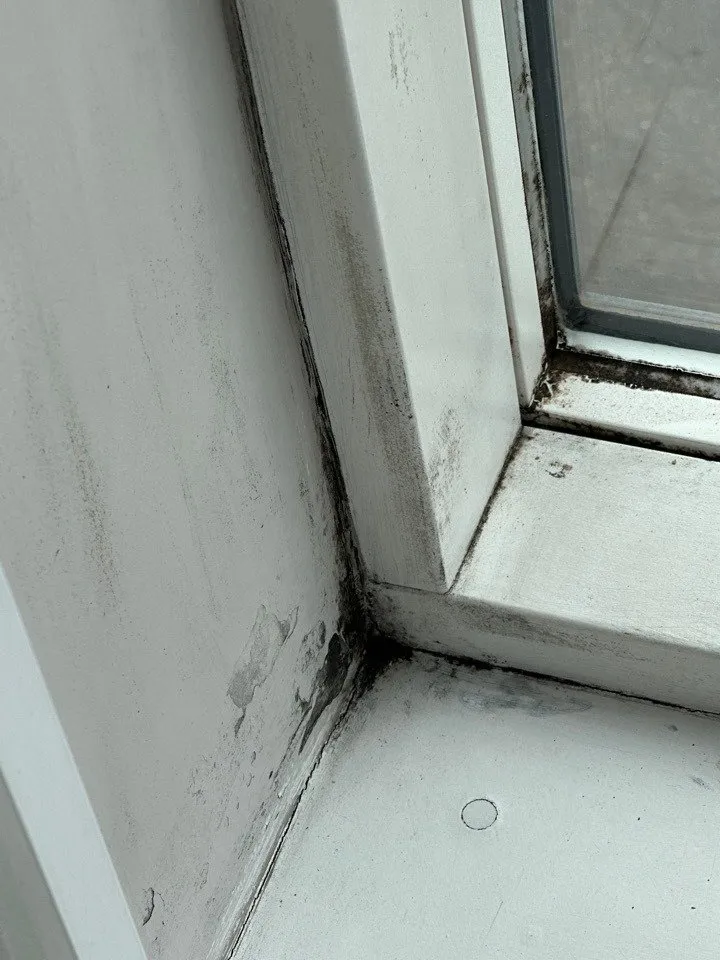
Black spots creeping along the edge of the window frame, into the corners of the reveal and across the sill are one of the most common things we’re asked to look at, especially in autumn and winter. It’s unsightly, it smells, and it can affect health. The good news is the cause is usually straightforward to identify.
Why mould grows around windows
In most cases, mould around windows is caused by condensation, not a leak:
- Everyday activities like cooking, showering, drying clothes and even breathing put a lot of moisture into the air.
- Windows and the walls around them (the reveals) are usually the coldest surfaces in the room.
- When warm, moist air meets those cold surfaces, it condenses into water: streaming glass, damp frames and wet sills.
- Mould spores, which are present everywhere, grow wherever surfaces stay damp, especially in corners and edges where air doesn’t move, exactly where you see it in the photo above.
Things that make it worse include closed or blocked trickle vents, curtains or blinds trapping cold air against the glass, furniture pushed against outside walls, drying washing indoors and extractor fans that don’t work or aren’t used.
Is it always condensation?
Not always. Before treating it as condensation, we check:
- Does it get worse after rain? That suggests water getting in from outside, through failed seals around the frame, a damaged sill or defective pointing.
- Is the frame itself leaking? Look for water inside the frame, or failed seals between frame and wall.
- Are moisture readings high deep in the wall, rather than just on the surface? That points away from condensation.
Our damp and leak investigation guide explains how we work out the real cause.
Cleaning it safely
- wear gloves and, ideally, a mask, and open the window
- use a fungicidal mould wash, following the product instructions
- wipe away from you with disposable cloths, and bag them up afterwards
- don’t brush or dry-vacuum mould, which spreads the spores
- on painted surfaces, once fully dry, consider a mould-resistant paint
Cleaning removes what you can see, but if the moisture problem isn’t fixed, the mould will come back.
Stopping it coming back
- Open trickle vents and keep them open, especially in bedrooms
- Wipe condensation off glass and sills each morning
- Use extractor fans when cooking and showering, and make sure they actually work and are powerful enough. See our extractor fan guide
- Keep heating at a steady, low level rather than short bursts, so surfaces don’t stay cold
- Leave a gap between furniture and outside walls
- Dry washing outside or in a ventilated room, or use a vented or heat-pump dryer
- For persistent problems, consider continuous ventilation such as humidity-controlled fans or MVHR
Landlords: act quickly
Damp and mould in rented homes is a serious health issue, and landlords are expected to investigate promptly and put things right, not just tell tenants to open a window. A proper investigation with readings, photos and the cause identified, followed by the right fixes (such as working fans, ventilation improvements, or repairing leaks) protects both tenant and landlord. Our damp and mould guide for landlords explains your responsibilities.
Book a mould investigation
Our maintenance team investigates damp and mould, fixes the cause and repairs the damage, with photos and findings sent to you at each stage. See our property maintenance service.
We cover London and Essex, with our own engineers working every day across Chigwell, Loughton, Buckhurst Hill, Woodford, Ilford, Romford, Brentwood and Epping. Call 020 8227 0035 or book an investigation.