
As homes become more airtight through better windows, insulation and draught-proofing, ventilation becomes more important. Without it, moisture and stale air build up, leading to condensation, mould and poor air quality. MVHR, or mechanical ventilation with heat recovery, is one of the most effective ways to solve this without throwing heat out of the window.
How MVHR works
An MVHR system is a central unit, usually in a loft, cupboard or utility room, connected to ducts throughout the house:
- stale, moist air is extracted from kitchens, bathrooms, WCs and utility rooms
- fresh air is drawn in from outside, filtered, and supplied to living rooms and bedrooms
- a heat exchanger in the unit transfers most of the warmth from the outgoing air to the incoming air, without the two airflows mixing
The system runs continuously at a low, quiet background rate, with a boost mode for when you’re cooking or showering.
The benefits
- Less condensation and mould, because moisture is removed constantly at the source
- Better air quality, with filtered fresh air that reduces dust and pollen for allergy sufferers
- Lower heat loss than opening windows or relying on several separate extractor fans
- Quieter, tidier rooms, with no noisy fans in every bathroom and no trickle vents letting in street noise
Which homes is it right for?
MVHR works best in well-sealed homes: new builds, extensions and deep renovations where airtightness is good. In a draughty older house, much of the air leaks through gaps instead of going through the heat exchanger, so the benefit is smaller. There, better extractor fans or a different whole-house system may make more sense.
Plan it early
MVHR needs duct runs to every room, so it’s much easier to install during a renovation or extension, before ceilings are boarded:
- duct routes through ceiling voids, floors or boxing
- space for the unit, with access for filter changes
- outside terminals for the intake and exhaust, kept apart
- a power supply and controls
- balancing and commissioning, setting the airflow in each room to match the design so the system runs quietly and efficiently
A poorly designed or unbalanced system can be noisy or ineffective. Design and commissioning matter as much as the unit itself.
Servicing and maintenance
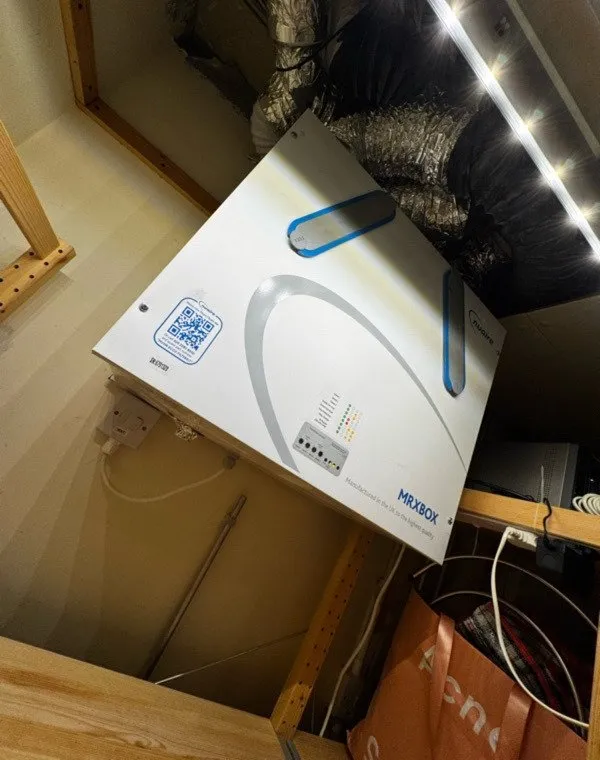
MVHR is low maintenance, but it isn’t no maintenance. The filters need cleaning or replacing regularly, typically every 6 to 12 months depending on the unit and location. Blocked filters reduce airflow and efficiency, and many units show a filter reminder.
A periodic MVHR service typically includes:
- replacing the filters with the correct ones for the unit
- checking the fans and heat exchanger are clean and working properly
- checking the condensate drain is clear, since the heat exchanger produces condensation that must drain away
- checking ducts and connections for damage, kinks or loose joints, especially in lofts where ducts can get knocked
- checking controls and boost settings are working, and airflows are as designed
- clearing the outside terminals of leaves, cobwebs and debris
Units are often tucked away in lofts and cupboards, like the one above, so they’re easy to forget. If the system has become noisy, the boost doesn’t seem to work, or condensation and mould are returning, it’s probably overdue a service.
Get advice
We install ventilation and MVHR as part of renovations, extensions and refurbishments, alongside the electrical and building work. See our ventilation and MVHR service and our damp and mould guide for landlords. We cover London and Essex, with our own engineers working every day across Chigwell, Loughton, Buckhurst Hill, Woodford, Ilford, Romford, Brentwood and Epping. Call 020 8227 0035 or request a quote.