
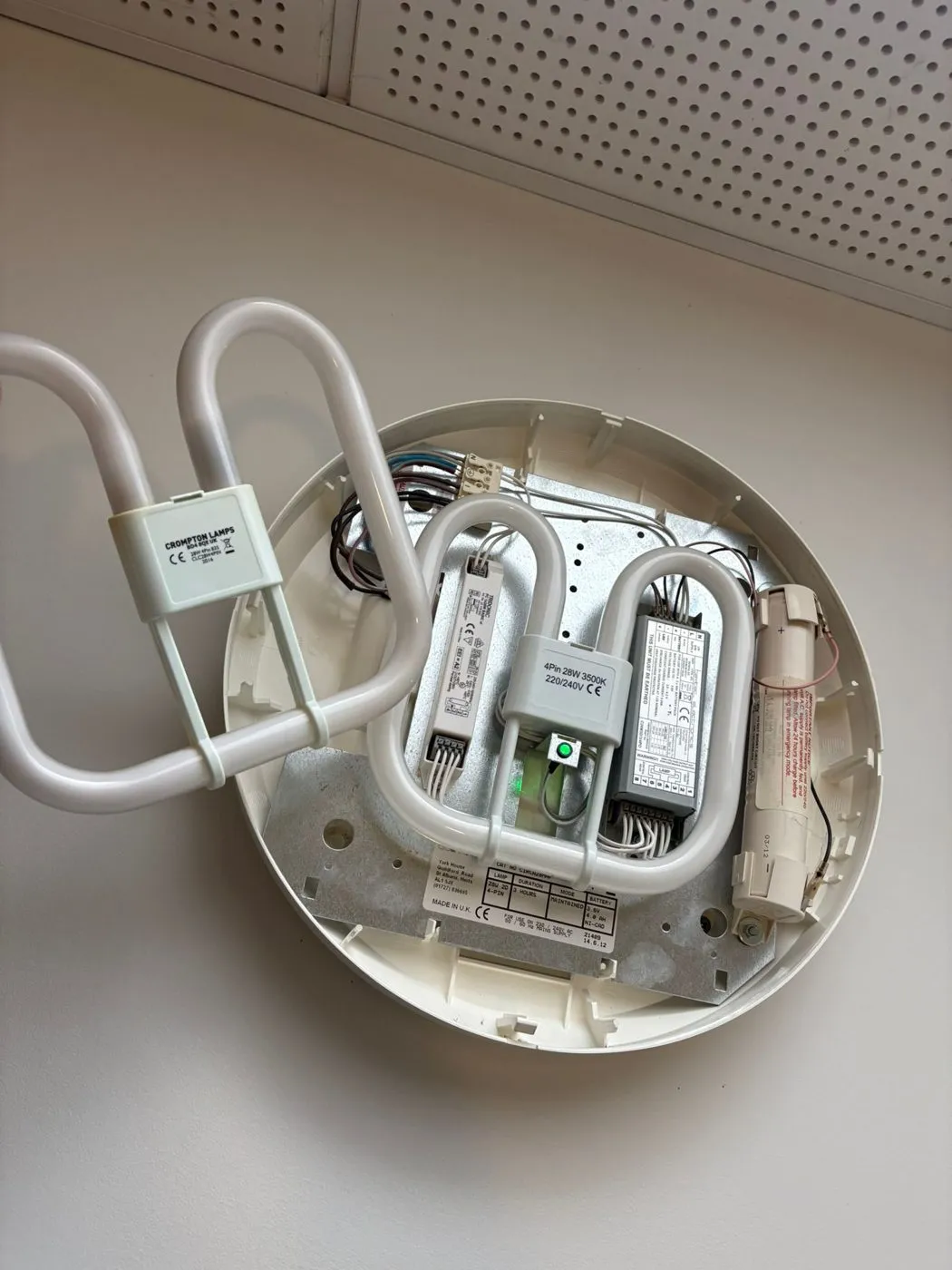
Many blocks of flats, offices and communal areas still use round ceiling fittings with 2D fluorescent lamps, the flat, double-loop tubes in the photos below. They were the standard choice for years, but they flicker, fail regularly, and use far more energy than LED. Fluorescent lamps are also being phased out of sale in the UK, so replacements are getting harder to find. Upgrading to LED is the obvious next step.
Two ways to upgrade
1. Replace the whole fitting with a new LED luminaire. This is usually the best long-term option: a modern fitting comes with its own LED driver, and often with built-in emergency backup, sensors or dimming.
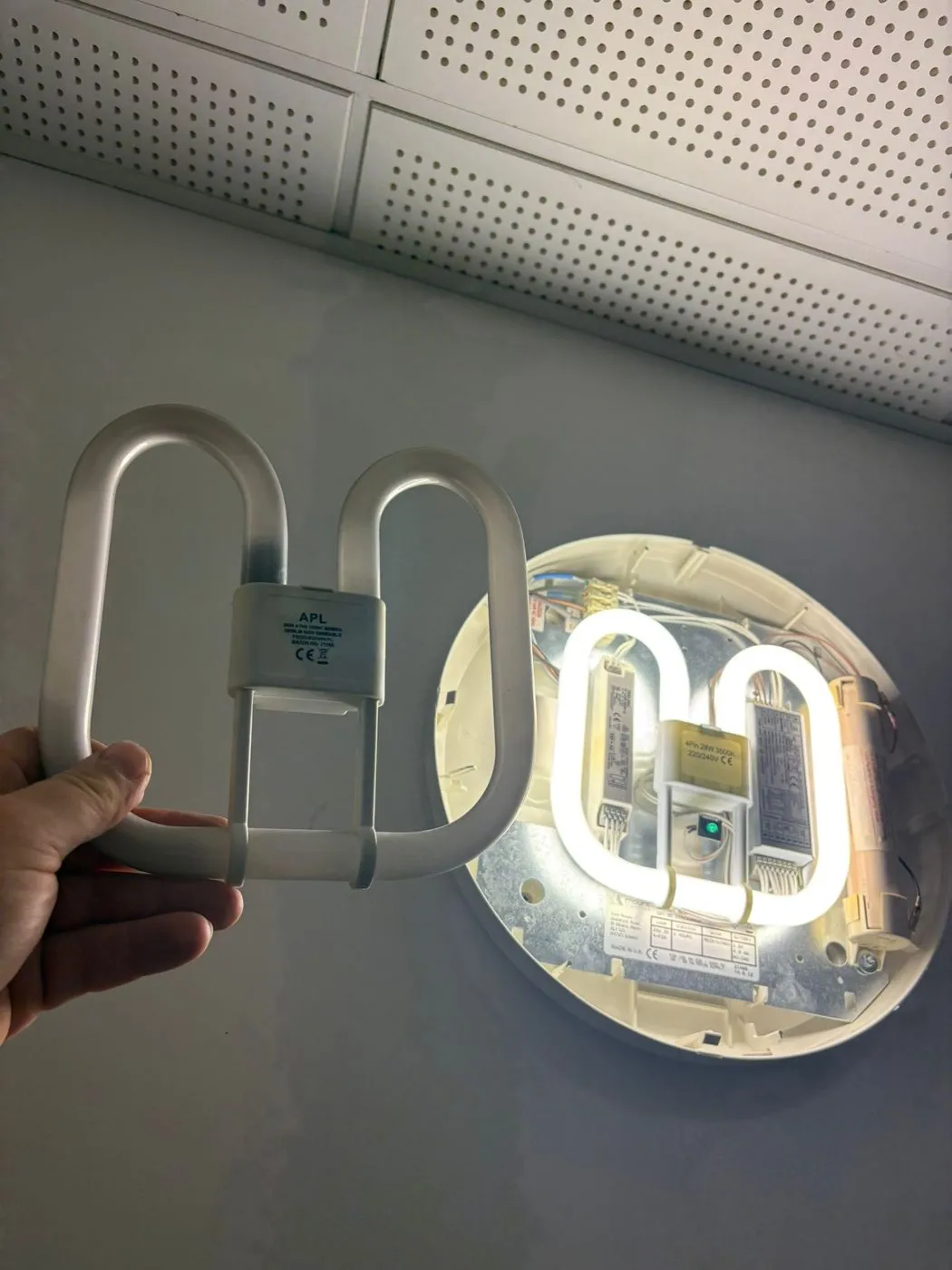
2. Re-lamp the existing fitting with an LED version of the 2D lamp, where the fitting and its control gear are suitable. Some LED 2D lamps work with the existing gear, while others need the fitting rewired to bypass it. This can be a cost-effective option when the fittings are in good condition.
The right choice depends on the age and condition of the fittings, how many there are, and whether they include emergency lighting.
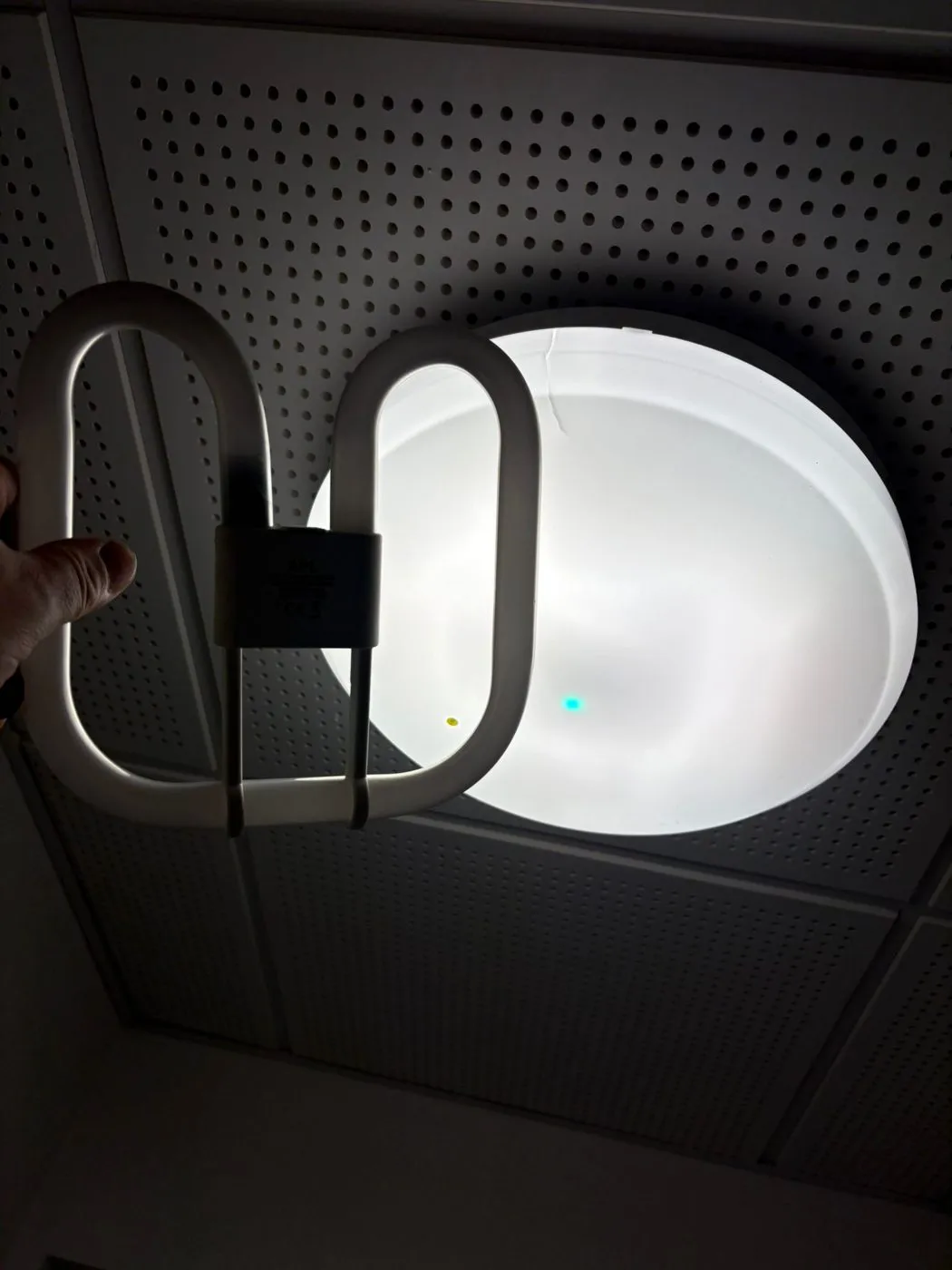
On this job, we fitted an LED 2D lamp in place of the old fluorescent one, and tested the fitting in emergency mode afterwards to confirm the backup still worked.
Take extra care with emergency fittings
Many communal fittings are emergency lights as well as everyday lights. The fitting in these photos is a maintained emergency luminaire: alongside the normal control gear, it has an emergency module and a backup battery (the long cylinder on the right), designed to keep the light working for three hours in a power cut, so people can find their way out.
That changes how the upgrade must be done:
- the replacement lamp must be compatible with the emergency module, or the emergency function may not work, or may give far less light than required
- the battery needs checking. Batteries in emergency fittings have a limited life and should be replaced when they fail their tests or reach the end of their service life
- after any work, the fitting must be tested in emergency mode, and the result recorded in the emergency lighting log
- in many cases, replacing the whole fitting with a new LED emergency luminaire is the simplest way to be sure it complies
Emergency lighting in communal areas is part of the building’s fire safety, and the responsible person must keep it maintained and tested. See our fire alarm and emergency lighting guide.
Benefits of LED in communal areas
- lower running costs, often a large saving on landlord electricity bills where lights run day and night
- far fewer failures, so fewer “light out” calls and visits
- instant, flicker-free light, safer on stairs and corridors
- sensor options, so lights in quiet areas only run when needed
- no more hunting for discontinued fluorescent lamps
For managing agents and freeholders
We survey communal lighting across a block, identify which fittings are emergency luminaires, recommend re-lamping or replacement fitting by fitting, and carry out the work with testing and certification. Combining the upgrade with your emergency lighting tests and a commercial EICR keeps visits to a minimum. See our electrical services.
We cover London and Essex, with our own engineers working every day across Chigwell, Loughton, Buckhurst Hill, Woodford, Ilford, Romford, Brentwood and Epping. Call 020 8227 0035 or request a quote.