

A bathroom floor that feels soft or springy underfoot, or tiles that crack and lift, is usually a sign of something serious underneath. On this job, years of water escaping around the toilet, bath and fittings had rotted the floor through. Here’s what we found and how we put it right.
What we found
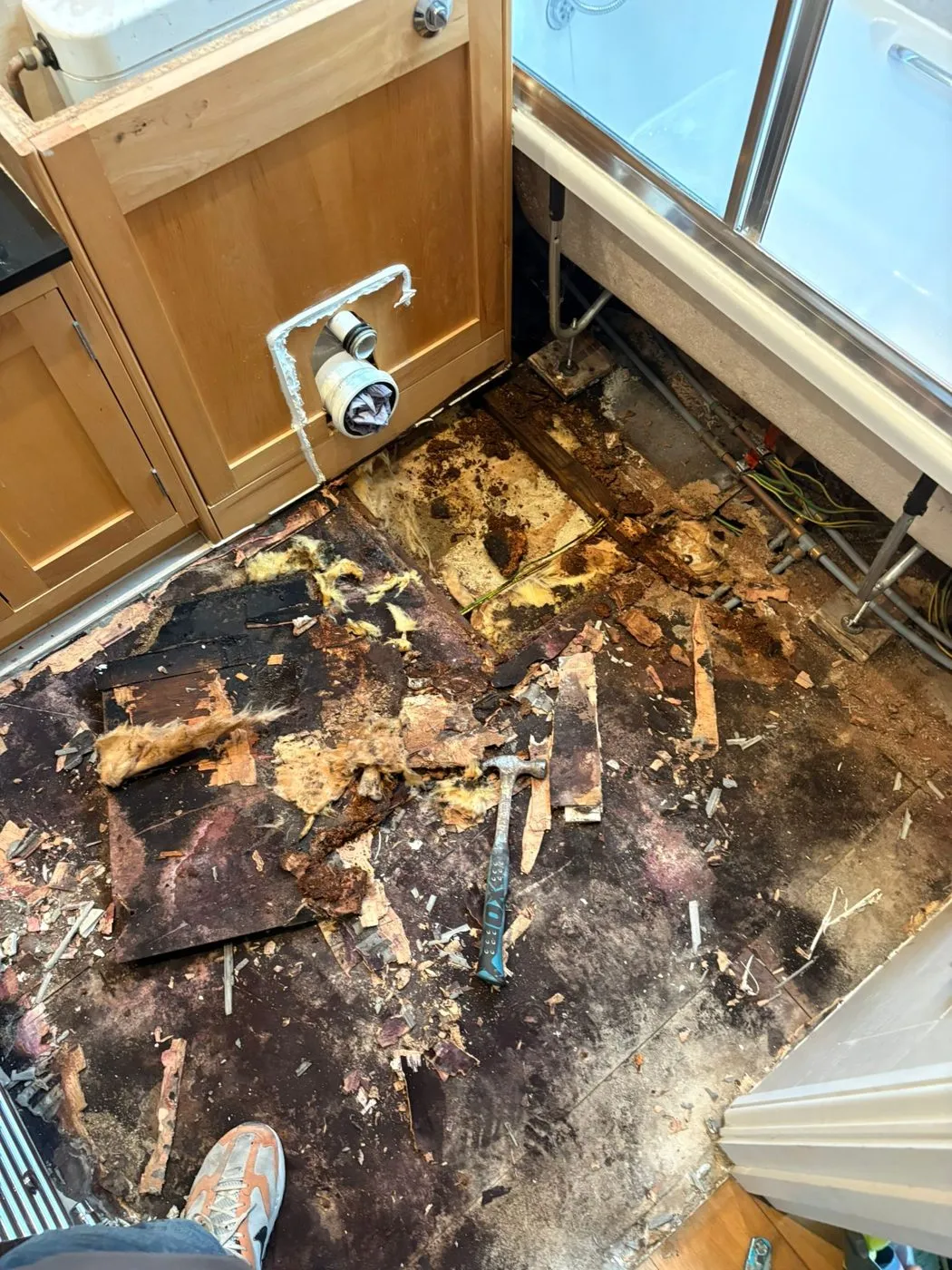
With the old floor covering lifted, the damage was extensive. The floorboards were dark, soft and crumbling, the insulation between the joists was soaked and stained, and parts of the floor had rotted right through around the toilet waste and under the bath. Water from small, slow leaks had been soaking in for a long time without anyone seeing it.
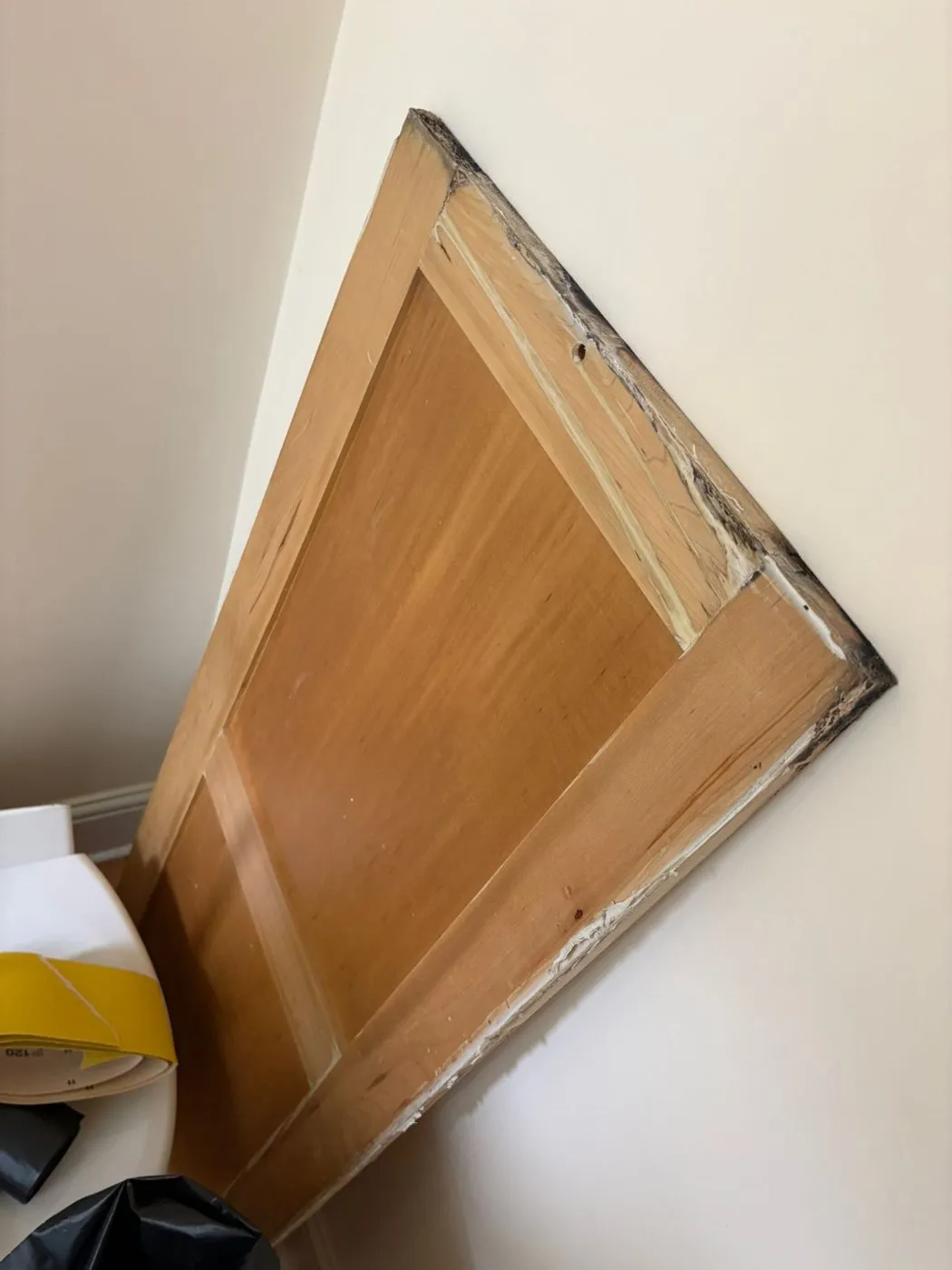
The water had also damaged the bathroom door. Its lower edge had absorbed water from the floor and was blackened and breaking down. It’s a reminder that hidden leaks spread further than you expect.
Stopping the water first
Before rebuilding anything, the source of the water had to be fixed. Here it was a leaking joint under the bath, which we repaired first. Other common culprits behind damage like this include a perished toilet pan connector (see our leaking toilet case study), failed sealant around the bath, and leaking waste or supply pipe joints. A new floor laid over an unfixed leak would rot again. Our damp and leak investigation guide explains how we trace sources.
Rebuilding the floor
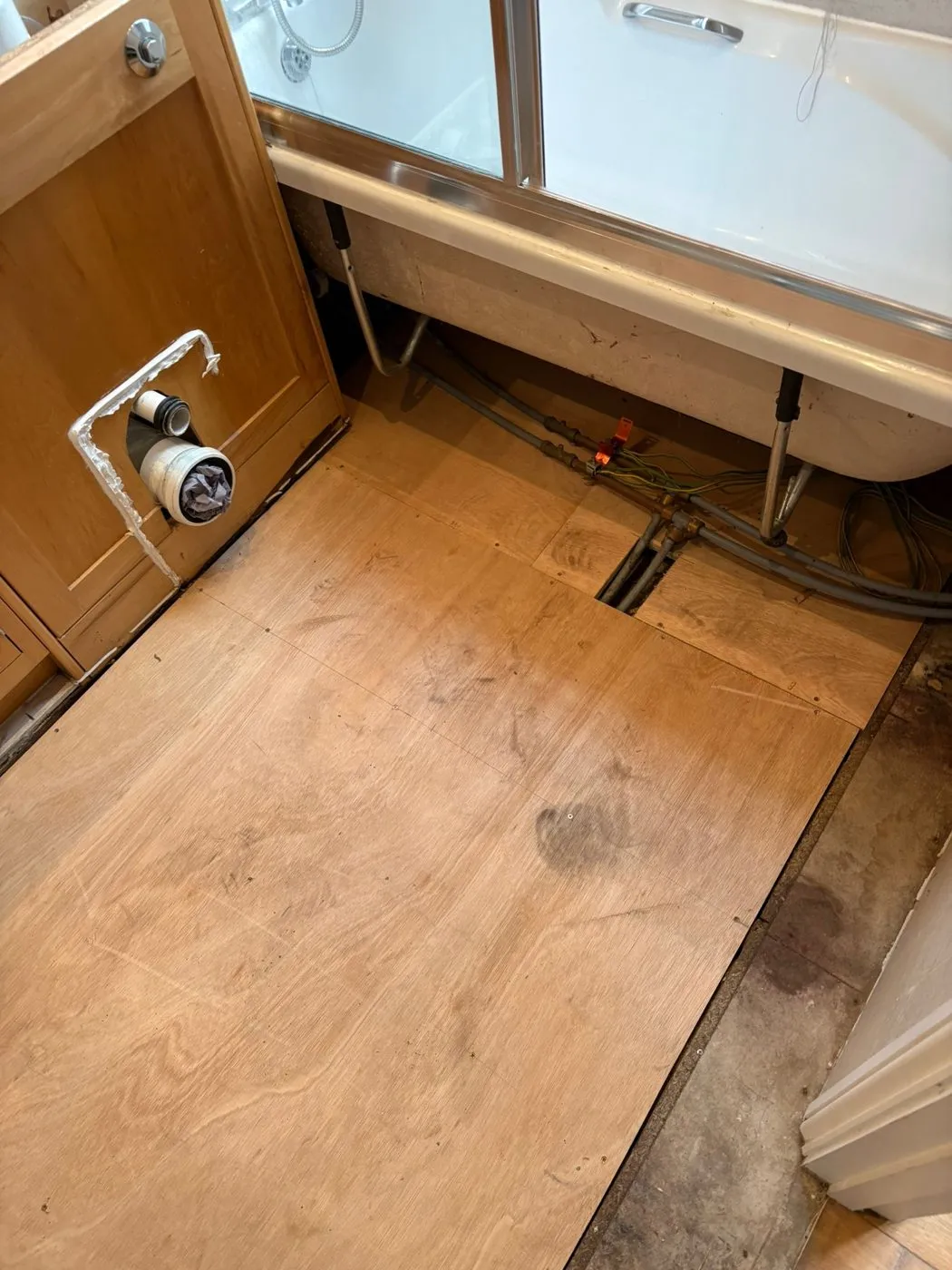
We removed all the rotten boards and damaged insulation, checked the joists beneath, and let everything dry. Then we laid a new structural plywood subfloor, screwed down firmly so it won’t flex. Flex is what cracks tiles and grout. A section was cut neatly around the bath pipework so the pipes can still be reached.
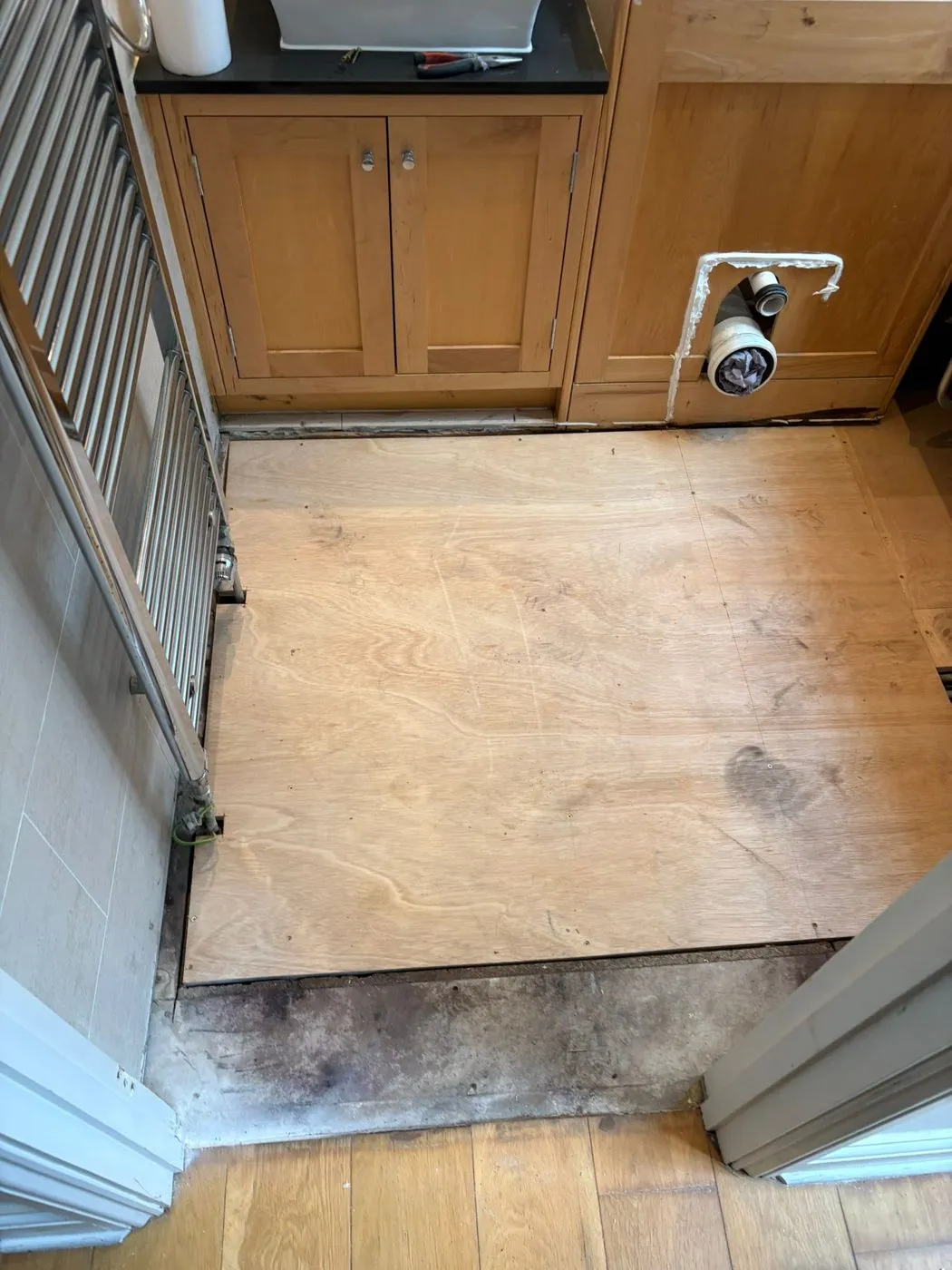
A flat, rigid subfloor is the foundation of a tiled bathroom floor that lasts.
Tiling
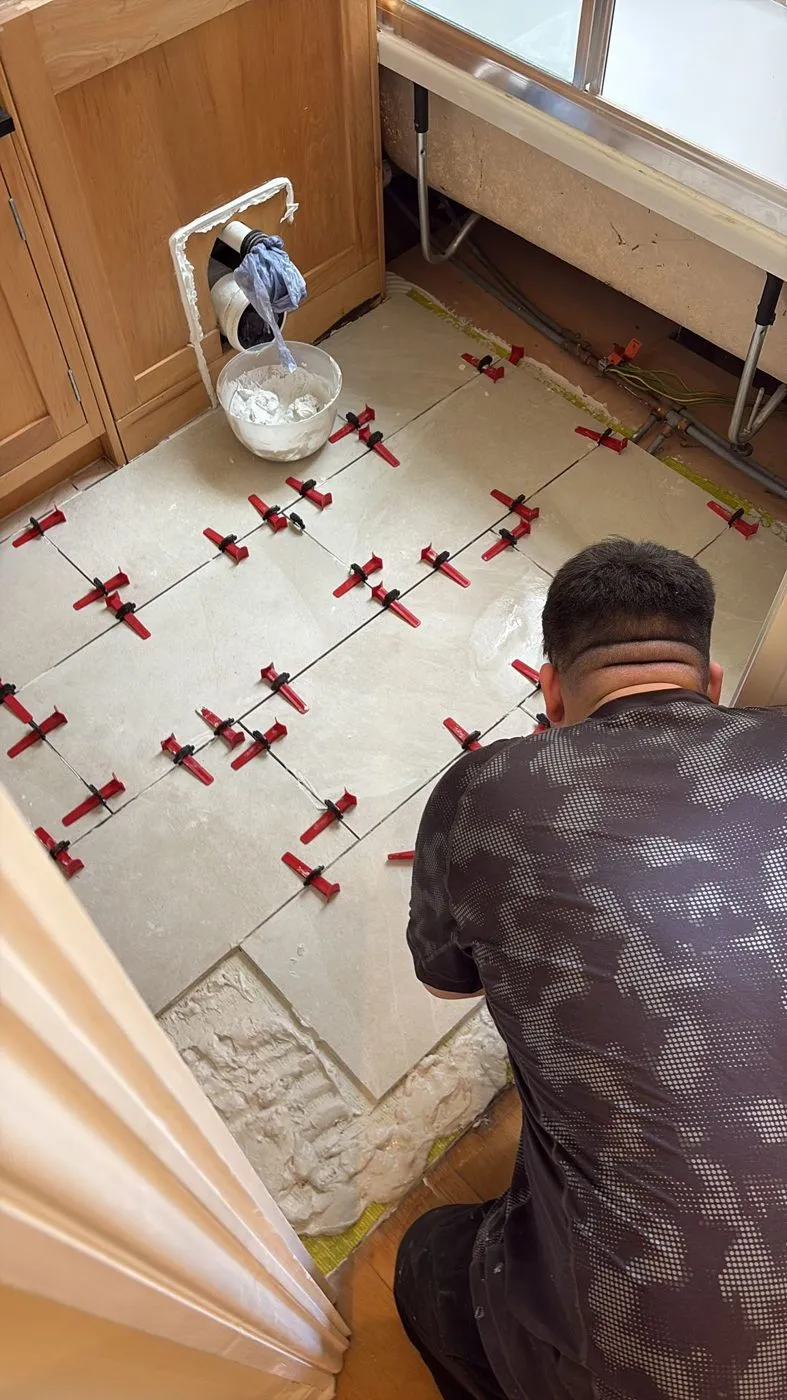
The floor was finished in large-format porcelain tiles, which are fully waterproof and very hard-wearing. Tile levelling clips (the red wedges) keep every tile perfectly flush with its neighbours while the adhesive sets, so there are no raised edges. Once set, the clips are removed and the floor is grouted and sealed at the edges.
Signs your bathroom floor may be damaged
- the floor feels soft, spongy or bouncy, especially around the toilet or bath
- tiles cracking, lifting or grout breaking up
- a musty smell that cleaning doesn’t remove
- staining or bubbling on the ceiling below
- swollen or blackened door bottoms, skirting or kitchen-style bathroom units
The earlier you catch it, the smaller the repair.
Landlords and agents
Rotten bathroom floors are often found at change of tenancy or after a complaint from the flat below. Fixing the leak early is far cheaper than replacing a floor. A clear record of what was found and done, with photos, also helps with insurance claims. See our property maintenance service and plumbing service.
We cover London and Essex, with our own engineers working every day across Chigwell, Loughton, Buckhurst Hill, Woodford, Ilford, Romford, Brentwood and Epping. Call 020 8227 0035 or request a quote.