

This job started with two complaints: a toilet that was leaking around the base and a basin that drained painfully slowly. Both are common, and both get worse the longer they’re left. Here’s what we found and how we fixed them in one visit.
The leaking toilet
What we found
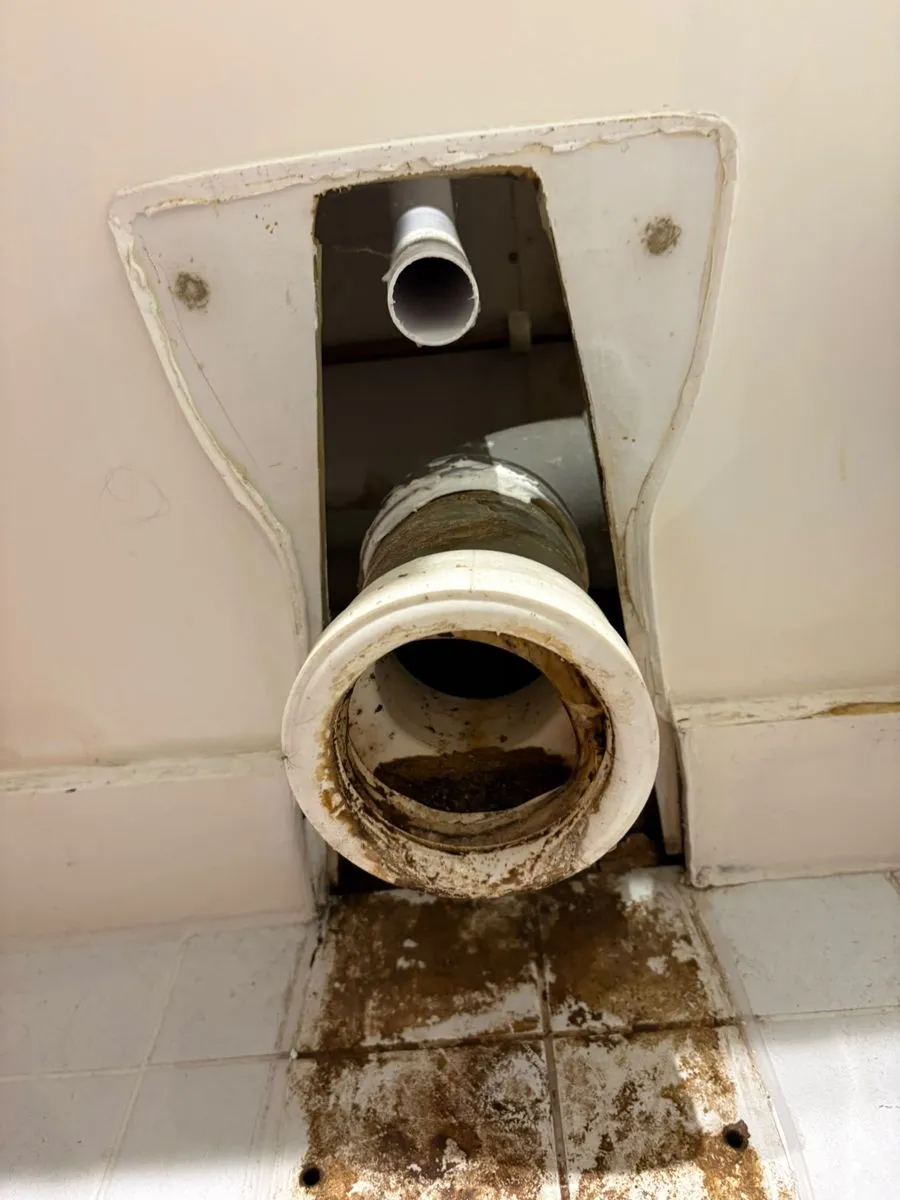
With the old toilet removed, the problem was obvious. The pan connector, the flexible fitting that joins the toilet outlet to the soil pipe, had perished and was no longer sealing. Waste water had been seeping out every time the toilet was flushed, staining the floor tiles and soaking into the surrounding area.
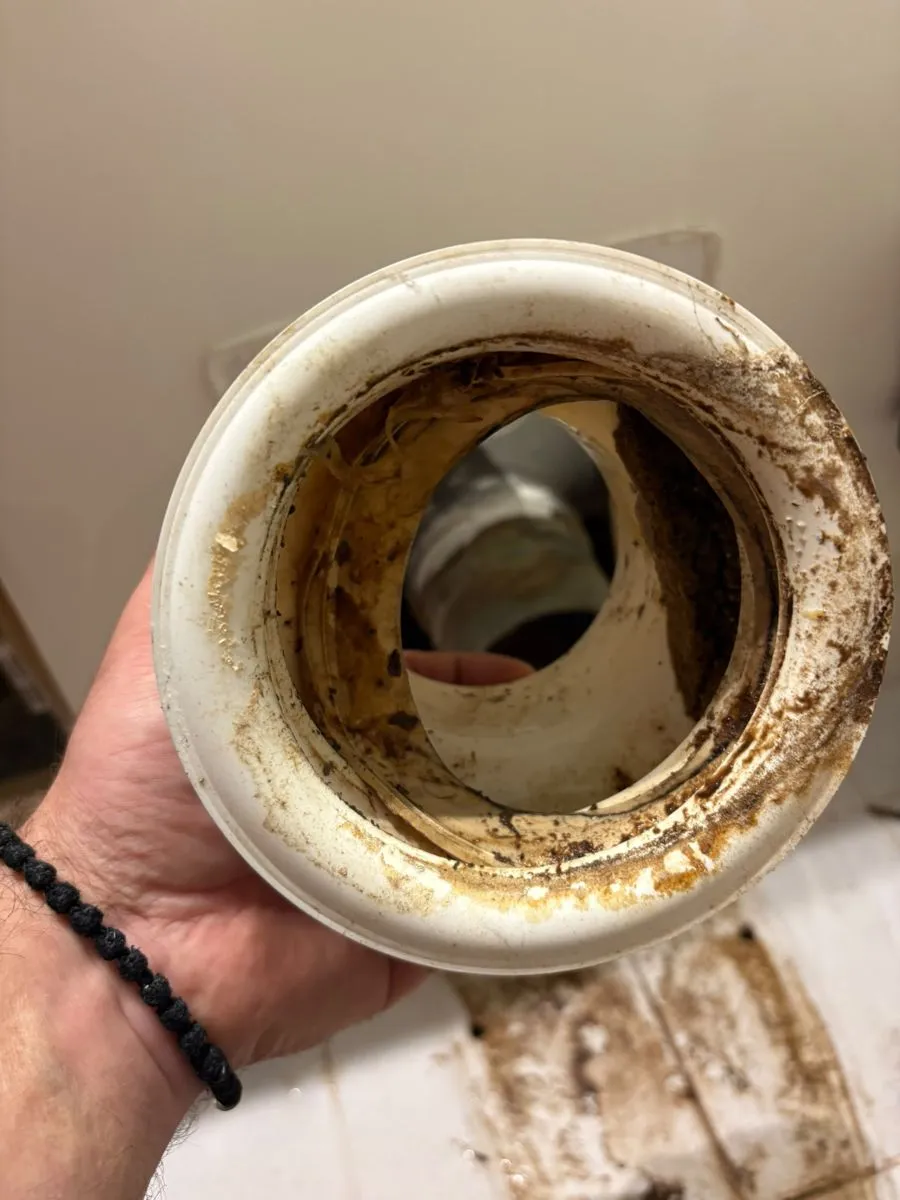
Inside, the old connector was heavily stained and crusted, with its seals hardened and no longer gripping. Connectors don’t last forever. Age, movement of the pan and the wrong type of connector all shorten their life.
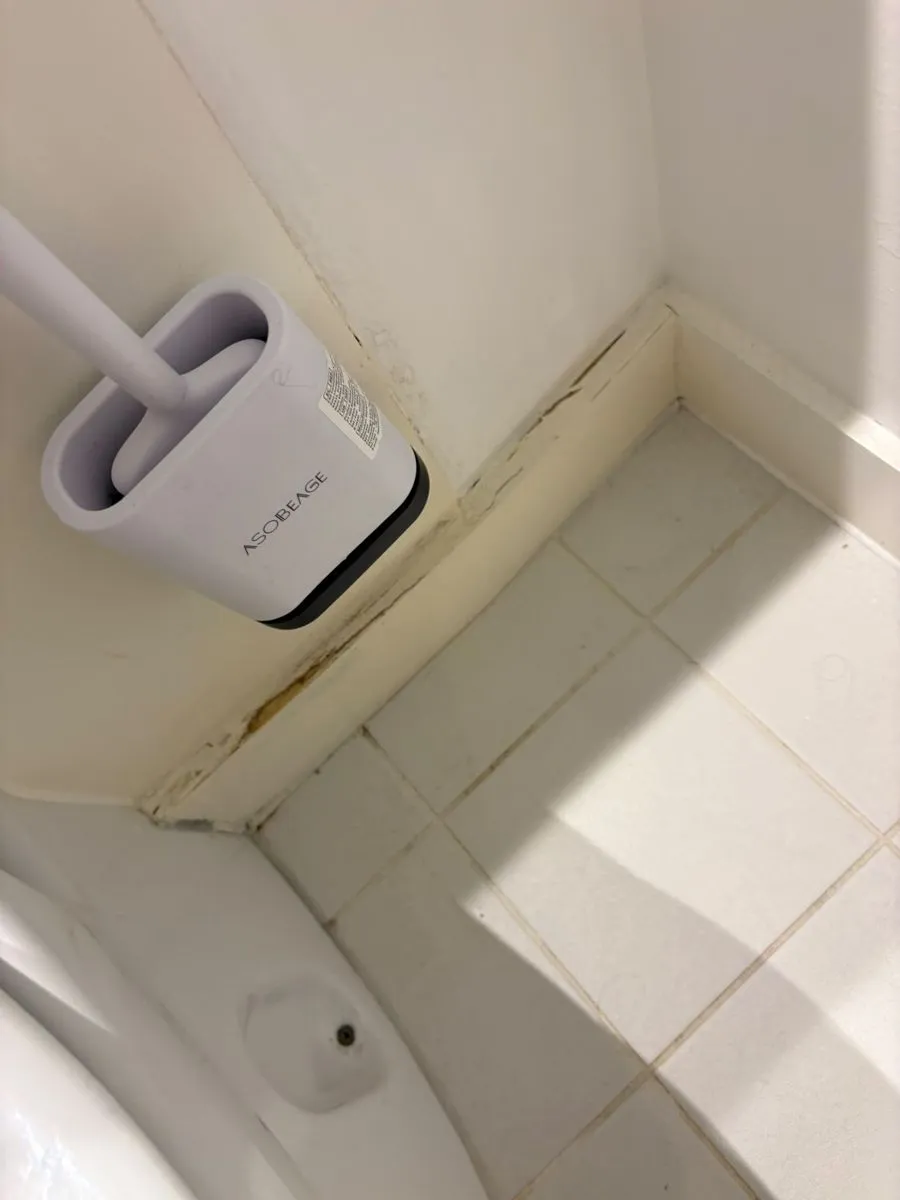
The leak had also marked the skirting and boxing beside the toilet. Left longer, this kind of slow leak can rot the floor and come through the ceiling below, which is a common and expensive problem in flats.
The fix
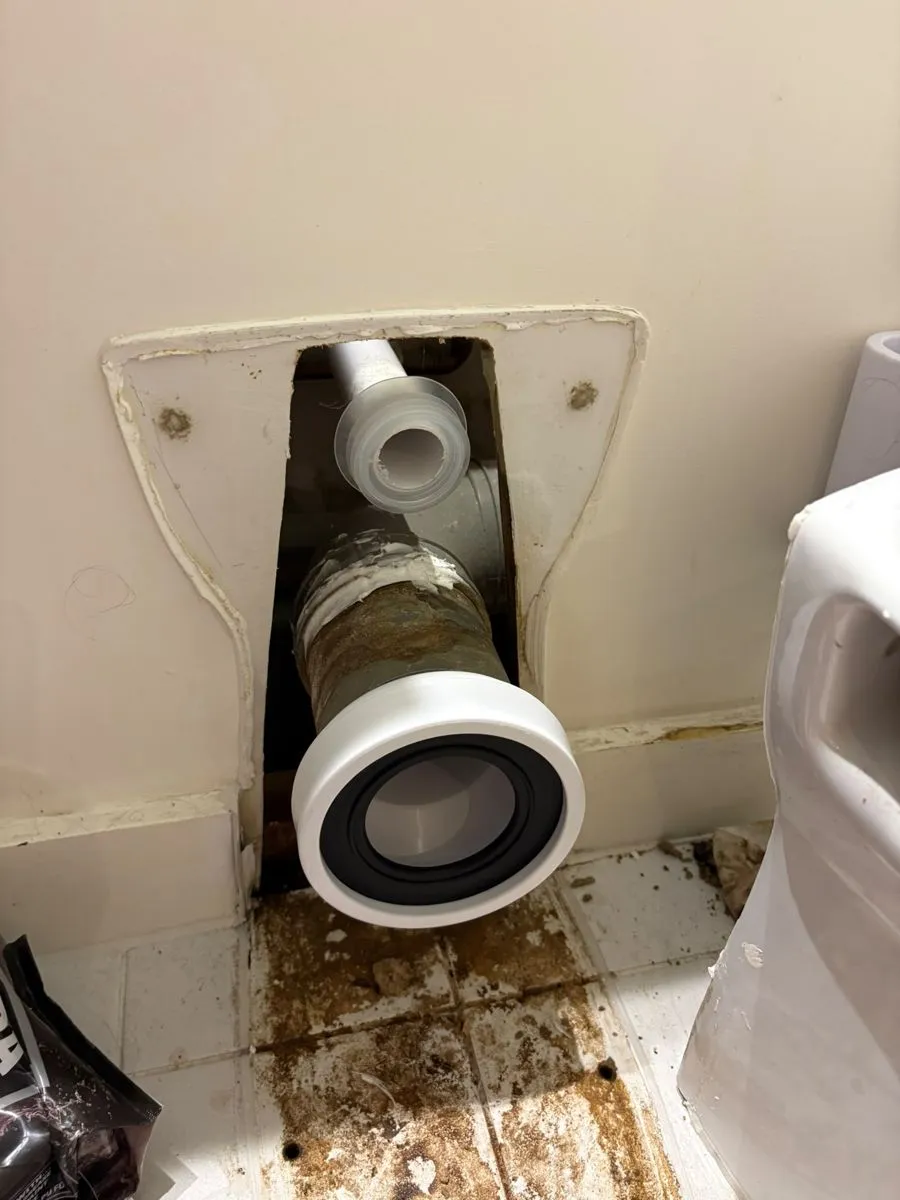
We:
- removed the old toilet and connector, and cleaned and disinfected the area
- checked the soil pipe and the floor for damage
- fitted a new pan connector sized correctly for the soil pipe and the new pan
- installed the new toilet, fixed securely to the floor so it can’t rock and stress the connector
- connected the water supply, and tested with repeated flushes to check for leaks
- sealed around the base neatly once we were sure it was watertight
The blocked basin
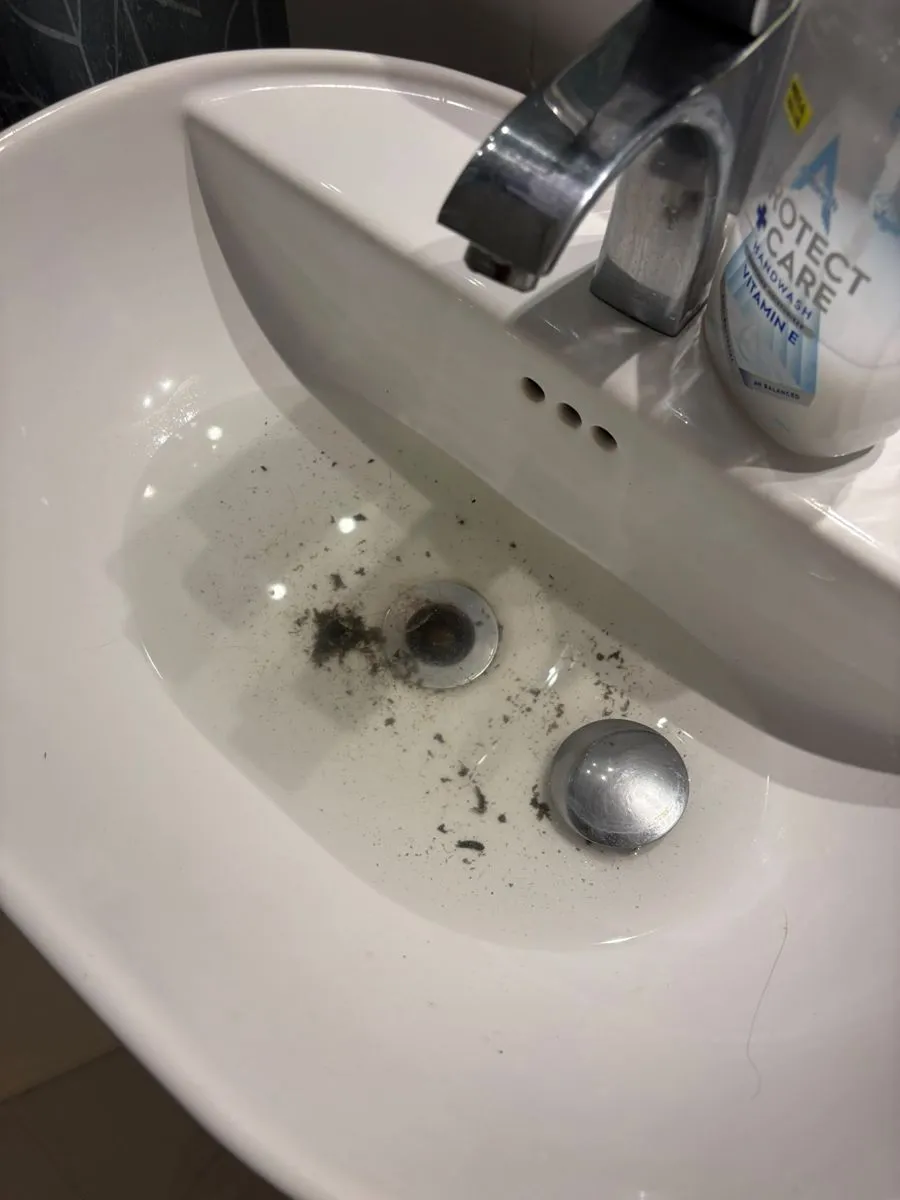
The basin was draining very slowly, leaving standing water with debris floating around the plug. Chemical drain cleaners often make little difference to this kind of blockage, because the problem sits right under the plug.
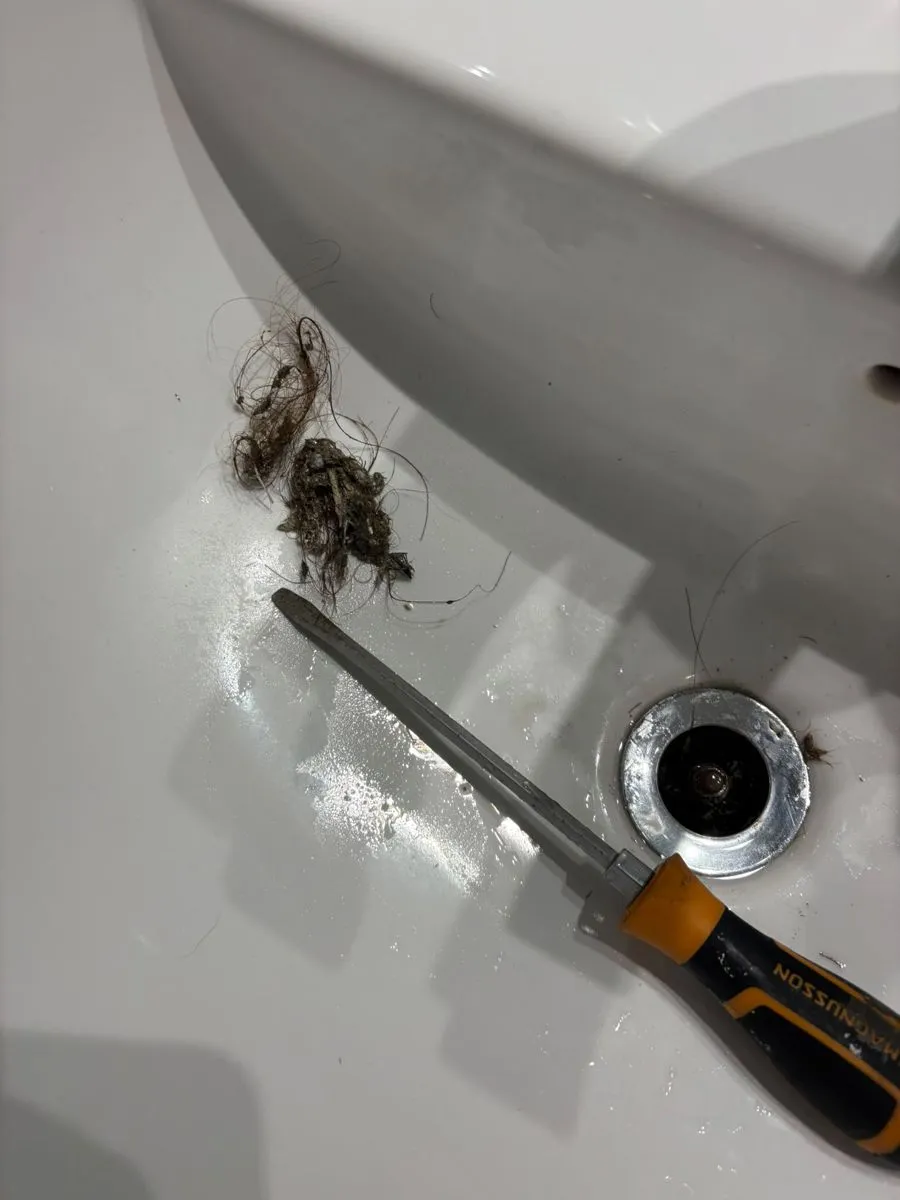
We removed the pop-up waste and pulled out a dense mat of hair bound together with soap and toothpaste residue, the classic basin blockage. We then cleaned the waste and trap.
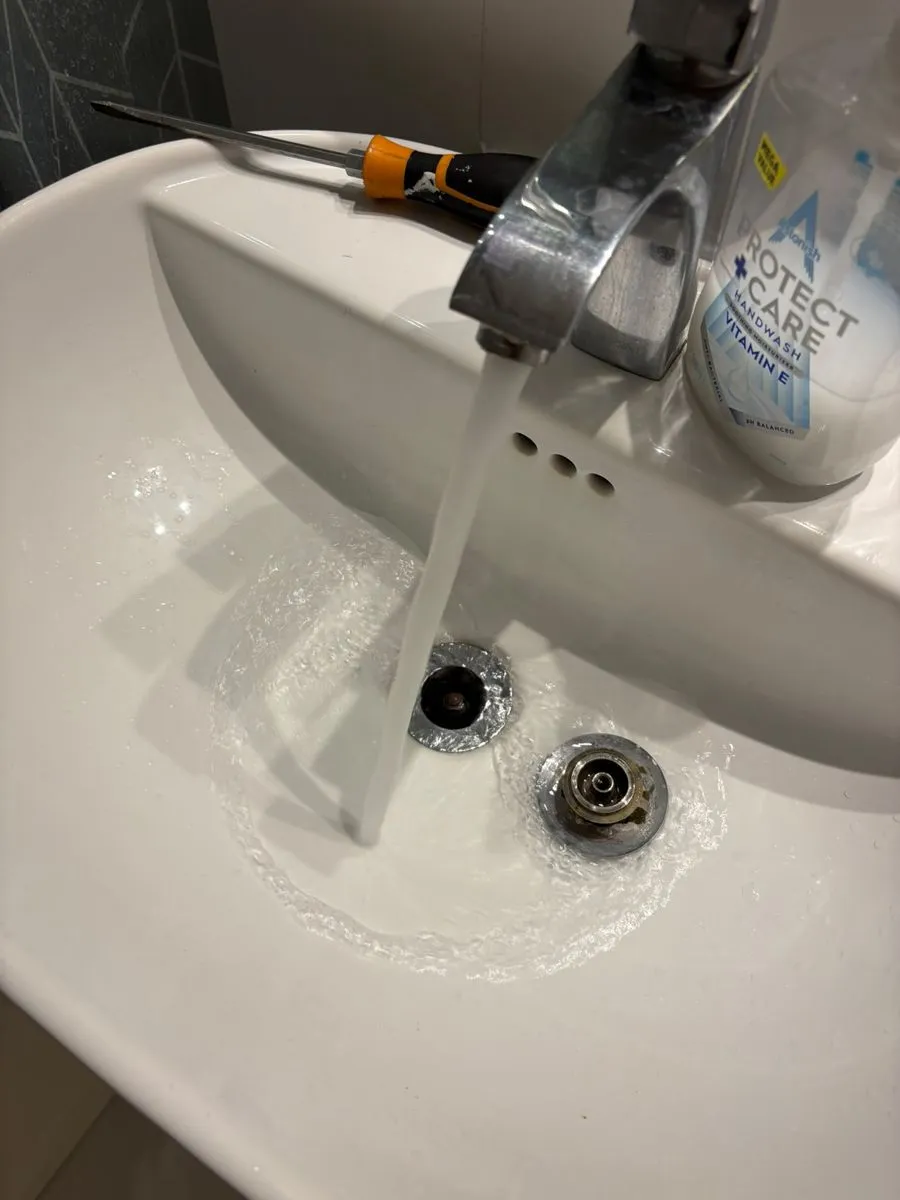
With the plug refitted, the basin drained freely again.
How to spot these problems early
Leaking toilet:
- water or staining around the base of the pan
- a toilet that rocks when you sit on it
- a smell around the toilet that doesn’t go away with cleaning
- marks on the ceiling of the room below
Slow basin or shower:
- water draining slower than it used to
- gurgling noises
- smells from the plughole
Pop-up plugs and shower wastes catch hair easily. Removing and cleaning them every few months, or using a hair catcher, prevents most blockages.
Landlords and agents
Leaking toilets and blocked wastes are among the most frequent tenant repair calls. Combining them into one visit, as here, keeps costs down. We send before-and-after photos so landlords can see exactly what was found. See our guides to running toilets and leaking cisterns and handyman repairs for landlords, and our plumbing and heating service.
We cover London and Essex, with our own engineers working every day across Chigwell, Loughton, Buckhurst Hill, Woodford, Ilford, Romford, Brentwood and Epping. Call 020 8227 0035 or request a quote.