

Solid wood worktops look warm and natural, but they need looking after. Over time, the protective oil wears away, and the wood picks up water marks, black stains around the sink and hob, scorches, scratches and a dull, dry look. The good news is that, unlike laminate, a solid wood worktop can almost always be resurfaced rather than replaced, at a fraction of the cost.
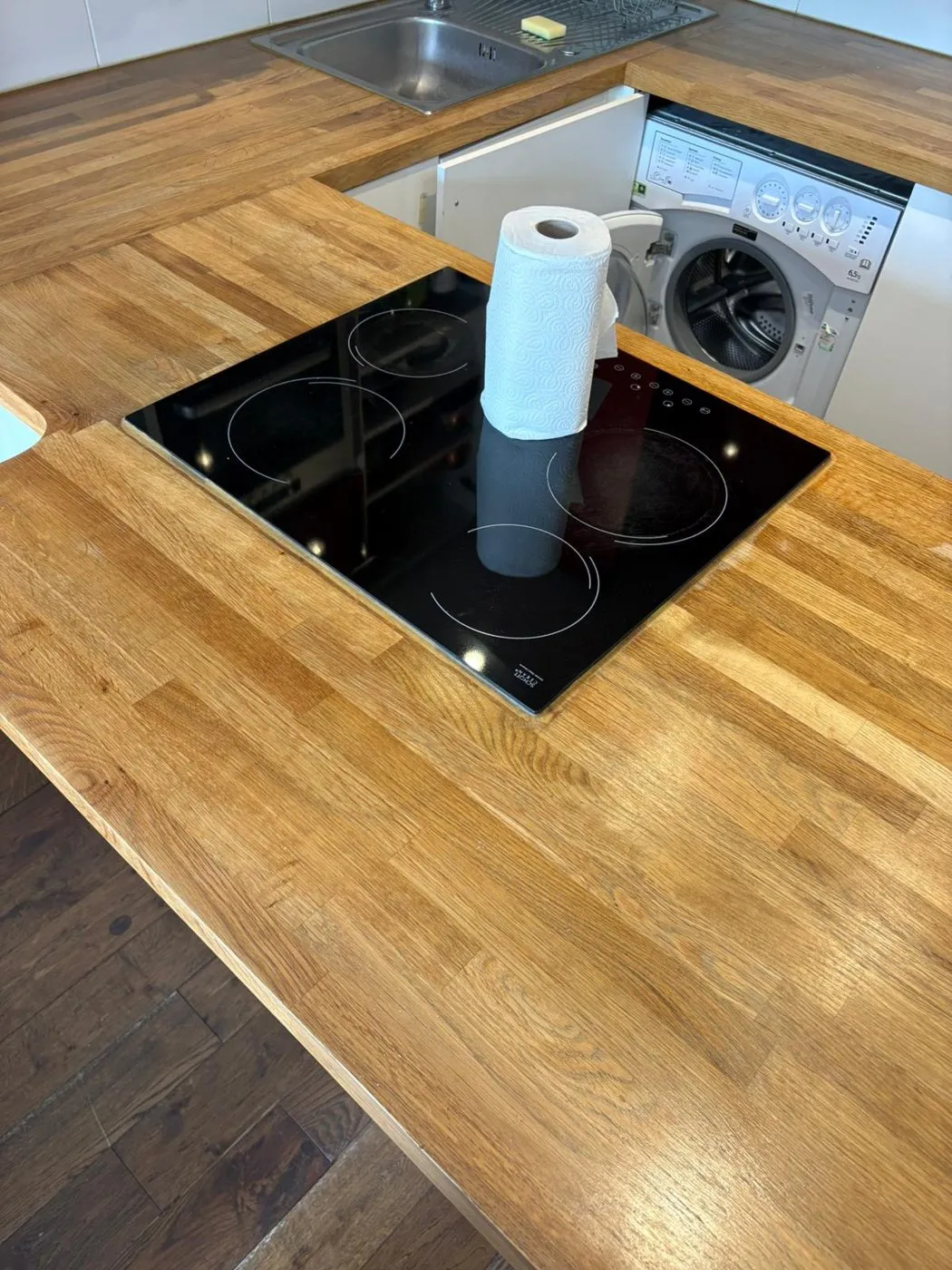
Why wooden worktops go downhill
- The oil finish wears through, especially around the sink, kettle and hob, so the bare wood soaks up water
- Water sitting in joints and edges turns the oak dark or black
- Heat and pans leave scorch rings near the hob
- Knives, grit and everyday use leave scratches and dents
- Spills of wine, oil and coffee soak into unprotected timber
Sanding back
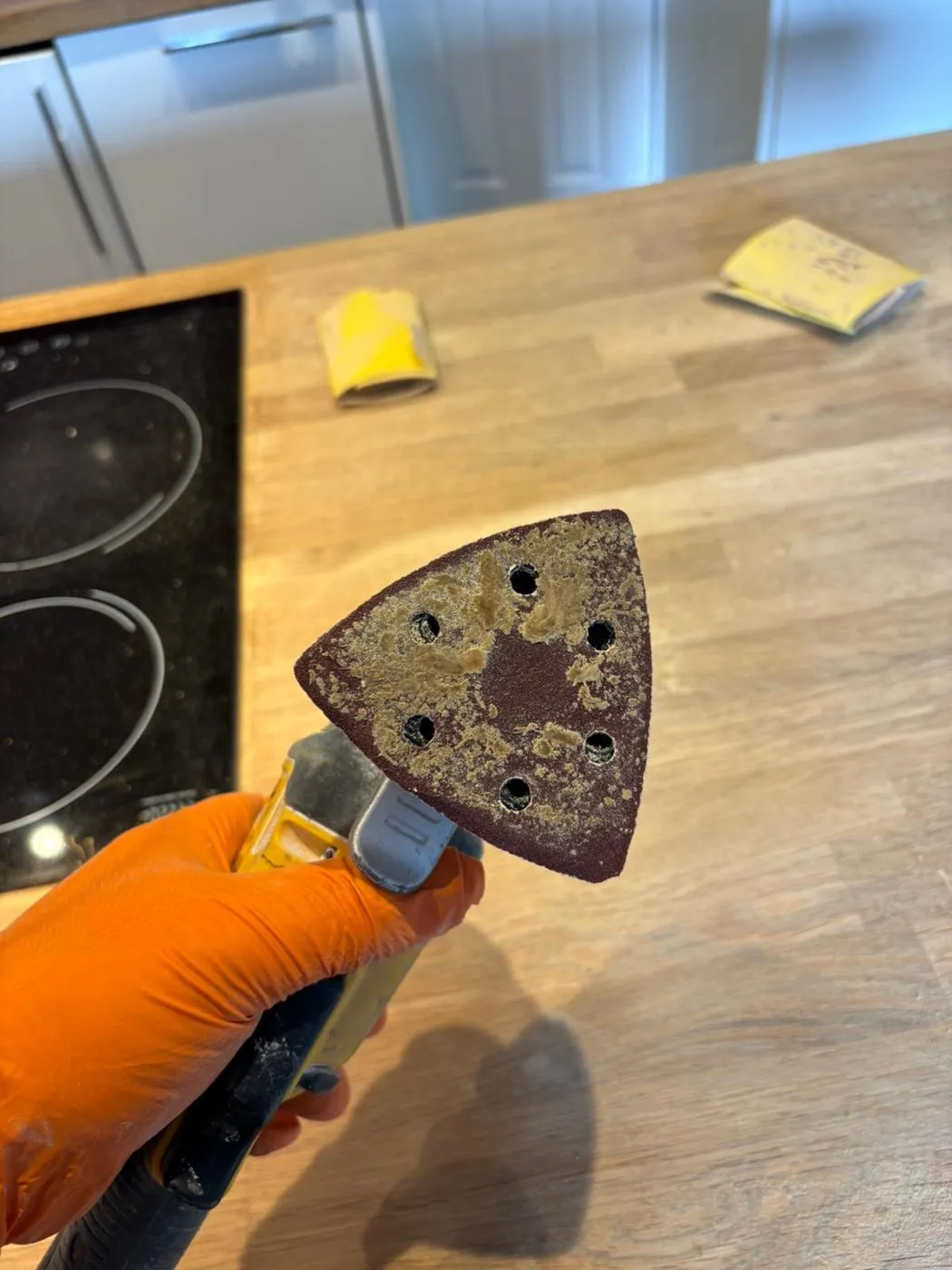
The first job is to sand away the old, failed finish and the surface damage. We work through progressively finer grits, so the surface ends up smooth and even. As the sanding pad above shows, a surprising amount of old oil, grime and stained timber comes off. Corners and the edges around the hob and sink are sanded carefully by hand or with a detail sander.
Deeper stains may need extra work, and very deep black water stains can’t always be removed completely, because the water has gone deep into the wood. We’ll be clear about what to expect before starting.
Re-oiling
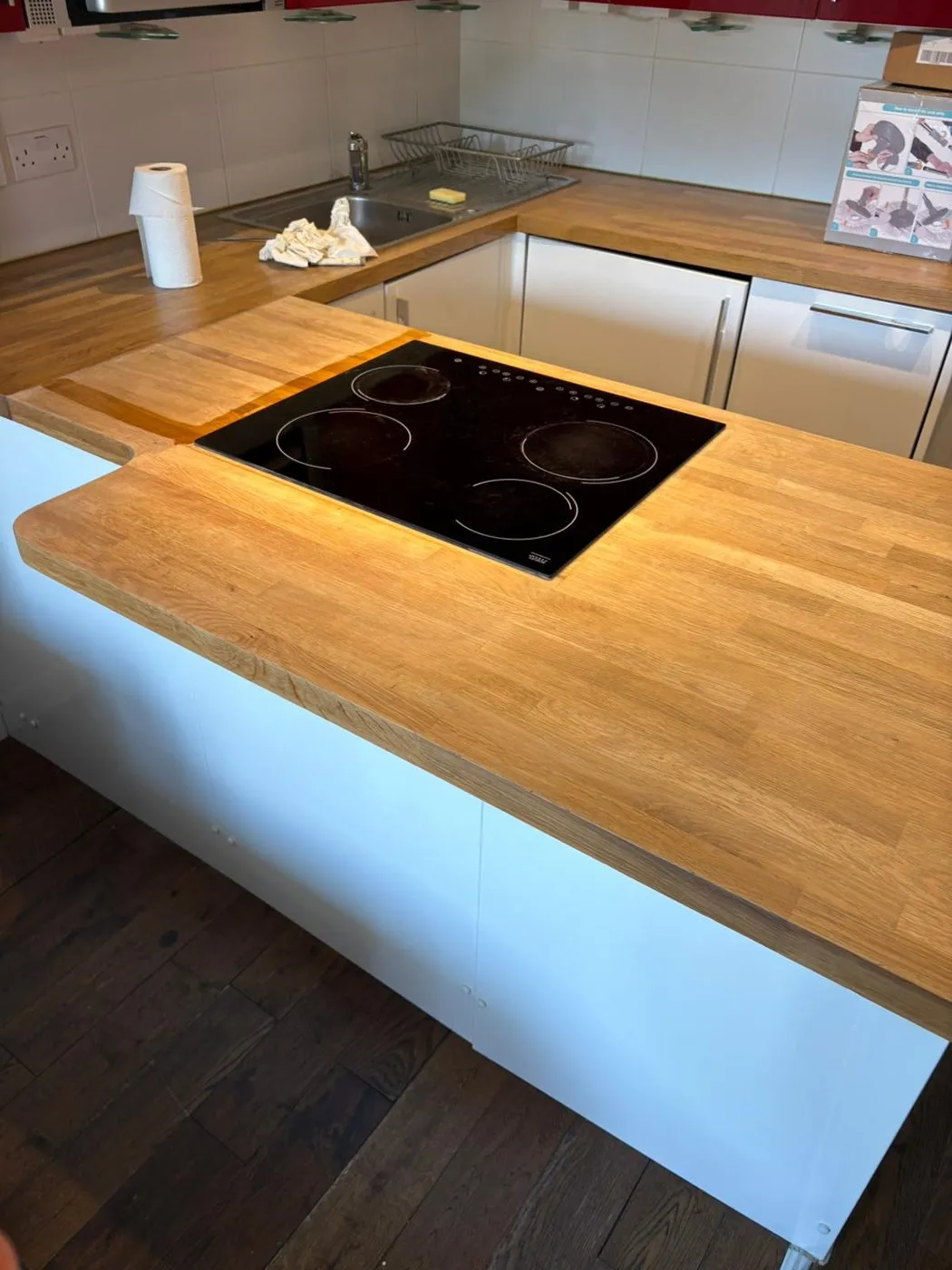
Once the dust is removed, the worktop is treated with a worktop oil suitable for food preparation areas. You can see the difference in the photo: the oiled section goes rich and golden, while the freshly sanded area is still pale. The oil is applied in several thin coats, with the excess wiped off and each coat left to dry before the next. Particular attention goes on the end grain, joints and edges around the sink and hob, where water causes the most damage.
The result
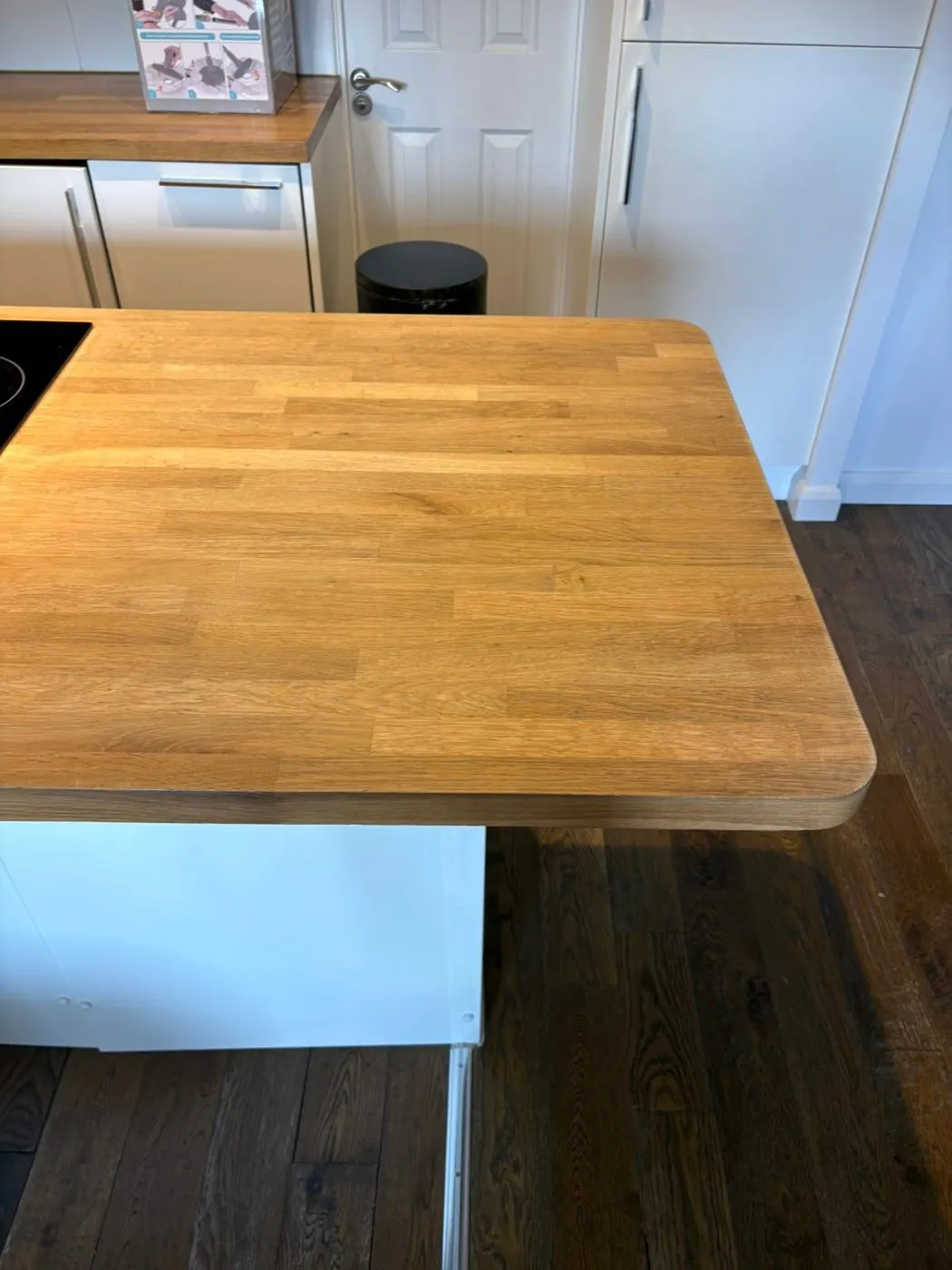
The worktop is back to an even, warm oak colour, smooth to the touch, and protected again. All this without removing the hob or sink, or the cost and disruption of a new worktop.
Keeping a wooden worktop looking good
- Re-oil regularly: a light coat every few months, more often around the sink. If water stops beading on the surface, it’s time.
- Wipe up water and spills quickly, especially around the sink and tap.
- Use trivets and chopping boards, not the worktop itself, for hot pans and knives.
- Avoid harsh cleaners and soaking wet cloths; mild soapy water is enough.
Landlords and agents
Wooden worktops in rental kitchens often look tired by the end of a tenancy. A professional resurface is quick and inexpensive compared with replacement, and it makes a big difference to how a kitchen photographs for the next let. It’s a good addition to a void property refresh. See our property maintenance service.
We cover London and Essex, with our own engineers working every day across Chigwell, Loughton, Buckhurst Hill, Woodford, Ilford, Romford, Brentwood and Epping. Call 020 8227 0035 or request a quote.