We inspected the heating in a home in Chelsea (SW10), which has both underfloor heating and radiators. Our engineer found that the underfloor heating pump and one actuator on the manifold were faulty and need replacing. He also bled and checked every radiator in the property. All of them were heating correctly apart from one on the very top floor. We quoted for the underfloor heating repairs.
What we found
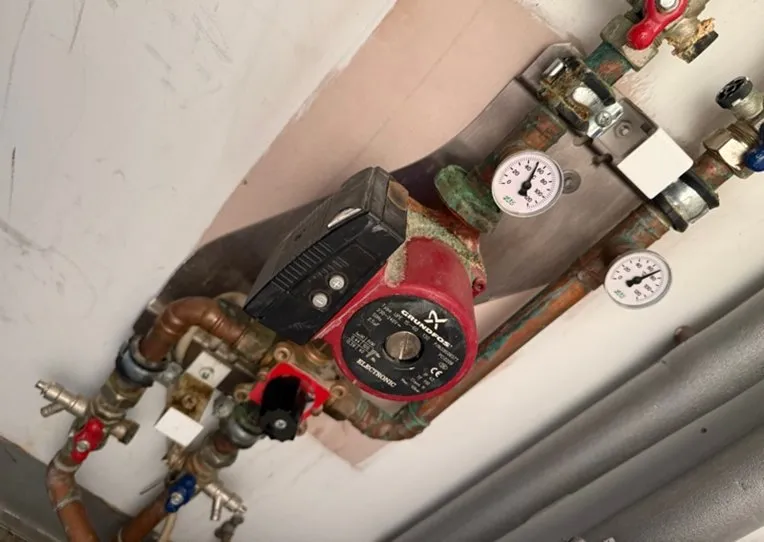
The underfloor heating pump
Underfloor heating has its own pump, which pushes warm water round the pipes under the floor. Our engineer found this pump was faulty.
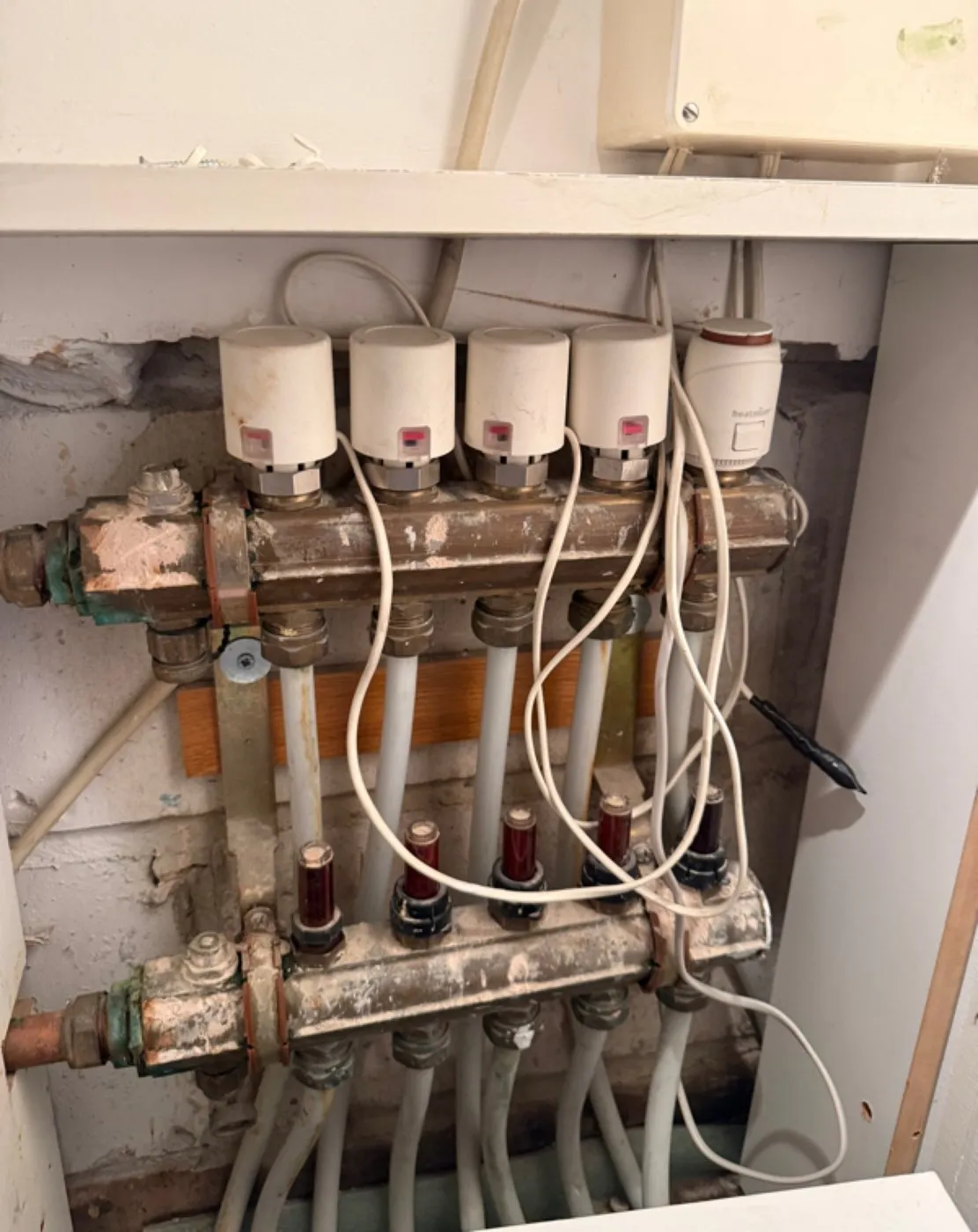
An actuator on the manifold
The manifold is where the underfloor heating pipes for each room or zone start and finish. On top of the manifold are actuators, small electric heads that open and close the valve for each zone when the thermostat calls for heat. One of these actuators was faulty.
The radiators
Our engineer also bled and checked all the radiators throughout the property. They were all getting hot and working as expected, apart from one on the very top floor.
What we recommended
Our engineer quoted for:
- supplying and fitting a new underfloor heating pump
- supplying and fitting one new actuator on the manifold
- testing the underfloor heating system once the work is done
A quote was sent for this work.
Signs of a faulty underfloor heating pump or actuator
Underfloor heating faults can be hard to spot because you can’t see the pipes. Things to look out for:
- every underfloor zone is cold, even though the boiler is working and the radiators are hot. This often points to the pump.
- one room or zone stays cold while the others warm up. This often points to that zone’s actuator or thermostat.
- the pump is silent, humming without running, or very hot to touch
- an actuator that stays in the same position whether the thermostat is calling for heat or not
Some actuators have a small indicator on top that shows whether they are open or closed. If the room thermostat is calling for heat and the actuator still shows closed, that is a clue.
For more on the usual causes, read our guide to underfloor heating that is not working.
Why bleed the radiators?
Air in a radiator stops hot water filling it, so you get a radiator that is cold at the top or only warm in places. Bleeding lets the air out. On a sealed system, check the boiler pressure after bleeding and top it up if needed.
Radiators on the top floor are often the first to get air in them, because air rises to the highest point of the system. If one radiator still won’t heat after bleeding, it may need further checks, such as its valves or the balance of the system. See our guide to radiator cold spots, bleeding and balancing.
Underfloor heating repairs in Chelsea
We repair underfloor heating, radiators and boilers across Chelsea, Fulham, Kensington and the rest of west and central London. See our underfloor heating service or our Chelsea area page.
Underfloor heating cold, or a room that won’t warm up? Call 020 8227 0035 or ask for a quote.