We inspected the cold water booster pump system that supplies a block of 8 flats in Marylebone (W1U). Because of the age and condition of the pumps, our engineer found that a complete replacement is needed, and that the new system will not be a like-for-like swap. He sent the details of the existing system to the manufacturer so they can work out the right pump sizes, flow rates and pressure for all 8 flats. A quote will follow once the new system has been specified.
What we found
The booster set is made up of a pump, a control box and a pressure vessel, connected to the incoming water and the pipes that feed the flats.
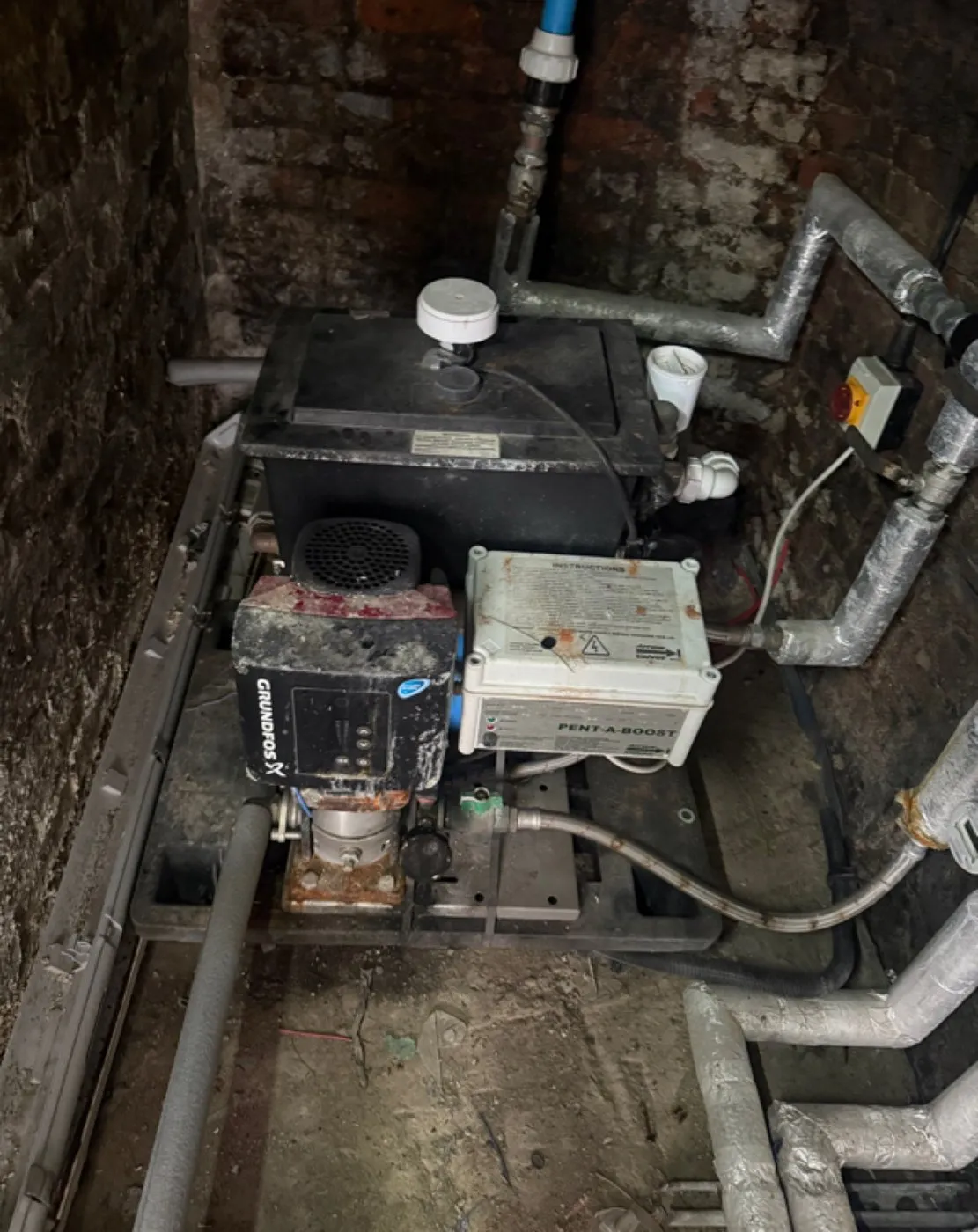
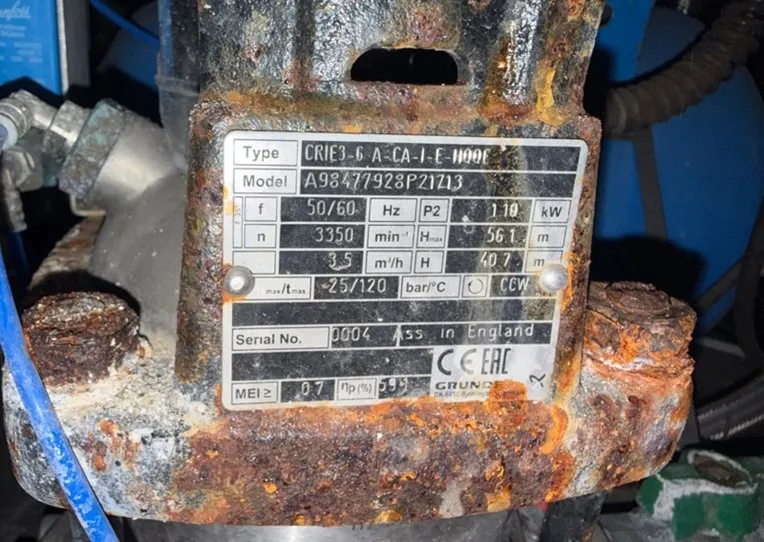
The pumps are old and in poor condition. You can see heavy rust on the pump body and base in the photo below.
What we did
Our engineer looked into the options for replacing the existing pumps. Rather than fitting new parts to an old set, the right answer here is a complete new booster pump system.
He sent the existing system details to the manufacturer so they can design and specify a suitable replacement. They need to calculate:
- the correct pump sizes
- the flow rates needed
- the pressure requirements
so that the new system can properly supply all 8 flats. A quote for the new system will follow.
What does a booster pump do?
In many blocks of flats, the mains water pressure isn’t strong enough to reach every floor, or to supply several flats at the same time. A booster pump set raises the pressure so every flat gets a steady supply.
Most booster sets have:
- one or more pumps that switch on when water is used
- a pressure vessel, which stores some water under pressure so the pumps don’t start every time a tap is opened
- a control box, which turns the pumps on and off and shows faults
Why it isn’t always like-for-like
It can be tempting to just swap old pumps for the same model. But pumps that were fitted years ago may no longer be made, and the building’s needs may have changed. Getting the size wrong causes problems:
- too small, and top-floor flats lose pressure when several people use water at once
- too big, and the pumps cycle on and off too often, wear out faster and waste power
That’s why we asked the manufacturer to size the new system properly from the existing details.
Signs your booster pumps need attention
- low or up-and-down water pressure, often worst on the top floors
- pumps running constantly, or switching on and off very often
- a fault light on the control box
- noise, vibration or leaks in the plant room
- heavy rust on the pumps or pipework
In a block of flats, the booster set is usually the responsibility of the freeholder or managing agent, not the individual flat owners. If residents start reporting pressure problems, it’s worth getting the system checked before it fails completely.
Booster pumps and plumbing for blocks in Marylebone and Westminster
We look after plumbing, heating and building maintenance for managing agents and freeholders across Marylebone, Westminster and the rest of central London. See our plumbing and heating and property maintenance pages, or our Westminster area page.
Managing a block? Read our guide to handyman and repair services for landlords and letting agents.
Low water pressure in your block, or old booster pumps that need replacing? Call 020 8227 0035 or ask for a quote.