
Macerators and waste water pumps make it possible to put a toilet, shower, kitchen or utility room where there’s no gravity drain, such as in basements, loft conversions, under-stairs WCs and kitchen islands. They’re clever bits of kit, but they’re also among the most abused. Here’s how they work, why they fail, and what we found inside a failed pump on a recent job.
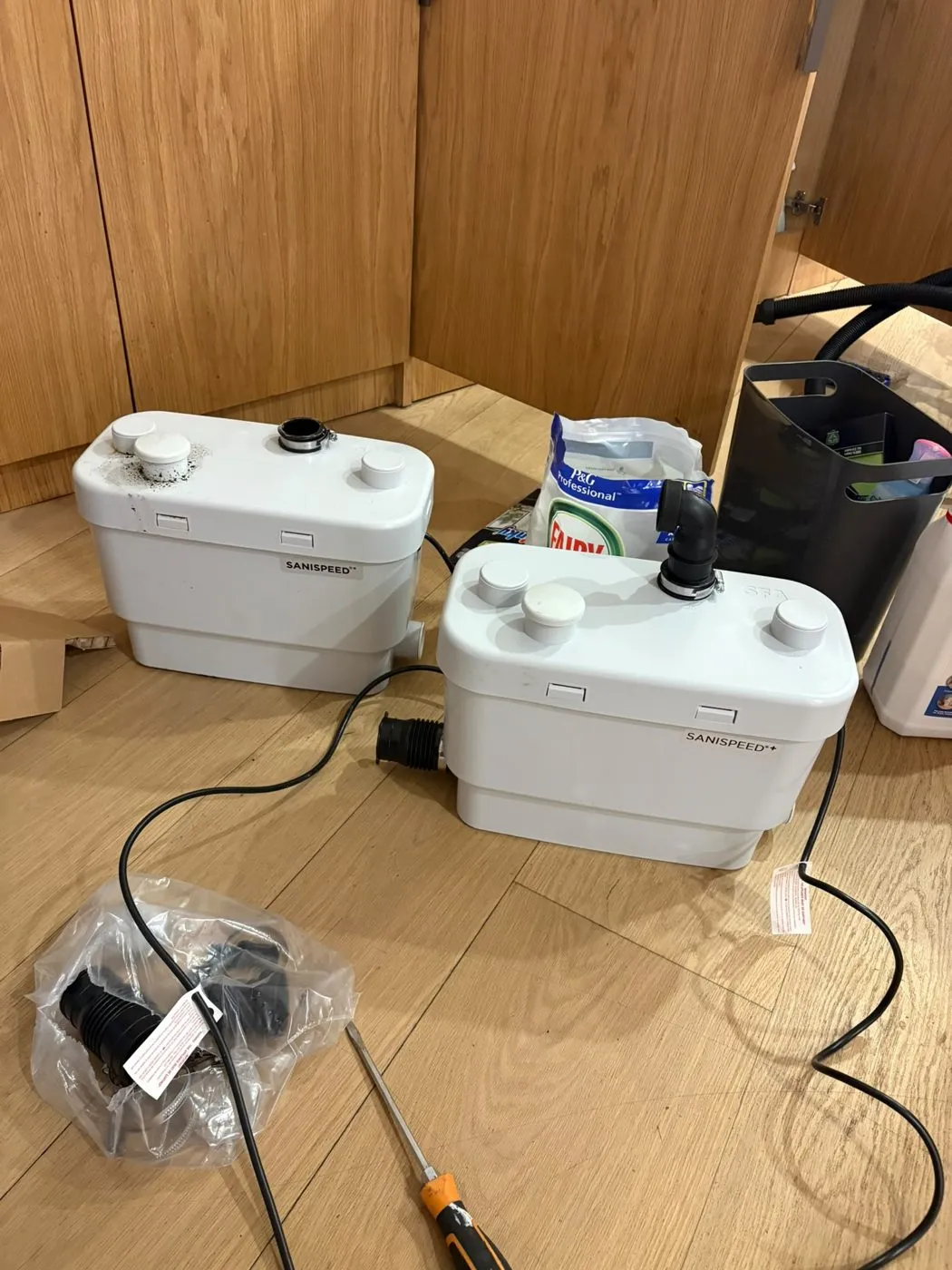
Macerator or grey water pump? They’re not the same
People call them all “macerators”, but there are two different types:
- Toilet macerators have cutting blades that break down toilet waste and paper so it can be pumped through small-bore pipe. They’re used for WCs, often with a basin or shower connected too.
- Grey water pumps (waste water pumps) handle water from sinks, showers, baths, dishwashers and washing machines. They don’t have the cutting blades of a toilet macerator and must never take toilet waste.
Fitting the wrong type for the job, or connecting a toilet to a grey water pump, is a guaranteed way to cause blockages and failures.
Why they fail
Grease and food in kitchen pumps
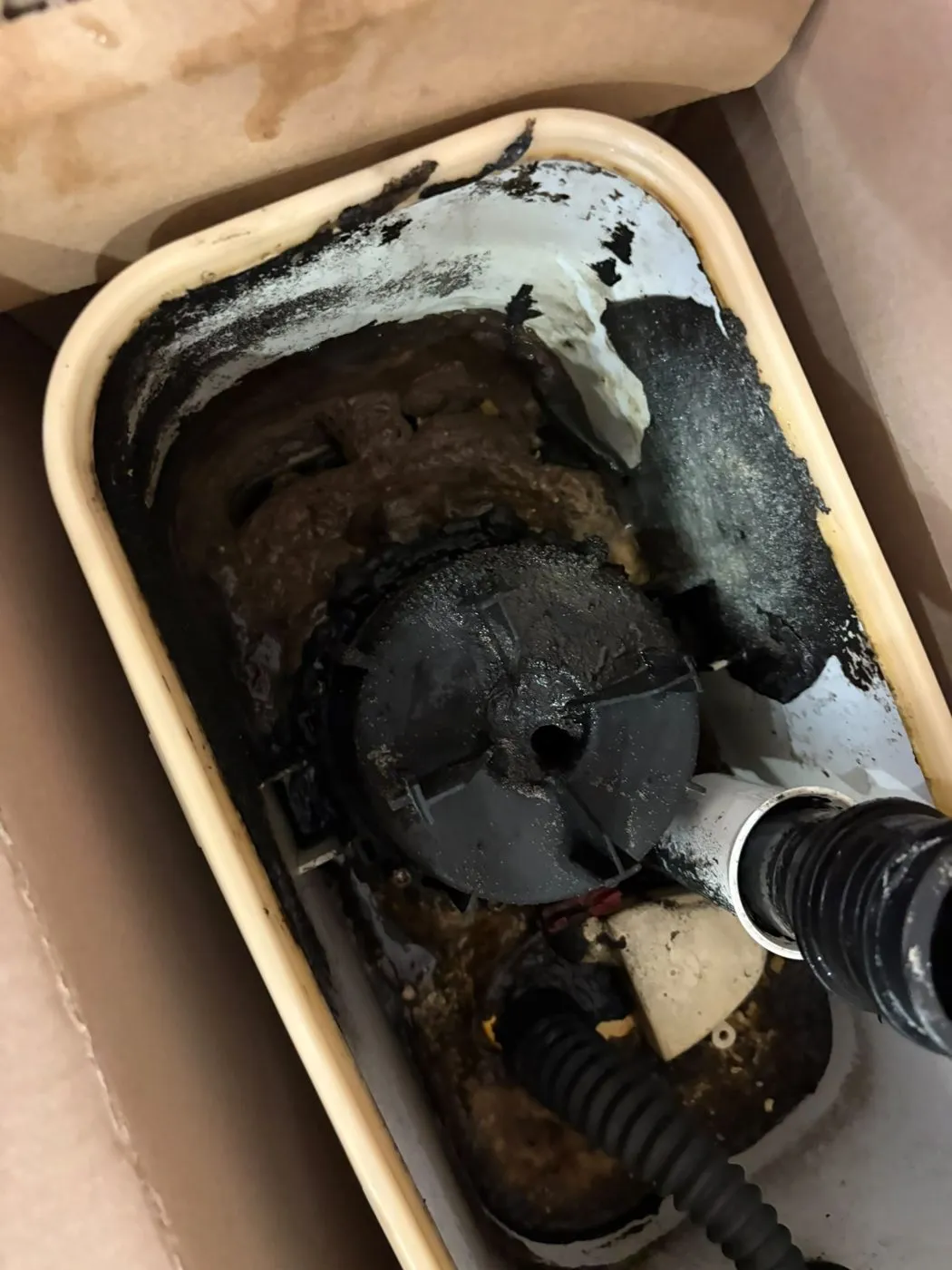
This is the inside of the failed pump we replaced. It served a kitchen sink and dishwasher. Over time, grease, fats and food waste have built up into a thick sludge that coats the chamber, jams the float switch and restricts the outlet. The result: the pump struggles, runs constantly, smells, and eventually stops altogether.
Fats and oils poured down a sink cool and solidify inside the pump. Dishwashers also send hot, greasy water through it at high volume.
Wipes and the wrong things in toilet macerators
Toilet macerators are designed for toilet waste and toilet paper only. Wet wipes, sanitary products, cotton buds, dental floss and kitchen roll wrap around the blades and jam the motor. “Flushable” wipes are one of the biggest causes of macerator call-outs.
Limescale
In hard-water areas, which includes much of London and Essex, limescale builds up on the pressure switch, membrane and float, stopping the unit from switching on or off properly.
Age and wear
Motors, seals and switches wear out. A unit that has been repaired several times may be more economical to replace.
Signs your macerator or pump is in trouble
- it runs for longer than usual, or keeps cycling on and off
- unpleasant smells, especially around the unit or from the sink or shower
- grinding or unusual noises
- slow draining or water backing up into the shower, sink or WC
- water around the base of the unit
Replacing the pump
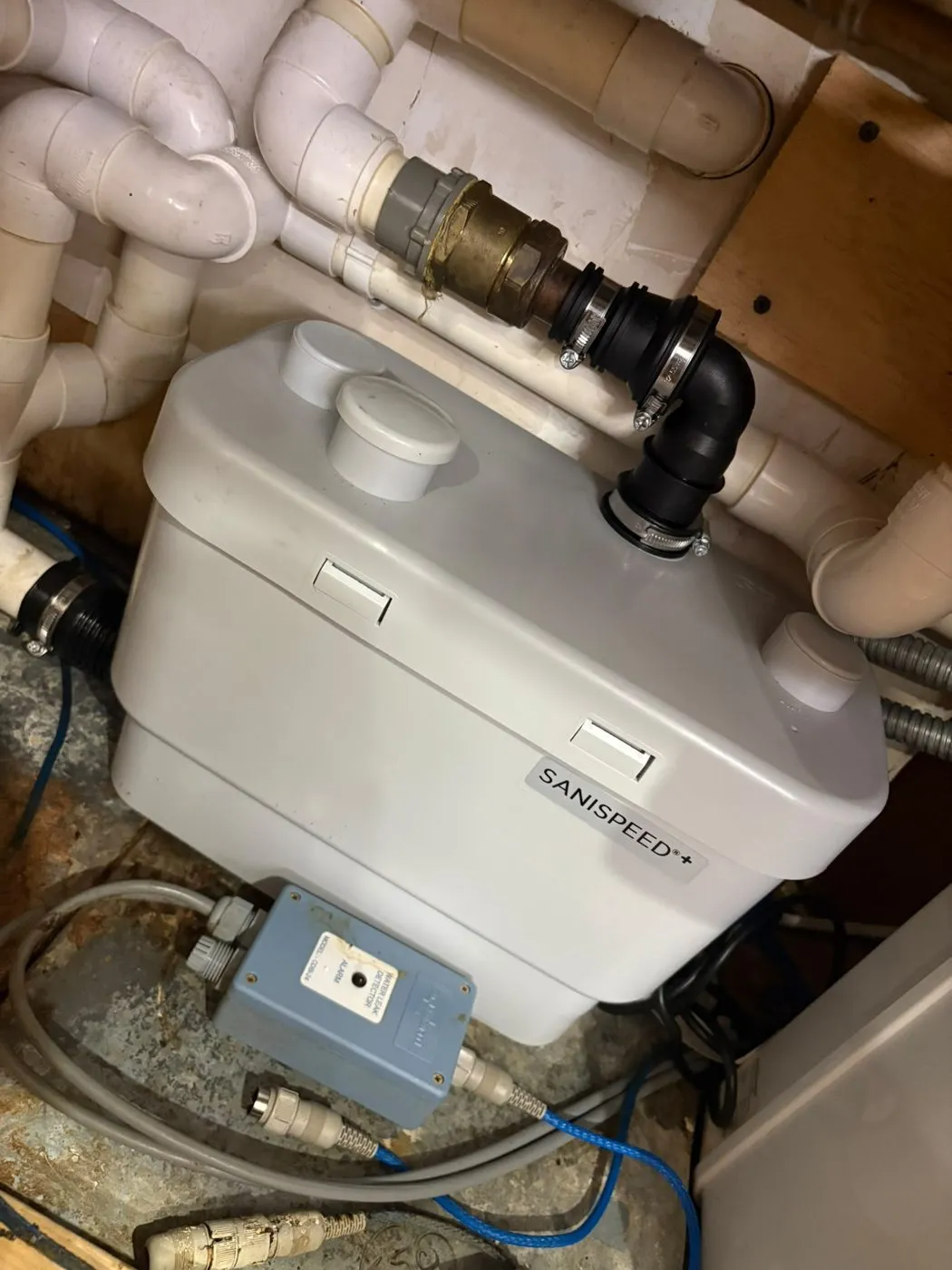
On this job, we:
- isolated the power and disconnected and removed the failed unit, with the floor protected
- checked and cleaned the connecting pipework and the non-return valve on the discharge pipe, so the new pump wasn’t fed old sludge straight away
- fitted the new pump with new connectors and clips
- refitted it alongside the water leak detector, which alarms if water escapes into the cabinet space, a sensible safeguard for a pump hidden under units
- tested by running the sink and dishwasher, checking the pump switched on and off correctly with no leaks
Replacing the toilet too
On the same visit, Dorian also replaced the toilet, fitting the new pan and cistern, connecting it to the waste and water supply, and testing it for leaks. When a bathroom or kitchen has a pump or macerator, it’s worth checking the other fittings that feed it on the same visit.
Making a new pump last
- Never pour fats, oil or food waste down a sink that drains to a pump. Wipe pans with kitchen roll first.
- Only toilet paper in a toilet macerator. Bin everything else, including “flushable” wipes.
- Descale periodically in hard-water areas, using the manufacturer’s recommended descaler.
- Fit a leak detector where the pump is hidden.
- Get it serviced if it starts running longer or making new noises, before it fails completely.
Landlords and agents
Macerators and pumps in rental properties fail far more often than they should, usually because tenants don’t know what not to put down them. A clear note by the toilet or sink, and a check at each change of tenancy, saves a lot of call-outs. See our handyman and repairs guide for landlords.
Book a macerator or pump repair
Our plumbing team repairs and replaces toilet macerators and waste water pumps for homes, rental properties and commercial kitchens. See our plumbing and heating service.
We cover London and Essex, with our own engineers working every day across Chigwell, Loughton, Buckhurst Hill, Woodford, Ilford, Romford, Brentwood and Epping. Call 020 8227 0035 or request a quote.