
Toilet problems are among the most common repair calls we get from homeowners, tenants and letting agents. Most are quick to fix once you know the cause, but a running or leaking toilet can waste a lot of water and damage floors and ceilings if it’s left.
Toilet that won’t stop running
If you can hear water trickling into the pan long after flushing, or the cistern keeps refilling, the usual culprits are:
- a worn flush valve seal (on push-button toilets), which lets water leak past into the pan
- a faulty fill valve, which doesn’t shut off when the cistern is full, so water runs into the overflow
- the float set too high, so the water level reaches the overflow before the valve closes
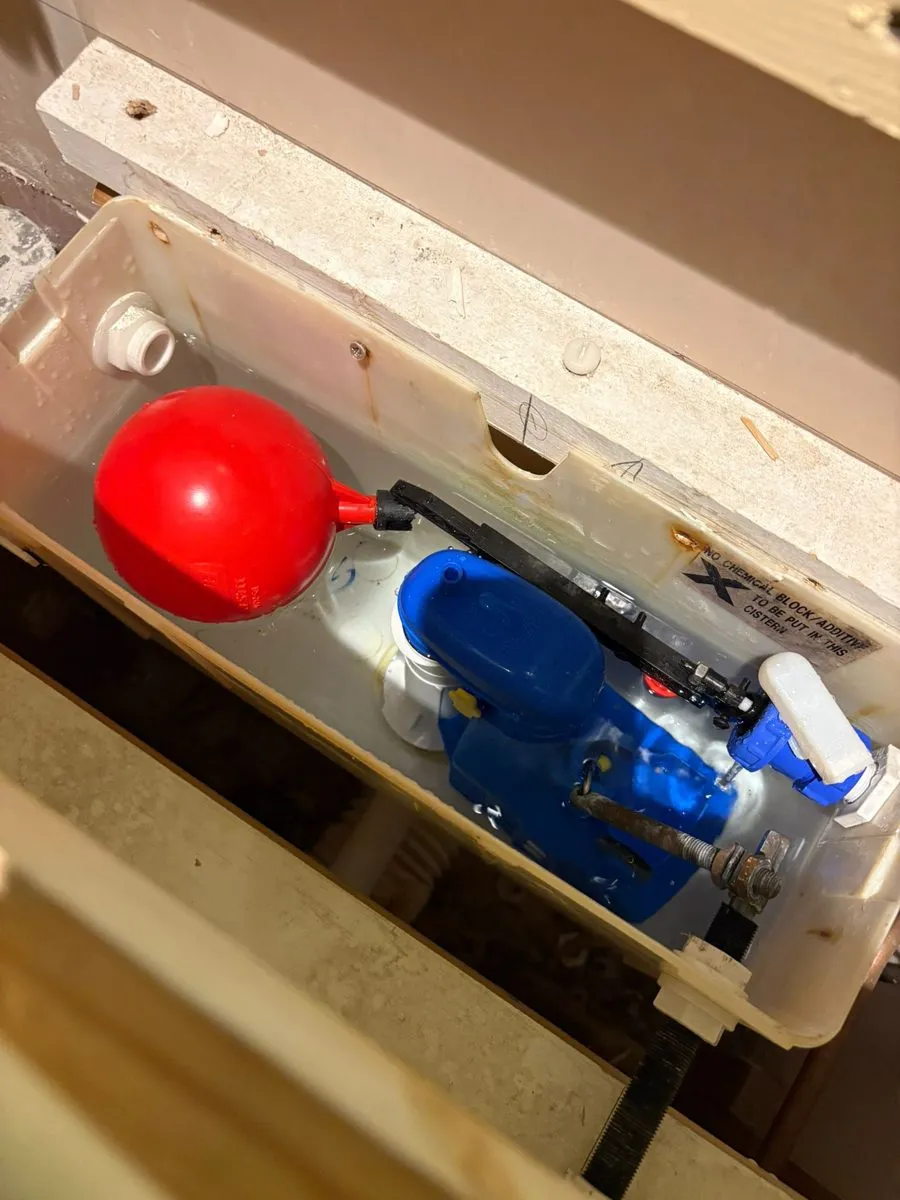
On older cisterns like this one, the water level is controlled by a ball float valve: as the cistern fills, the float rises on its arm and closes the valve. If the valve washer wears, the float is set too high, or the arm sticks, water keeps running into the overflow. Repairs usually mean adjusting the float, replacing the washer or seal, or fitting a new, quieter fill valve. On this cistern, adjusting the float to set the correct water level was enough to stop it running.
Quick check: lift the cistern lid and look at the water level. If it’s running into the overflow pipe, the fill valve or float is the problem. If the level is fine but water trickles into the pan, it’s the flush valve seal.
Weak or incomplete flush
- Low water level in the cistern, so there isn’t enough water to clear the pan
- A partly blocked pan or trap, often from wipes, which shouldn’t be flushed even when the packet says “flushable”
- A faulty flush mechanism or button that doesn’t lift the valve fully
- Limescale restricting the flushing holes under the rim, a common problem in hard-water areas of London and Essex
Leaking at the base or behind the pan
Water around the base of the toilet should be dealt with quickly, because it can rot floors and come through the ceiling below. Common causes:
- a perished pan connector between the toilet and the soil pipe
- a loose or failed seal between the cistern and the pan
- condensation on the cistern in cold weather, which can look like a leak
A leaking pan connector or cistern seal is usually a straightforward repair, but the toilet often has to be removed and refitted to do it properly.
Leaking isolation valve or supply pipe
Most modern toilets have a small isolation valve on the supply pipe. If it’s dripping, it can often be tightened or replaced. It’s also the first thing to turn off (a quarter turn with a flat screwdriver) if the toilet is overflowing.
Wall-hung toilets
If your toilet is wall-hung with a hidden cistern, the same faults apply, but access is different. See our guide to concealed cistern repairs.
When to call a plumber
- water is leaking onto the floor or through a ceiling
- the toilet rocks, or the pan is cracked
- you’ve replaced parts and the problem keeps coming back
- the blockage won’t clear with a plunger
For landlords and agents
A running toilet in a rental can quietly add a lot to a water bill, and leaks under the pan are a classic cause of ceiling damage in flats. We fix toilet faults quickly, send before-and-after photos, and can check other taps and valves on the same visit. See our plumbing and heating service and property maintenance.
We cover London and Essex, with our own engineers working every day across Chigwell, Loughton, Buckhurst Hill, Woodford, Ilford, Romford, Brentwood and Epping. Call 020 8227 0035 or request a quote.