We were called to a flat in Wembley (HA0) where the heating wasn’t working. The heat interface unit (HIU) was showing fault code F7, which points to a low-pressure or pressure-related fault. Our engineer topped the heating system up to 2 bar, but the F7 code stayed on and the heating still didn’t run. He found the likely cause is the pressure sensor or pressure switch. He also found the electric element in the heated towel rail was faulty. A quote for the further work is to follow.
What we found
An HIU is the box in a flat that takes heat from the building’s shared (communal) heating and passes it into the flat’s own radiators and hot water.
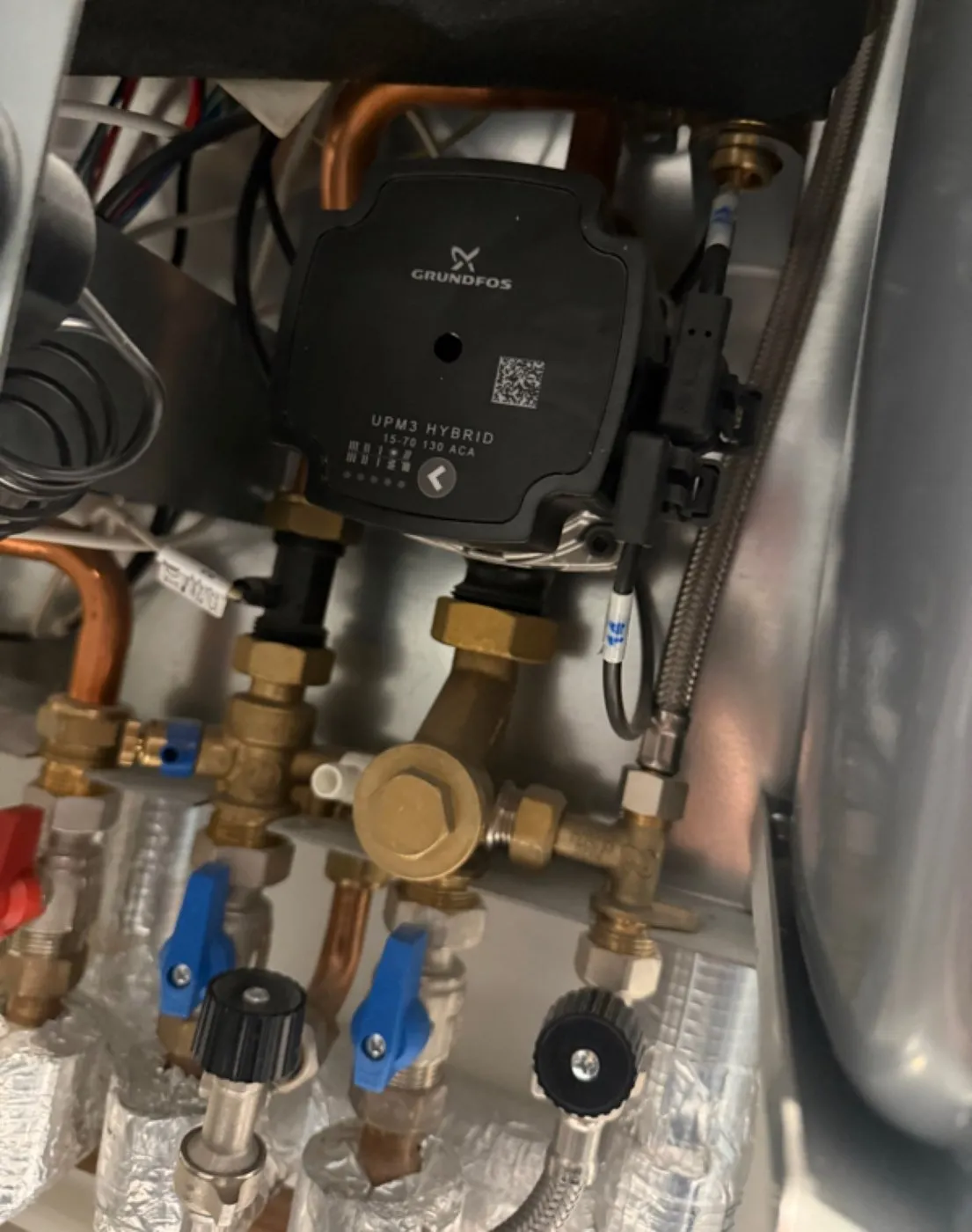
The HIU display was showing F7, a low-pressure or pressure-related fault. When the unit sees low pressure on the heating side, it stops the heating to protect itself.
Our engineer also looked at the heated towel rail in the bathroom. Its electric heating element appeared to be faulty and needs replacing.
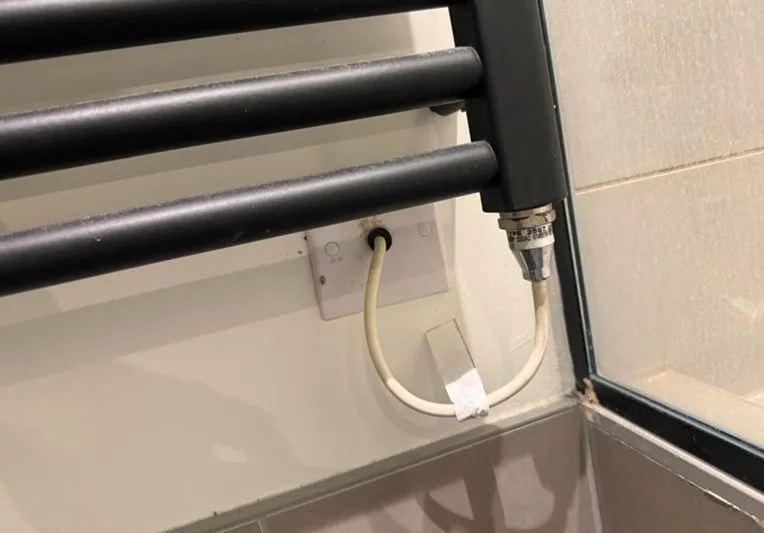
What we did
Our engineer topped up the heating system pressure to 2 bar. If low pressure were the only problem, this would normally clear the code.
It didn’t. The F7 code stayed on the display and the heating still wasn’t working. Further checks suggest the pressure sensor or switch may be faulty. If so, it could be stopping the HIU from recognising the correct pressure, even when the system is full.
The faulty part and the towel rail element both need replacing. A quote for this work is to follow.
Why a pressure fault doesn’t always mean low pressure
A pressure code on an HIU or boiler tells you the unit thinks the pressure is wrong. Most of the time the system really is low, often because of a small leak, a radiator being bled, or a slow loss over time. Topping it up fixes it.
But the unit only knows the pressure from its sensor. If the sensor or switch fails, the unit can show a pressure fault even when the gauge says the system is fine. That’s why it’s worth topping up first, and then looking at the sensor if the code won’t clear.
If your HIU shows a pressure fault:
- Check the pressure gauge on the unit and note the number.
- Write down the fault code shown.
- If you have been shown how to top up and it’s allowed in your building, top up slowly to the level in your HIU manual.
- If the pressure keeps dropping, or the code won’t clear, call an engineer.
Who is responsible for an HIU?
In many blocks, the HIU belongs to the flat, but the communal heating network is run by a managing agent or heat supplier. Tenants should report faults to their landlord or agent. Leaseholders should check their lease or ask their managing agent who looks after the unit.
HIU repairs across north-west London
We repair HIUs in Wembley and across north-west London, as well as the rest of London and Essex. See our HIU and CIU servicing and repair service.
You may also find these useful:
- HIU repairs and common faults
- HIU heat exchanger and pump replaced in Croydon
- Electric towel rail installation
Our office is open Monday to Friday, 7am to 5pm. Call 020 8227 0035 or ask for a quote.