A toilet that won’t flush properly is one of the most common plumbing calls we get. In this Dagenham home (RM9) the fault was the flush valve, the part inside the cistern that lets the water out when you press the button. Our engineer supplied and fitted a new like-for-like valve, secured it, tested the flush and left the toilet working with no further issues.
What a flush valve does
Most modern toilets with a push button on the lid use a flush valve rather than the old-style siphon and lever. When you press the button, the valve lifts and lets the water in the cistern drop into the pan. When the cistern is empty, the valve drops back onto its seal so the cistern can refill.
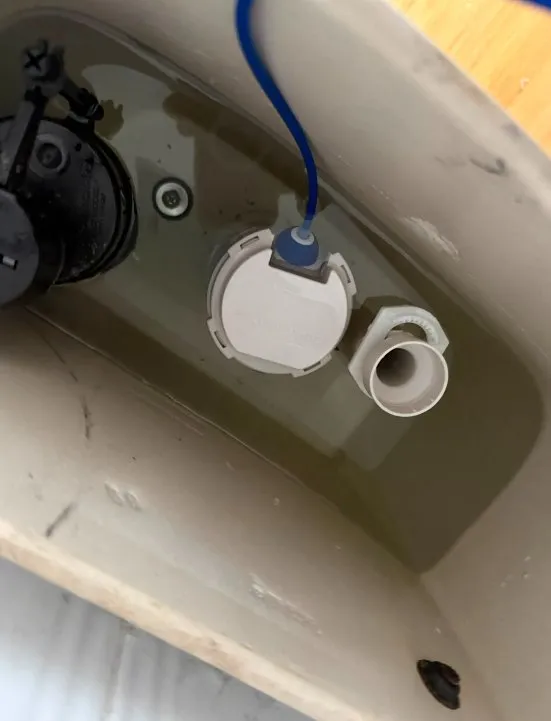
On this toilet the push button works the valve through a blue cable (you can see it running up from the top of the valve in the photo). That’s a common design: the button on the lid pulls the cable, and the cable lifts the valve.
There are two separate parts in most cisterns, and it helps to know which is which:
- The flush valve (in the middle) lets the water out into the pan.
- The fill valve (on the left in the photos) lets fresh water in to refill the cistern.
If water keeps trickling into the pan, it’s usually the flush valve seal. If the cistern keeps filling and running into the overflow, it’s usually the fill valve.
Signs your flush valve is failing
- You have to press the button more than once, or hold it down, to get a full flush.
- The flush is weak, or the button feels loose or doesn’t spring back.
- Water keeps trickling into the pan long after the flush has finished.
- The cistern refills on its own every so often, even when nobody has used the toilet.
- The button or cable has snapped or come away from the valve.
A trickling flush valve is easy to ignore, but it can waste a lot of water over a few months, and on a water meter you pay for every litre.
Why we fitted a like-for-like valve
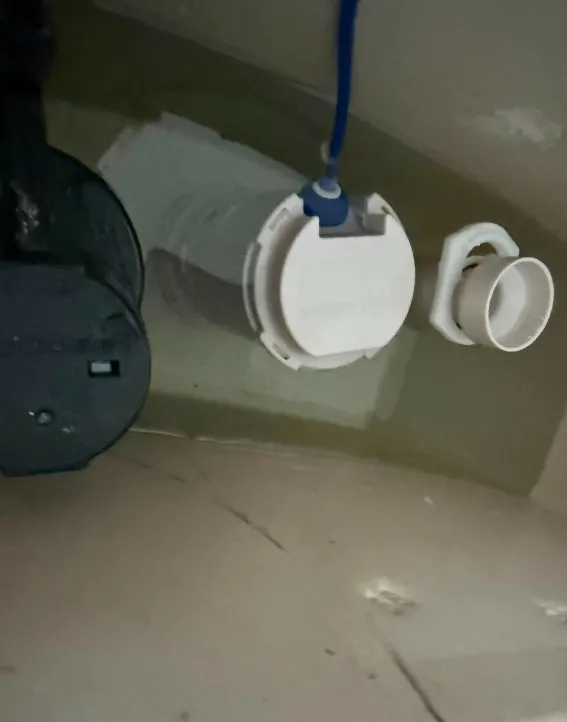
Flush valves come in different heights, base sizes and button types, and cisterns are made to suit particular ones. Fitting a like-for-like valve means:
- it sits and seals properly on the cistern outlet
- the existing push button and lid still fit
- the flush volume is what the toilet was designed for, so the pan clears properly
Once the new valve was in, our engineer secured it, refilled the cistern and tested the flush several times to make sure it lifted and sealed every time. The toilet was left flushing correctly.
Can you fix it yourself?
Some flush valve problems are simple, like a cable that has popped off or a bit of debris on the seal. But replacing the valve usually means isolating the water, emptying the cistern and sometimes taking the cistern off the pan, which brings its own risk of leaks at the joints. If you’re not sure, it’s quicker and safer to have a plumber do it.
For more on the usual causes, read our guide to a running toilet or weak flush. If your toilet is the wall-hung type with the cistern hidden behind the wall, see concealed cistern repairs.
Plumbing repairs in Dagenham and nearby
We carry out toilet, tap, leak and shower repairs across Dagenham, Barking, Romford, Ilford and the rest of east London and Essex from our Chigwell base. See our plumbing and heating services or, for Romford, our Romford area page.
Toilet not flushing, running all the time or leaking? Call 020 8227 0035 or ask for a quote.