
A fire alarm only protects people if it works when it’s needed. In blocks of flats, HMOs, offices and shops, keeping it working isn’t optional. It’s part of the legal duty of whoever is responsible for the building. Here’s what regular fire alarm servicing involves and what you need to do between visits.
Who is responsible?
In England, the Regulatory Reform (Fire Safety) Order 2005 puts duties on the “responsible person” for non-domestic premises. That includes the common parts of blocks of flats and HMOs. In practice this is usually the freeholder, managing agent, landlord or employer. One of those duties is to make sure fire safety systems, including the fire alarm, are properly maintained.
Your fire risk assessment should set out what alarm system the building needs and how it should be maintained. If it has flagged actions, those need closing out too.
How often should a fire alarm be serviced?
For most commercial premises and buildings with a panel-based system, the British Standard for fire alarm systems (BS 5839-1) recommends a professional service at least every six months. Higher-risk buildings or those with specific insurance conditions may need more frequent visits. Your fire risk assessment and insurer will confirm what applies to you.
What happens during a service
A fire alarm service typically includes:
- Checking the control panel for faults, its event log, and that all zones are reporting correctly
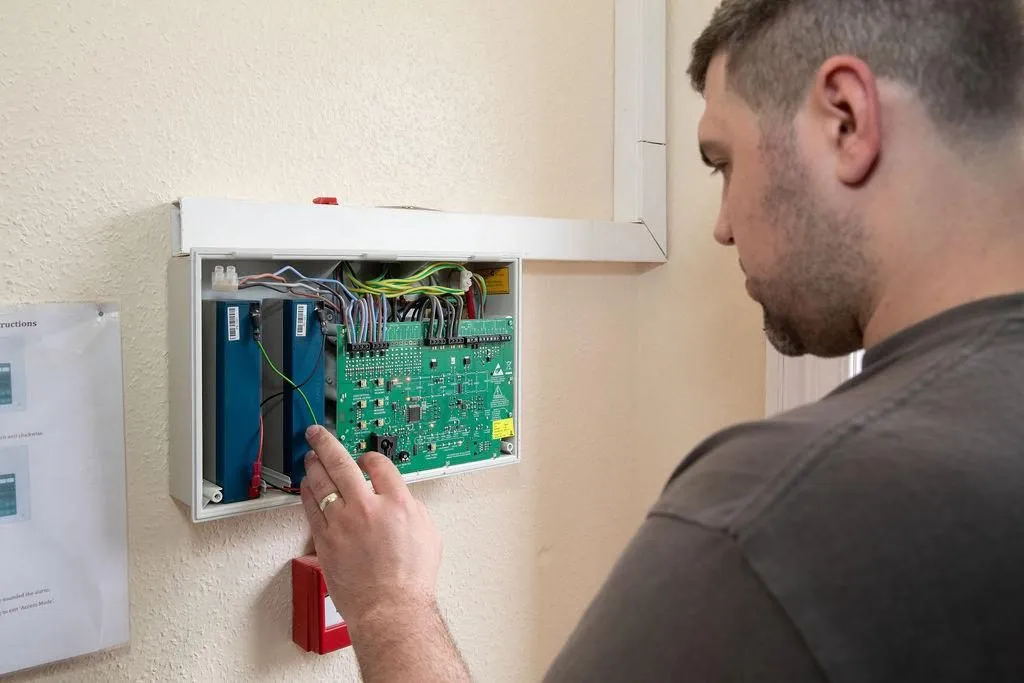
- Testing the standby batteries, which keep the system running during a power cut. You can see the two blue batteries inside the panel in the photo above. Batteries are typically replaced every few years, or sooner if they fail a test.
- Testing call points and detectors, with a proportion of devices tested on each visit so that every device is covered over the year
- Checking sounders and beacons, so the alarm can be heard or seen throughout the building
- Checking for changes in the building, such as new partitions, changes of use or blocked devices, that could affect how well the system protects it
- Updating the logbook and issuing a service certificate, with any defects recorded and quoted for
What you need to do between services
The responsible person, or someone they appoint, should:
- Test the alarm weekly by operating a different call point each week, so all of them are tested in rotation
- Record every test in the fire alarm logbook, along with any false alarms, faults and repairs
- Report faults immediately. A panel showing “fault” or “disabled” means part of the building may not be protected.
- Keep detectors clear, with nothing covering them and no storage blocking them
Don’t forget emergency lighting
Emergency lighting usually sits alongside the fire alarm and has its own testing regime: a brief monthly functional test, and a full-duration test once a year. It’s sensible to combine emergency lighting testing with your fire alarm service visits.
How we help
Positive Contractors looks after fire safety for landlords, managing agents and businesses across London and Essex. That includes fire alarm and emergency lighting maintenance, plus fire doors, fire stopping and the remedial actions from fire risk assessments. Our engineers send photos, certificates and logbook updates together after every visit. See our fire safety service, our guide to fire doors in flats and HMOs, or call 020 8227 0035 to arrange a service.
We cover London and Essex, with our own engineers working every day across Chigwell, Loughton, Buckhurst Hill, Woodford, Ilford, Romford, Brentwood and Epping.