

Plastic bath panels are cheap and quick to fit, but they crack, bow and come loose, especially when they get kicked or knelt against. Replacing a tired panel with a solid, tiled panel makes a bathroom look finished and lasts far longer. The most important detail is one that’s often forgotten: access to the waste and trap.
Building a solid panel
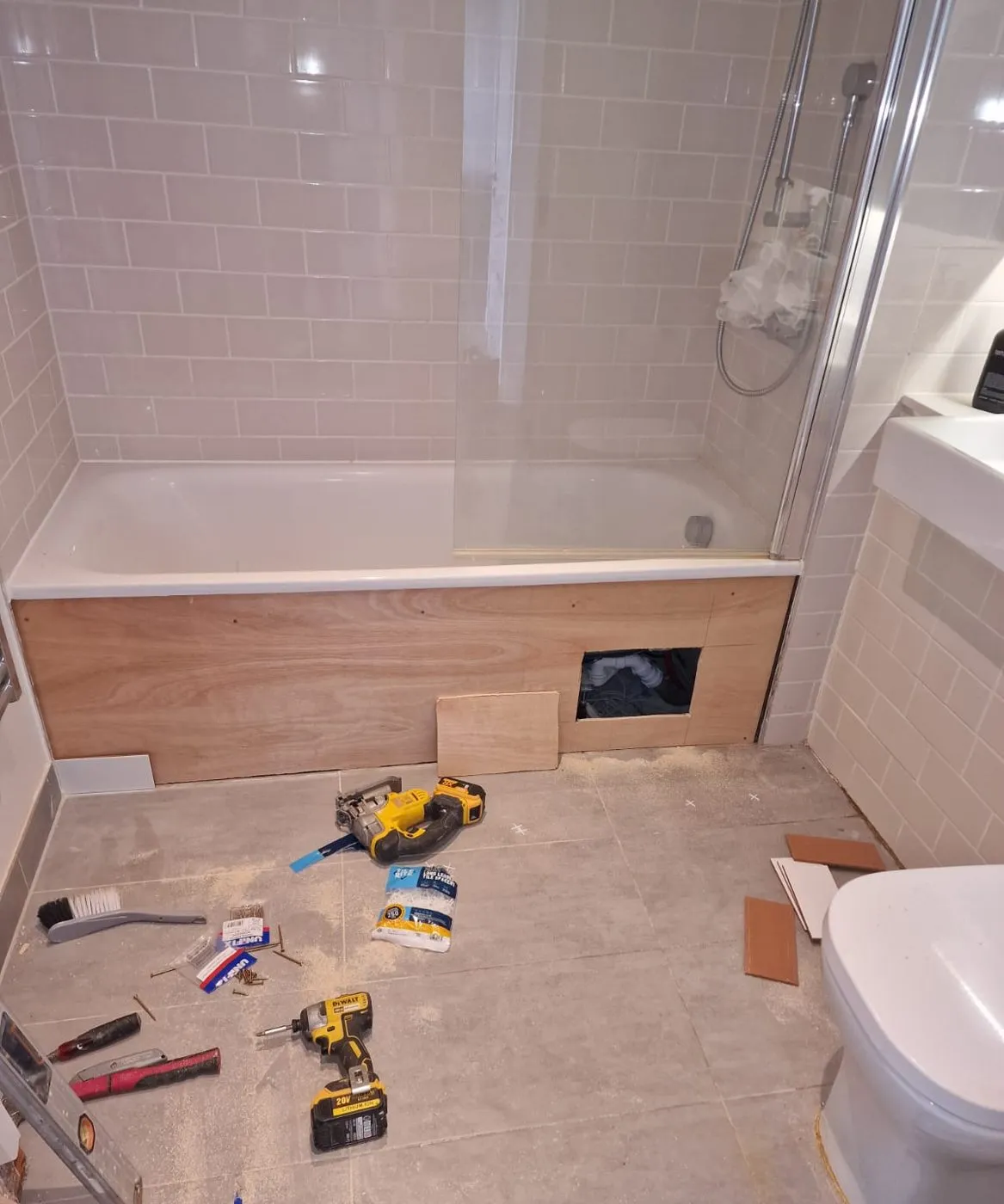
On this job, we fitted a new plywood panel along the front of the bath, fixed securely so it won’t flex. Before tiling, we cut an access hatch in line with the bath waste. Through the opening in the photo above you can see the waste pipework and trap that sit behind every bath.
Why the access hatch matters
The bath waste, overflow and trap all sit behind the panel, and they’re the parts most likely to need attention: blockages, leaks from the waste seal, or a trap that needs clearing. Without a hatch:
- a simple blockage or a dripping waste means breaking off tiles or cutting the panel
- small leaks go unnoticed until they damage the floor or the ceiling below
With a hatch, a plumber can reach everything in minutes, and you can take a quick look for leaks yourself.
Tiling the panel
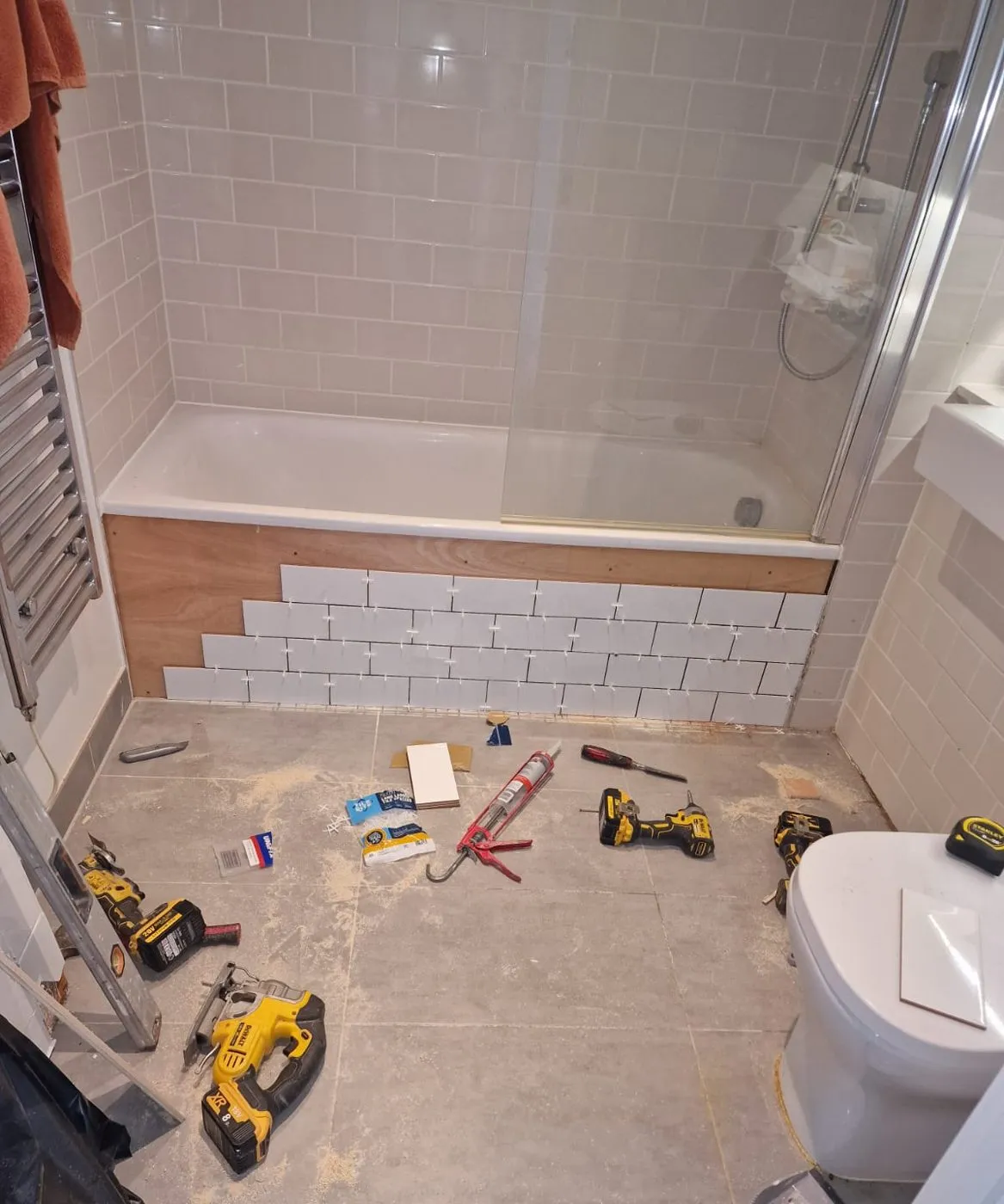
The panel was then tiled in white metro tiles, set out in a brick bond with spacers for even joints to suit the rest of the bathroom. A tiled panel is:
- far tougher than plastic, and won’t crack or bow when knocked
- easy to clean and doesn’t discolour
- seamless with the tiled walls, so the bathroom looks finished
The access hatch is designed to be removable, so the waste can still be reached once the panel is finished.
Finishing details
- Silicone where the panel meets the bath and the floor, so water from the bath can’t run behind the panel
- Waterproof grout suited to bathrooms
- A hatch that’s easy to remove, without needing to break grout lines
Is your bath panel due for replacement?
- cracked, split or bowing plastic panels
- panels that move or come away from the bath
- staining or swelling on wooden panels, which can be a sign of a leak behind
- no way to reach the bath waste without removing the whole panel
Landlords and agents
Broken bath panels are one of the most common items on end-of-tenancy and inspection reports. A solid tiled panel with an access hatch is a one-off upgrade that saves repeated replacements, and makes future waste repairs quicker and cheaper. Pair it with a bath and shower reseal for a bathroom that looks fresh for the next tenant. See our property maintenance service.
We cover London and Essex, with our own engineers working every day across Chigwell, Loughton, Buckhurst Hill, Woodford, Ilford, Romford, Brentwood and Epping. Call 020 8227 0035 or request a quote.