
Most radiator problems, such as cold patches, noises and slow warming, can be fixed by bleeding, balancing or cleaning the system (see our radiator problems guide). But some radiators are simply worn out. Rust, leaks and corroded valves are signs it’s time for a replacement before it fails and soaks the floor.
A radiator rusting from the inside
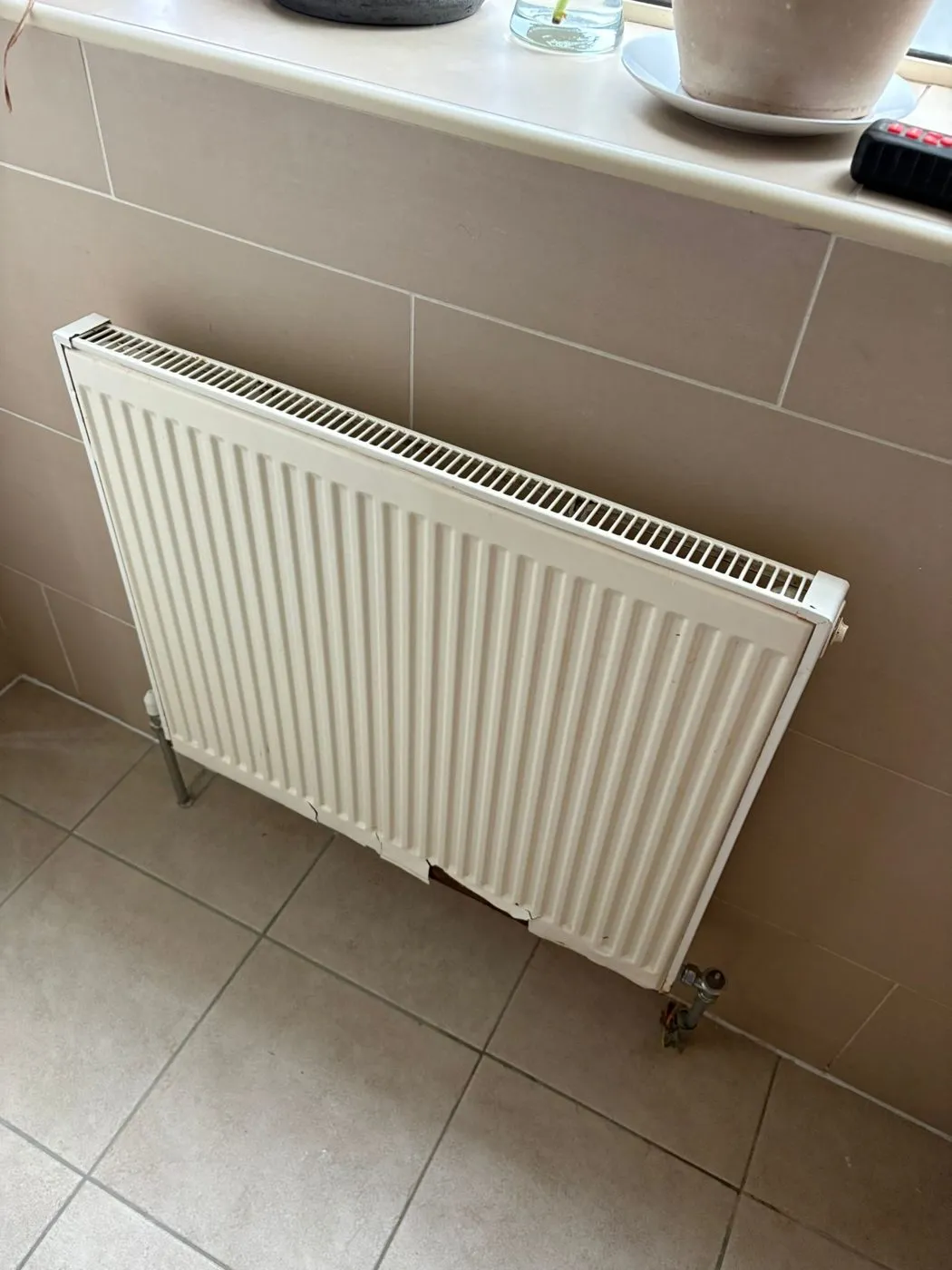
From a distance this bathroom radiator looked fine, apart from some cracked paint along the bottom. Up close, the problem was clear:
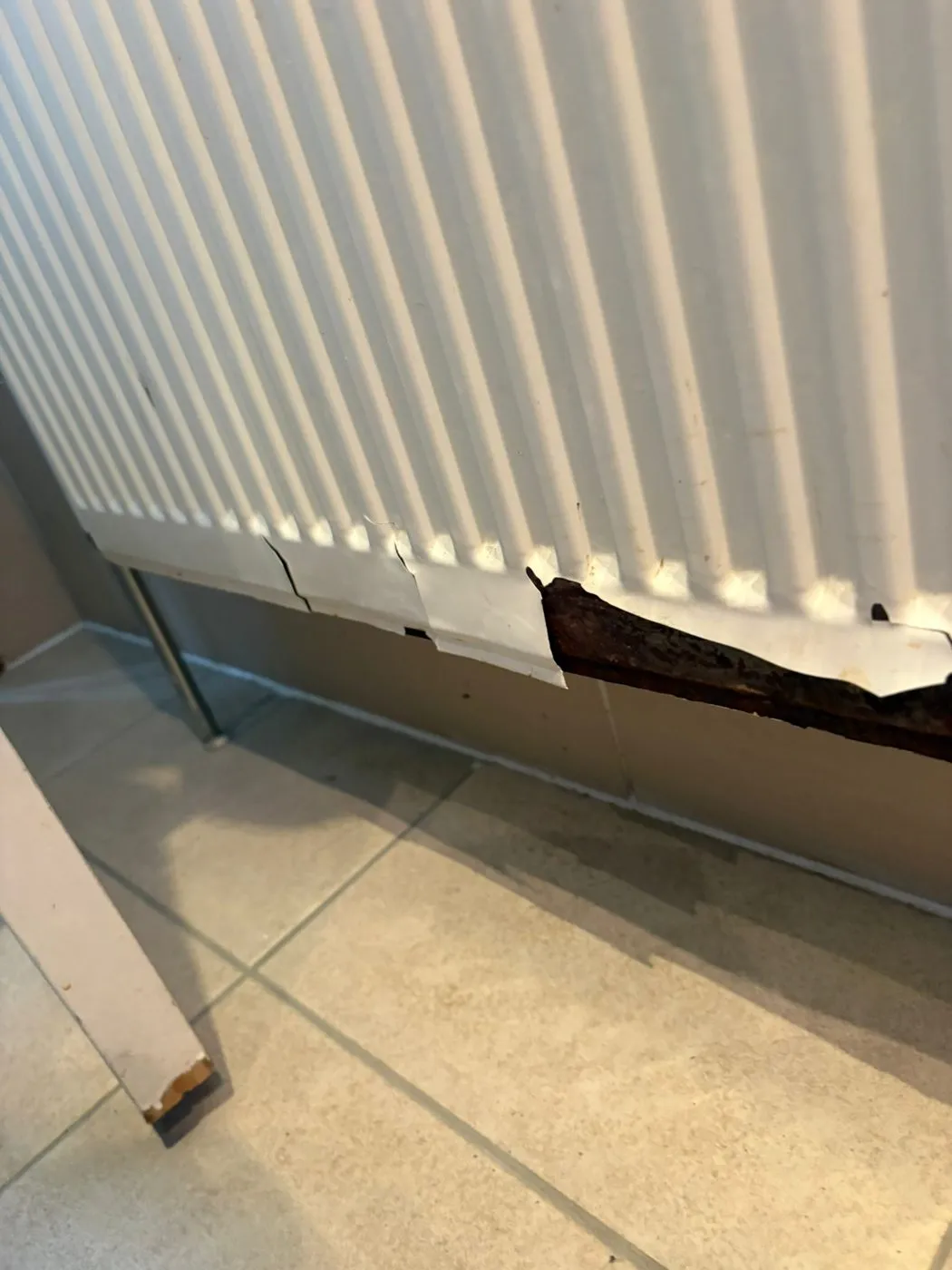
The steel along the bottom seam had rusted through, splitting the paint. Steel panel radiators corrode from the inside out when the heating water is dirty or contains air. Sludge settles along the bottom of the radiator, and corrosion eats through from there. Bathrooms are especially hard on radiators, because condensation attacks the outside too.
Once a radiator is rusting through, it can’t be repaired. It will start to weep, then leak, often while nobody’s home.
Corroded and leaking valves
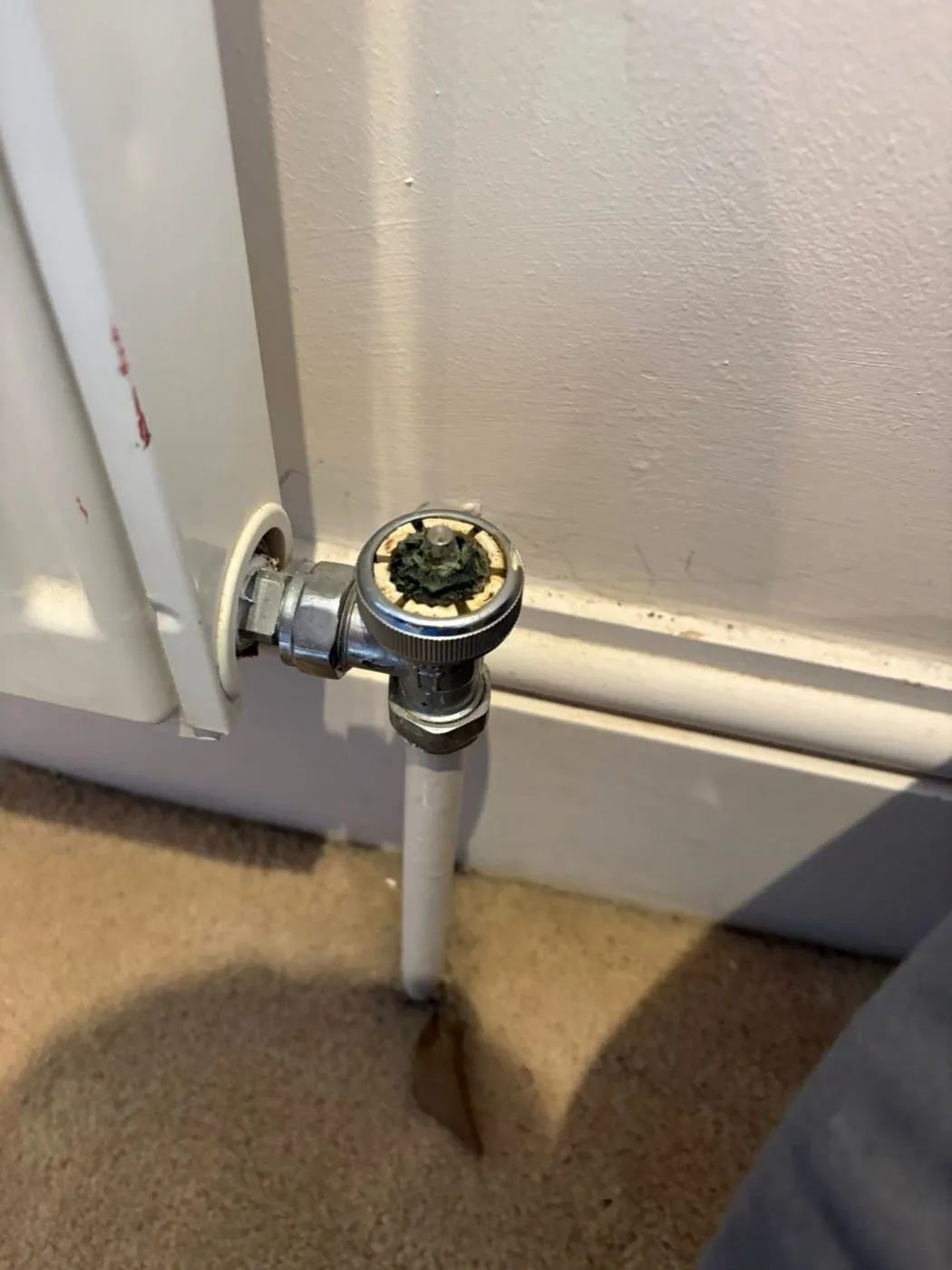
The green and white crust on top of this valve is a classic sign of a slow leak: water seeps past the valve’s seal, evaporates, and leaves corrosion behind. The brown staining on the carpet around the pipe shows where water has been dripping down. Left alone, small valve leaks damage flooring, rot floorboards and drop the system pressure, which can stop the boiler working.
Sometimes a valve can be repacked or its head replaced. Badly corroded valves are best replaced, and fitting thermostatic radiator valves (TRVs) at the same time gives better room-by-room control.
Signs a radiator needs replacing
- rust, bubbling or split paint, especially along the bottom edge or seams
- damp patches, drips or staining on the floor beneath
- corrosion on valves and fittings
- a radiator that stays cold at the bottom even after bleeding, a sign of heavy sludge
- frequent pressure drops on the boiler
What a replacement involves
- Isolate and drain the radiator, protecting floors from dirty system water
- Remove the old radiator and valves
- Fit the new radiator, sized correctly for the room’s heat requirement, adjusting pipework or brackets if the size differs
- Fit new valves, usually a TRV and a lockshield
- Refill, bleed and repressurise the system, then check every joint for leaks
- Consider the cause. If old radiators are rusting through, the heating water is likely dirty, so a system clean and a magnetic filter and inhibitor help protect the new radiator and the boiler
Landlords and agents
A leaking radiator is a priority repair, both for tenant comfort and to prevent damage to floors and the flat below. Replacing tired radiators and valves at a change of tenancy also avoids winter call-outs. See our plumbing and heating service.
We cover London and Essex, with our own engineers working every day across Chigwell, Loughton, Buckhurst Hill, Woodford, Ilford, Romford, Brentwood and Epping. Call 020 8227 0035 or request a quote.