An Electrical Installation Condition Report (EICR) tells you what is wrong with an installation. The remedial work is what puts it right. This job, at a house in Collier Row, Romford (RM5), is a good example of the kind of list an EICR can produce, and of how most of it can be cleared in a single visit.
What the EICR asked for
The report listed several items for us to put right:
- the surge protection device (SPD) in the consumer unit needed its supply and earth connections correcting, in line with the maker’s instructions
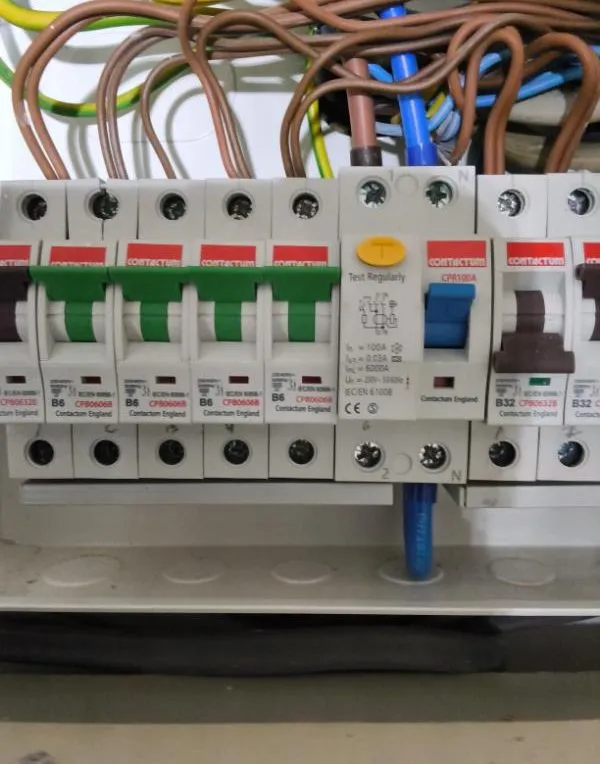
- circuit protection on two circuits needed changing to the breaker sizes proposed in the report, once we had checked the cables and loads
- cable entries into the metal consumer unit needed grommets or edging, unused openings needed closing, and gaps needed fire stopping
- the main earthing connection used an unsuitable connector
- a front porch lighting cable had exposed conductors and connections
- the kitchen and ground floor ring circuits had a reported break in continuity to investigate
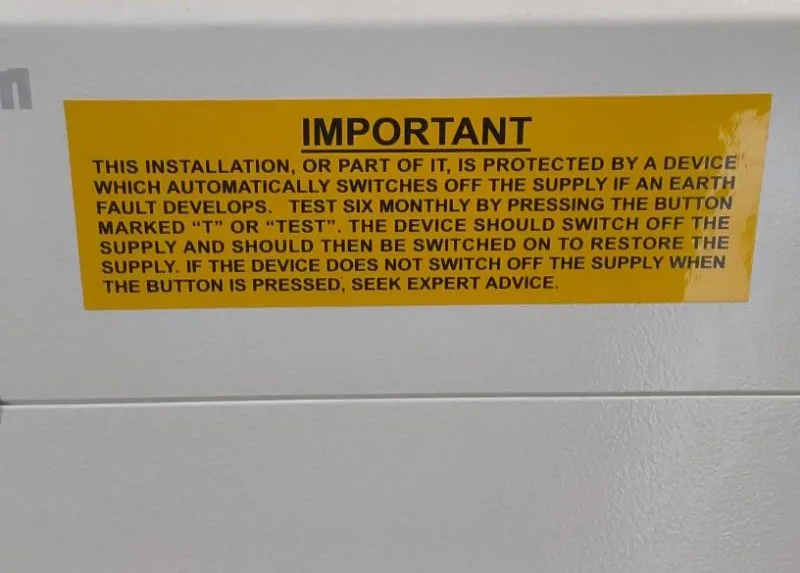
- the circuit labels needed correcting, and the RCD test notice was missing
What we did
Surge protection and circuit breakers
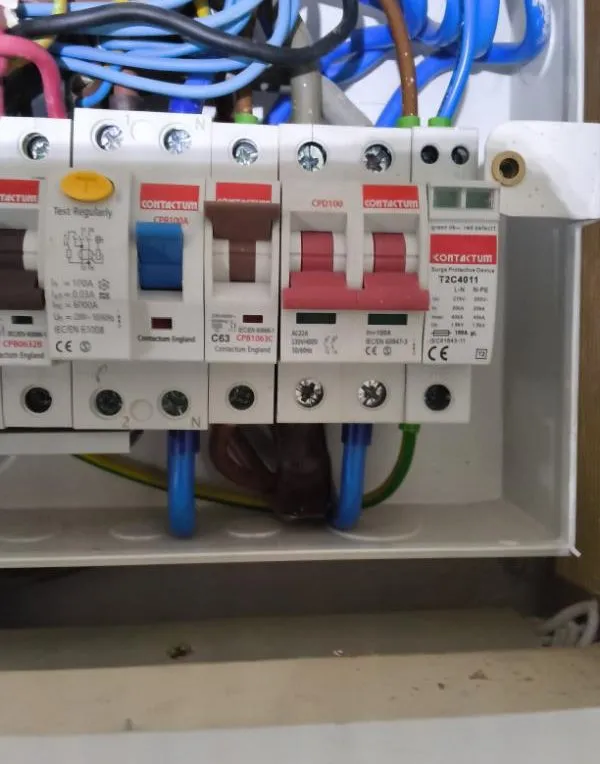
We safely isolated the consumer unit, then corrected the connections to the surge protection device and checked its status. An SPD protects your electrics and appliances from voltage spikes, but it can only do that if it is wired correctly.
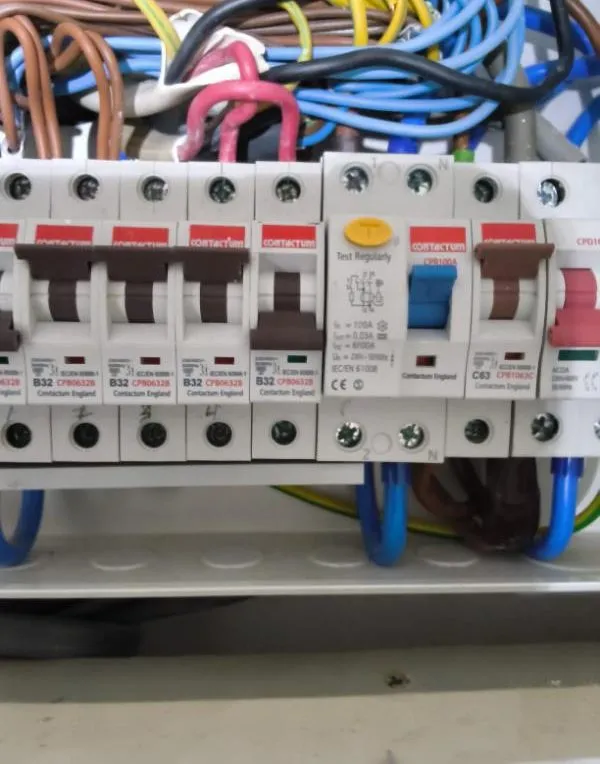
We checked the cable size, how the cables were installed and what was connected on the two circuits flagged in the report, then fitted new 32 A and 6 A breakers as the report proposed, then tested the circuits. A breaker that is the wrong size for its cable may not trip when it should, which is why EICRs pick this up.
Cable entries and fire stopping
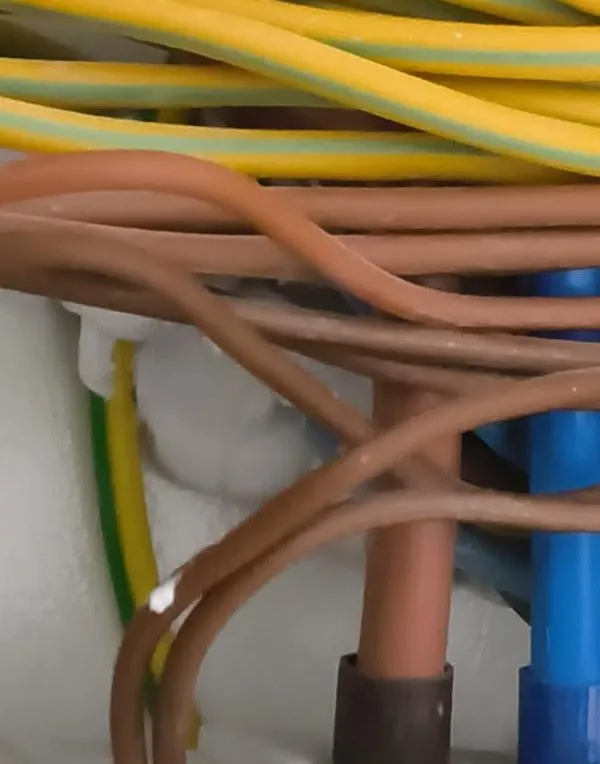
Where cables pass into a metal consumer unit, sharp edges can damage the insulation over time. We protected the entries, closed off unused openings and sealed the gaps. Sealing matters because a consumer unit is meant to contain a fault. Open holes let heat and fire escape.
Main earthing
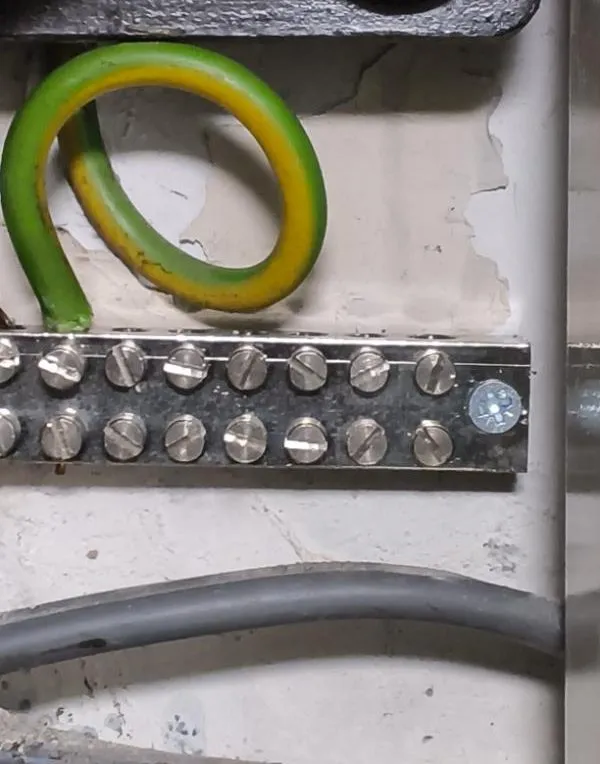
We replaced the unsuitable connector on the main earthing with a proper earth terminal block, secured the conductors and checked earth continuity. Good earthing is what lets the protective devices in your consumer unit do their job.
Exposed outdoor cables
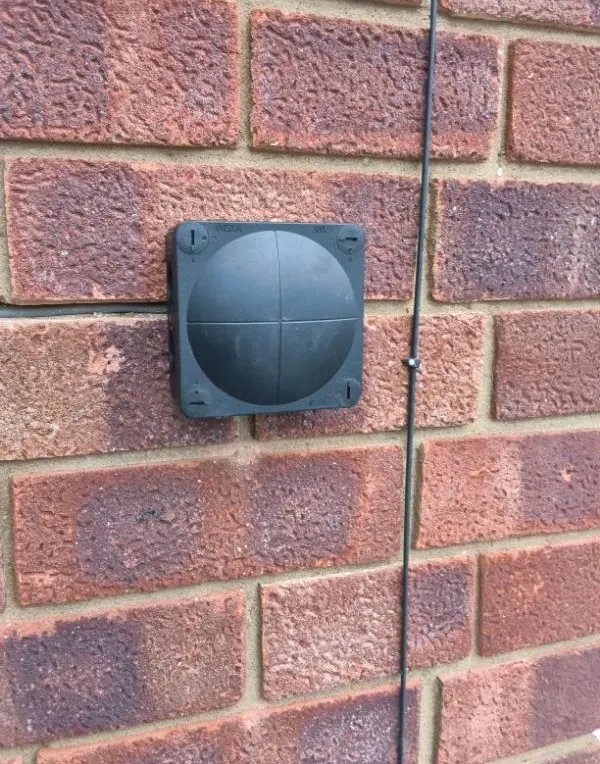
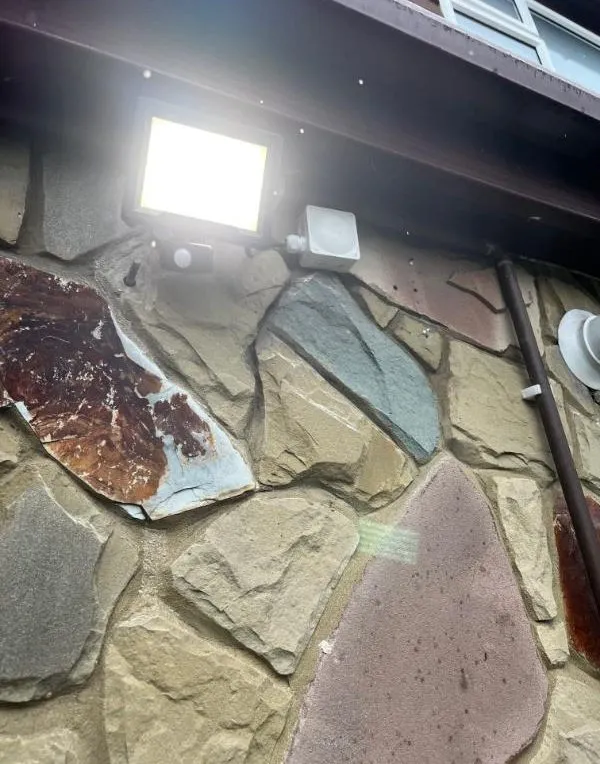
The porch lighting cable was enclosed in a weather-resistant enclosure and secured. While we were working outside, we found two more places where cables were exposed at security lights on the outside walls. We enclosed those properly too.
Rings, labels and paperwork
We investigated the reported break on the kitchen and ground floor ring circuits, corrected the circuit labels, and fitted the missing RCD test notice.
All the remedials were completed and the certificate was updated.
Why it matters
Items like these are easy to live with because nothing seems wrong. The lights work and the sockets work. But an SPD that isn’t wired properly, a breaker that doesn’t suit its cable, or a weak earth connection all reduce the protection you think you have. Exposed connections outdoors let in rain, which can cause faults and nuisance tripping.
For landlords, an EICR with items that need action isn’t the end of the story. The work has to be done and confirmed in writing within the time allowed. Having the same company test and fix keeps it simple: one visit, and an updated certificate at the end.
How to spot similar problems at home
- no yellow RCD test notice on or near your consumer unit
- missing or wrong circuit labels, so you can’t tell which breaker does what
- gaps or open holes in the consumer unit case or around the cables going into it
- outdoor lights with bare joints or tape instead of a proper sealed box
- a fuse board that hasn’t been checked for five years or more, or since you moved in
Press the “T” or “Test” button on your RCD every six months. It should switch off. If it doesn’t, call an electrician.
Need an EICR or remedial work?
We carry out EICRs from £175 + VAT and do the remedial work in-house. See our EICR and compliance service, EICRs in Romford, consumer unit replacement and our Romford page. You may also find our consumer unit upgrade after an EICR case study useful.
We cover London and Essex, with our own engineers working every day across Chigwell, Loughton, Buckhurst Hill, Woodford, Ilford, Romford, Brentwood and Epping. Call 020 8227 0035 or request a quote.