
An Electrical Installation Condition Report (EICR) often turns up the same issue: a consumer unit that no longer meets current safety standards. This job, at a property in Soho, central London, is a typical example. The EICR recommended an upgrade, and we replaced the old board with a modern one that protects every circuit individually.
Why consumer units get flagged on an EICR
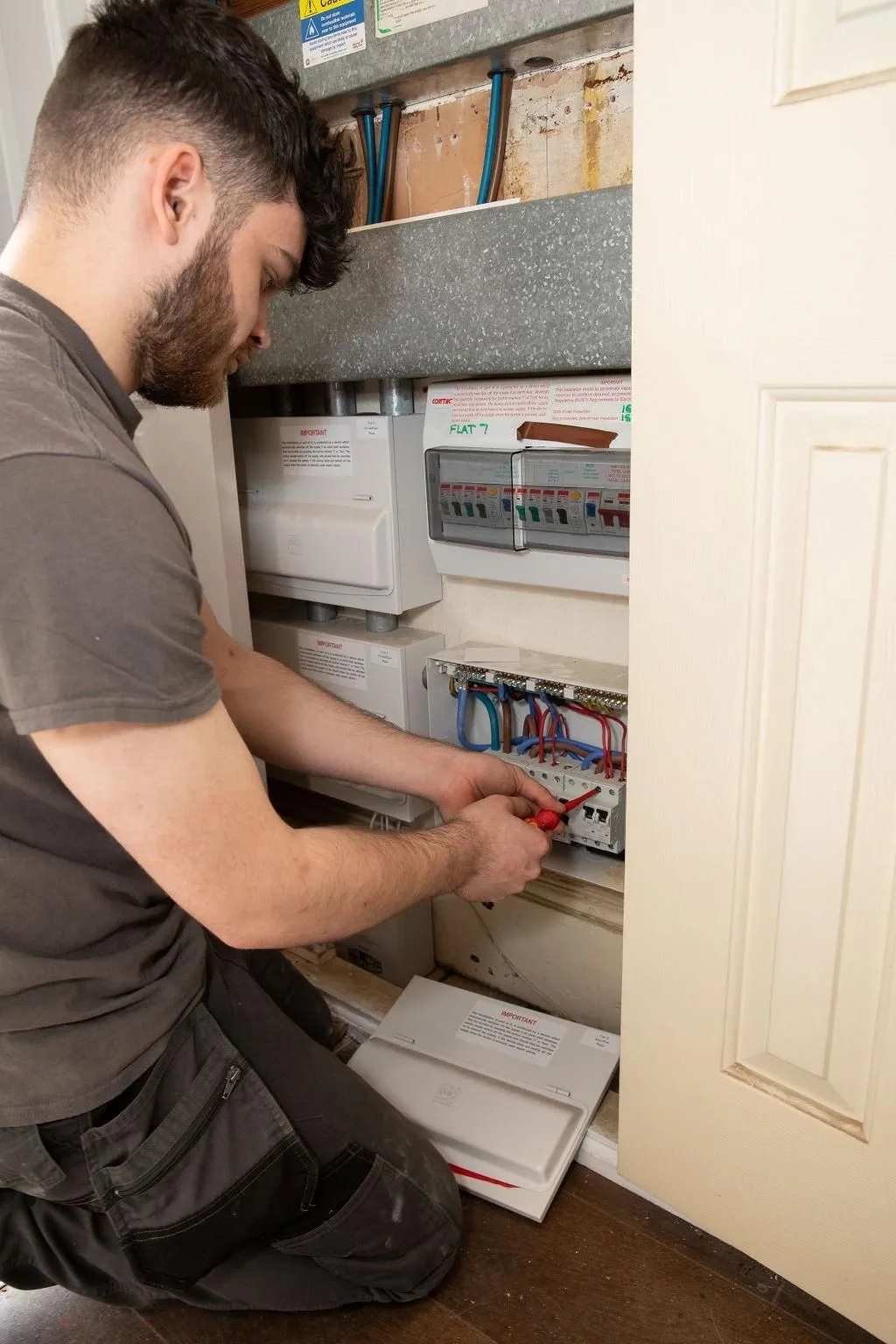
An EICR tests the whole installation, and the board is where many defects show up. Common reasons a consumer unit is flagged include:
- No RCD protection, or only partial protection, so some circuits wouldn’t disconnect quickly if someone touched something live
- A plastic enclosure. Domestic consumer units are now required to be in a non-combustible enclosure, usually steel
- Old rewireable fuses or obsolete breakers, where spares are no longer available
- Damage, overheating or loose connections inside the board
When the report recommends a replacement, the safest and most cost-effective fix is usually a new board rather than patching the old one. Our guide to EICR codes explains how defects are graded.
What we installed
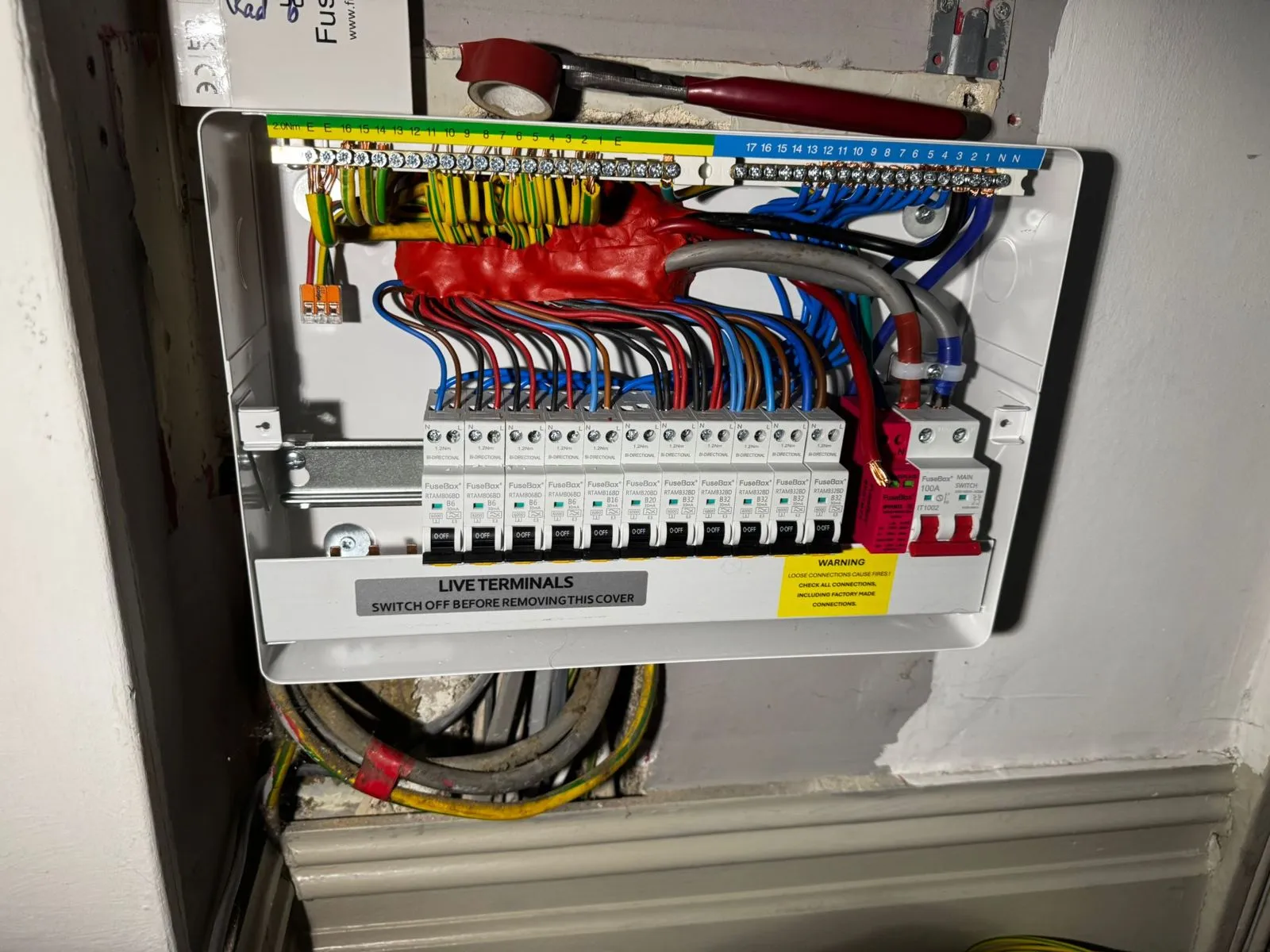
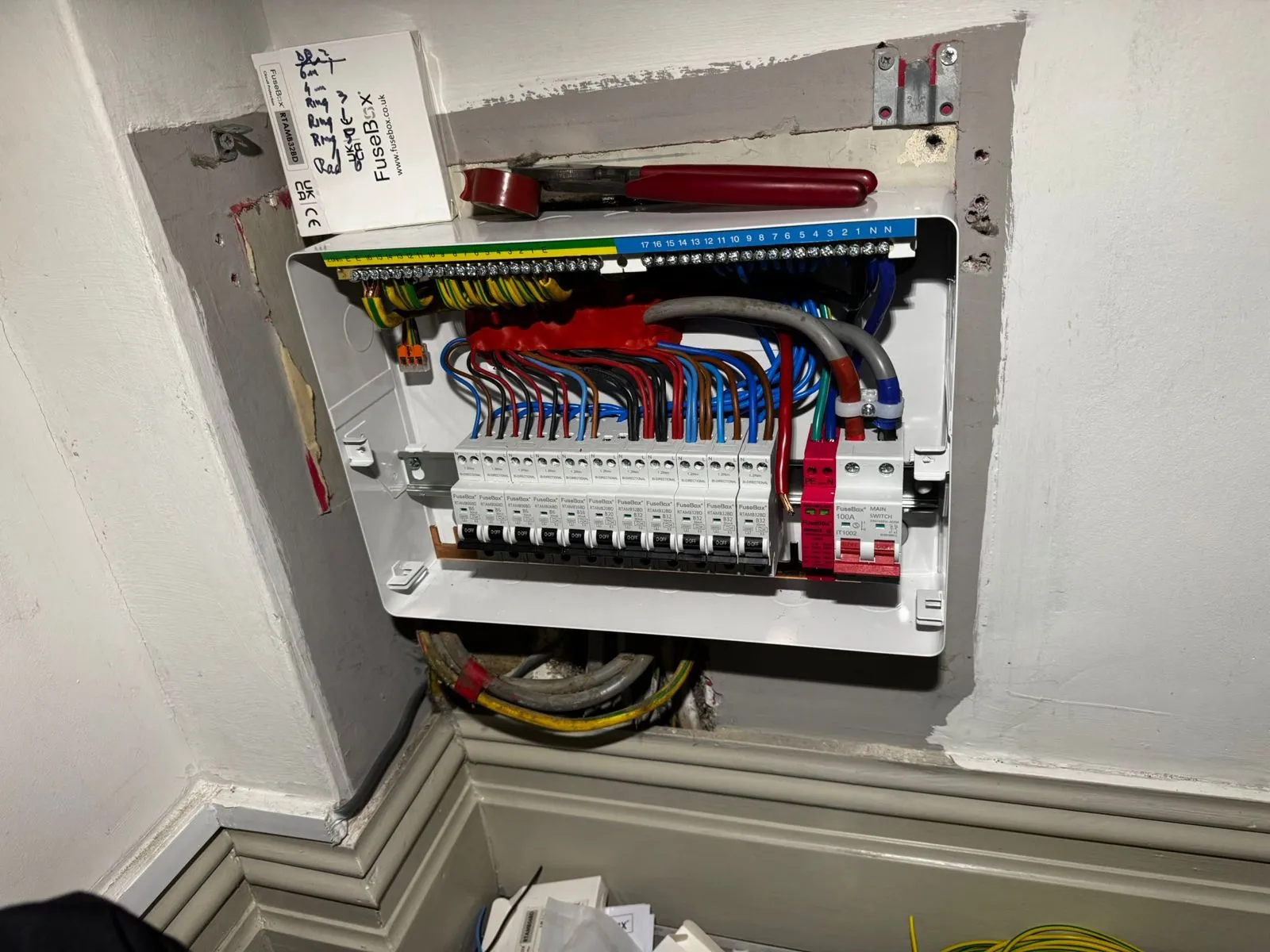
We fitted a new FuseBox consumer unit in a metal enclosure, with:
- A 100A main switch to isolate the whole installation
- Eleven RCBOs, one for each circuit. An RCBO combines a circuit breaker and an RCD in a single device. Each is rated to suit its circuit: 6A for lighting, 16A and 20A for dedicated circuits, and 32A for the socket circuits.
- A surge protection device (SPD), the red module next to the main switch. It protects the wiring and connected electronics from voltage spikes caused by things like lightning strikes or switching on the network.
Why RCBOs instead of a split-load board?
Older modern boards often used one or two RCDs, each covering half the circuits. The problem is that a single fault, such as a leaking outdoor light, trips everything on that side of the board. You can lose the fridge, the sockets and the lights in one go.
With an RCBO on every circuit, a fault only switches off the circuit it’s on. Everything else stays live, and the faulty circuit is obvious straight away. That makes life easier for homeowners, and it’s especially helpful for landlords and agents, because a tenant’s call about “the power’s gone off” becomes far simpler to diagnose.
A note on the old red and black cables
In the photos you can see red and black cables alongside newer brown and blue ones. Red and black are the old UK wiring colours, used before the harmonised colours came in during the mid-2000s. Older colours aren’t a defect on their own. We test every circuit before and after a board change to confirm the wiring is sound and safe to reconnect, and any faults found are reported and put right before the installation is certified.
Testing and paperwork
Once the board was in, every circuit was tested: continuity, insulation resistance, polarity, earth fault loop impedance and RCBO trip times. The customer received an Electrical Installation Certificate. Because a consumer unit change is notifiable work, we also notified it to Building Control under Part P, so a Building Regulations compliance certificate followed.
A board change is usually a one-day job, with the power off for part of the day.
Is your board due an upgrade?
If your fuse board is plastic, has no RCDs, or still uses fuse wire, it’s worth booking an EICR. Read our consumer unit replacement guide, see our EICR and compliance service, or call 020 8227 0035 to get a quote. Positive Contractors is an NICEIC Approved Contractor based in Chigwell, covering London and Essex.
We cover London and Essex, with our own engineers working every day across Chigwell, Loughton, Buckhurst Hill, Woodford, Ilford, Romford, Brentwood and Epping.