An EICR (Electrical Installation Condition Report) is only half the job for a landlord. If the report finds problems, they have to be put right, and the landlord needs written proof that the work is done. This case study is about that second half: the remedial work on a rented maisonette in Chelsea, London (SW3).
What the EICR found
The property had an EICR a week earlier. The report listed three C2 items (C2 means “potentially dangerous – urgent remedial action required”) and one FI item (“further investigation required”):
- C2 – damaged back box in a child’s playroom. A single-gang pattress box behind a blanking plate was damaged, so the plate could not be fixed securely. A timber play frame stood in front of it, making it hard to reach.
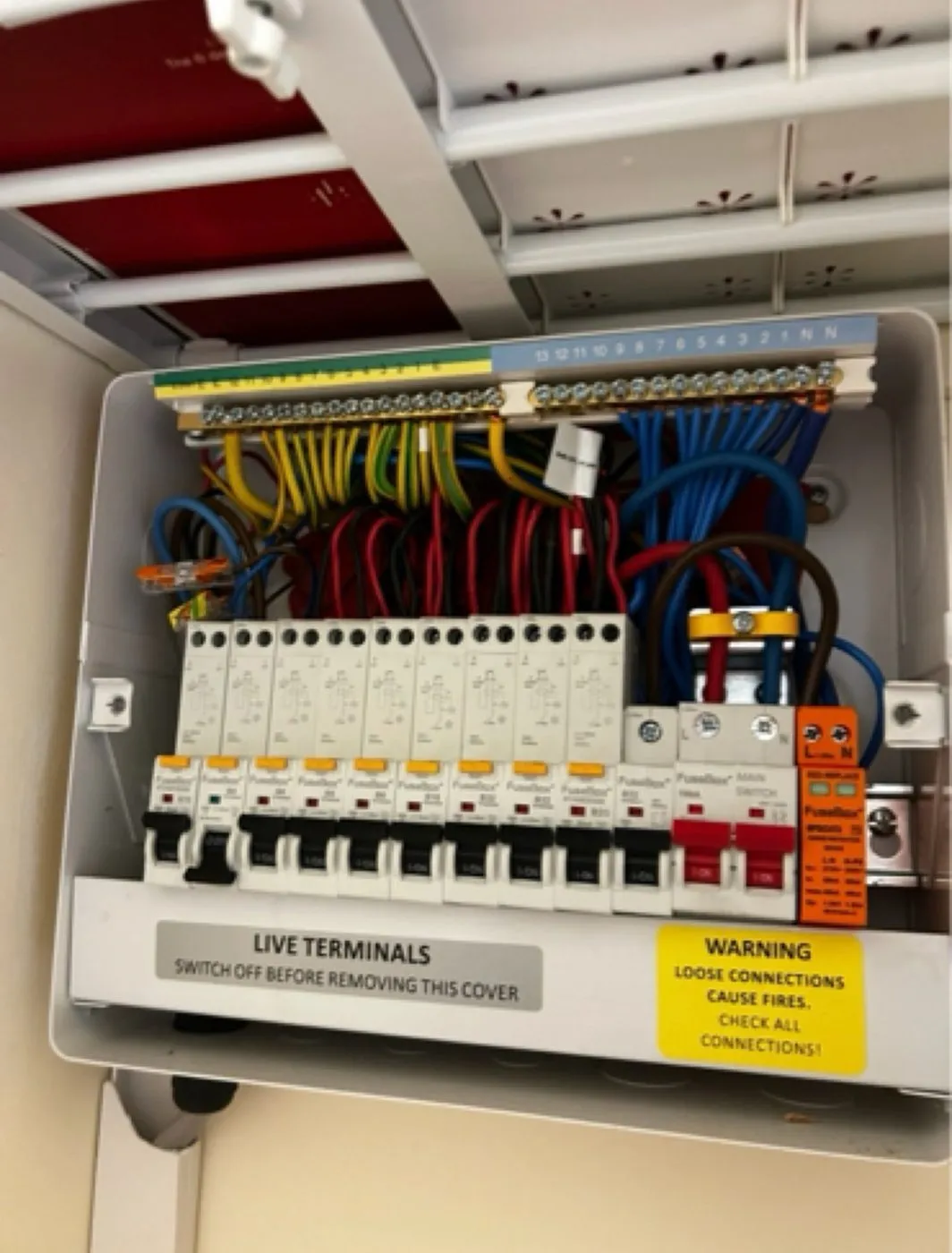
- C2 – gaps around the cables at the back of the consumer unit. Where the cables entered the rear of the board, there were openings that needed closing with fire-rated putty.
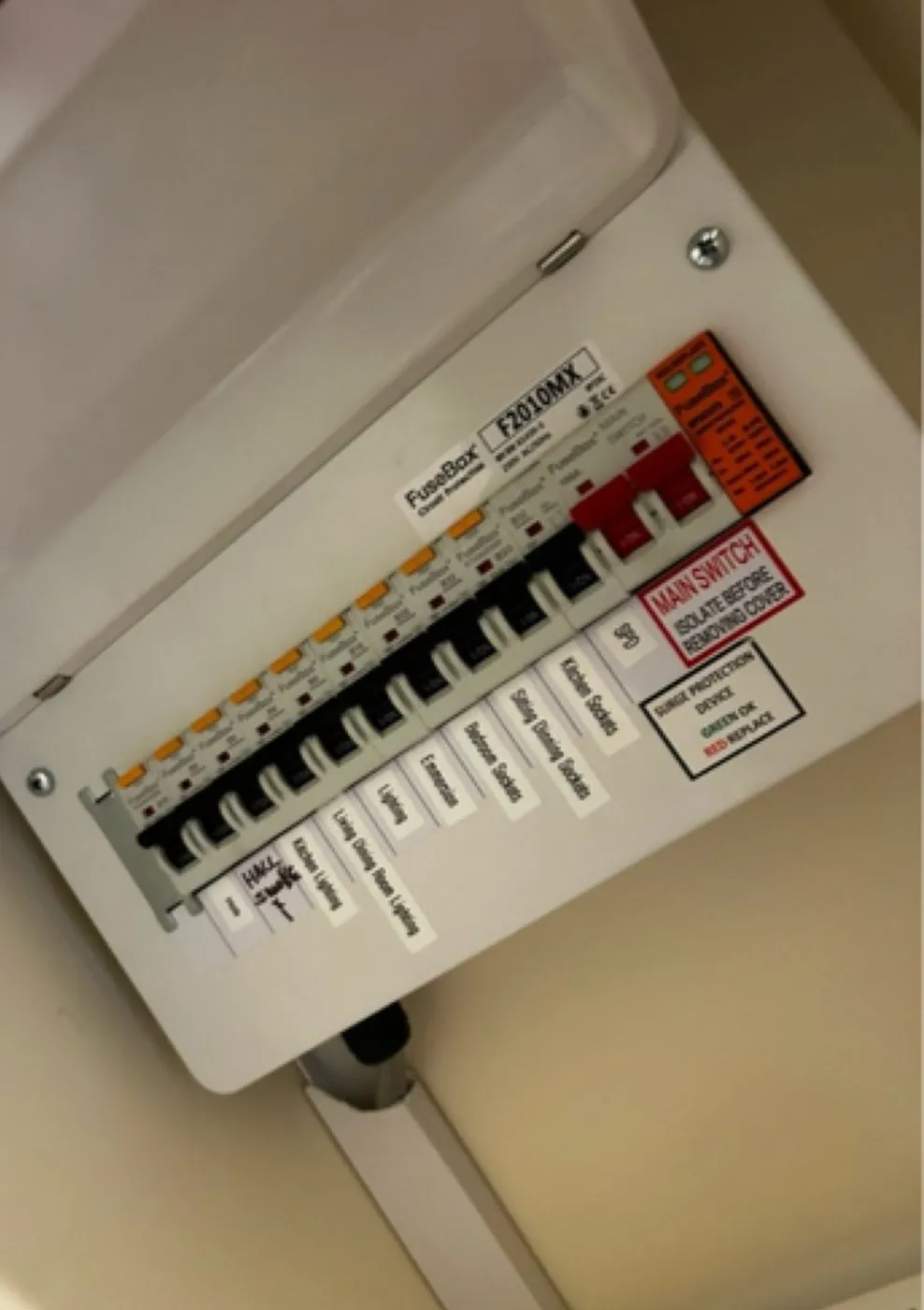
- FI – an unknown circuit. Circuit 9 on the board was not labelled, and where it went could not be found on the day of the inspection. It was switched off and left off until it could be traced.
- C2 – a high reading on the earth conductor. A high resistance reading was recorded on the circuit protective conductor (the earth wire, or CPC) of ring circuit 4. This can point to a poor connection somewhere on the circuit.
For a rented home, these are the items that stop an EICR coming back as “satisfactory”. In England, landlords must get remedial or investigative work done within 28 days of the report (or sooner if the report says so). This job was booked to be finished well inside that deadline.
What we did
The playroom back box
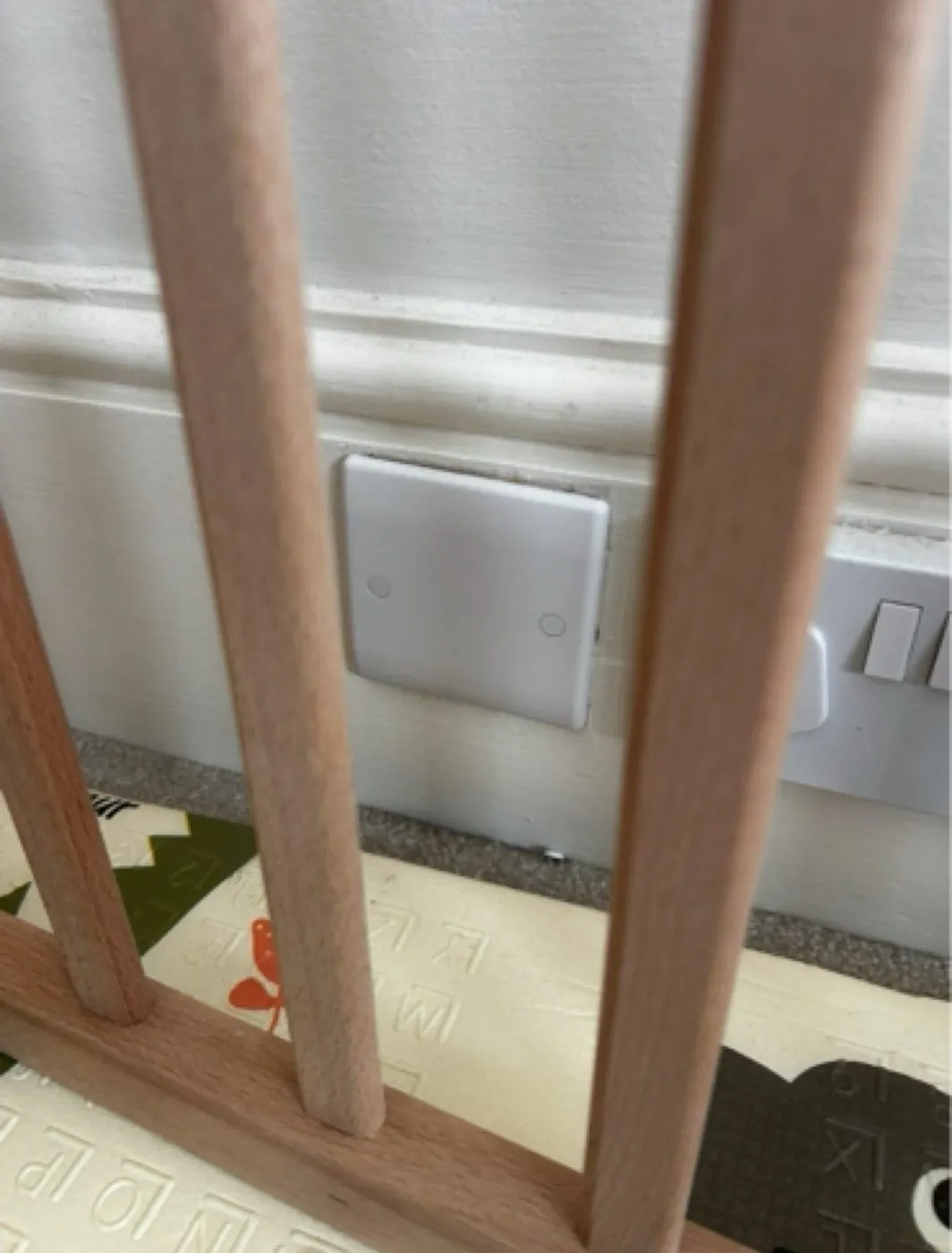
Our engineer worked around the play frame to get to the box, took off the old blanking plate, replaced the damaged pattress back box and fitted a new blank plate, now fixed firmly to the wall. In a child’s room in particular, a loose plate over live wiring is not something you want to leave, so this was the first item on the list.
Sealing the consumer unit
The gaps around the cables entering the back of the consumer unit were closed with fire putty. Modern consumer units are made of metal or fire-resistant material for a reason: if there is ever a fault inside, the enclosure should stop it spreading. Open holes at the back weaken that protection, so they need sealing properly.
The unknown circuit and the earth reading
Our engineer then dealt with the two items that needed testing: tracing circuit 9 to find out what it supplies, and investigating the high CPC reading on ring circuit 4 and checking the earth continuity on that circuit.
The result
The engineer’s report for the visit records “All remedials completed”, with the installation in satisfactory condition for continued use. The board is labelled, the enclosure is sealed, the playroom plate is secure and the earth readings have been dealt with.
For the landlord, that means the C2 and FI items from the EICR are closed out, with photos of the finished work to keep with the report.
Why it matters
A C2 is not a paperwork problem. It is something that could become dangerous under the right conditions:
- A loose blanking plate can expose live connections, and in a playroom small fingers find gaps quickly.
- Open holes in a consumer unit reduce its ability to contain a fault.
- An unlabelled circuit makes it harder to isolate things safely, for you or the next electrician.
- A high earth reading can mean a loose or poor connection, which can stop protective devices working as they should.
How to spot the same issues at home
You don’t need to be an electrician to notice some of the warning signs:
- Look at your sockets, switches and blank plates. If one moves when you touch it, is cracked, or sits away from the wall, get it checked.
- Open your consumer unit cover (don’t remove anything). Every switch should have a clear label. If you can’t tell what a circuit does, an electrician can trace it.
- Notice anything warm, buzzing or discoloured around sockets or the board. Turn it off and call an electrician.
- Landlords: read the codes on your EICR. C1 and C2 items need fixing, and FI items need investigating, within 28 days or sooner if stated. Our guide to EICR codes explained goes through each one.
Need an EICR or remedial work in Chelsea?
We carry out EICRs from £175 + VAT and can quote and complete any remedial work, with photos and paperwork sent together. See our EICR and compliance service, electrical services, landlord services and our Knightsbridge, Belgravia & Chelsea page. You may also like what happens on the day of an EICR and our EICR remedial work in Collier Row case study.
We cover London and Essex, with our own engineers working every day across Mayfair, Westminster, Knightsbridge & Chelsea, Kensington, the City of London, St John’s Wood, Hampstead and Canary Wharf. Call 020 8227 0035 or request a quote.