In this Spitalfields flat (E1) there was mould on the main bathroom ceiling. Our engineer treated the mould and painted the ceiling. He also set the flat’s MEV unit (mechanical extract ventilation) to a higher speed so it takes more damp air out of the bathroom, and tested it.
What we did
The work had two parts.
1. The ceiling. Our engineer gave the main bathroom ceiling a mould treatment and then painted it.
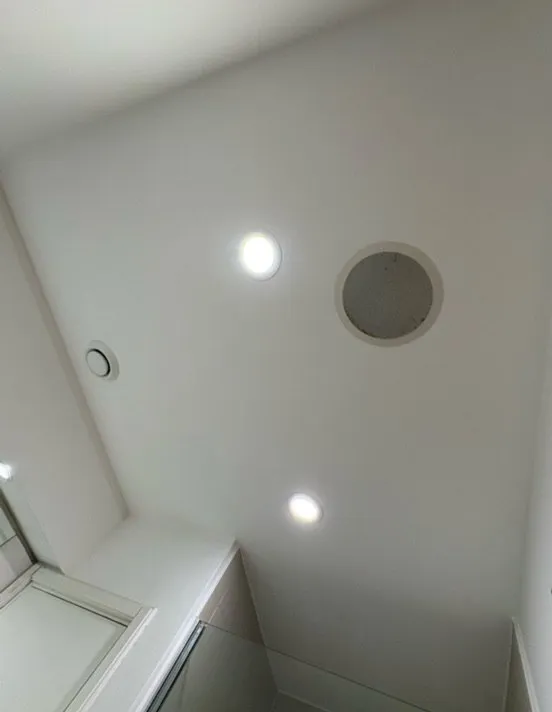
2. The ventilation. The flat has an MEV unit. Our engineer set it to a higher speed and tested it.
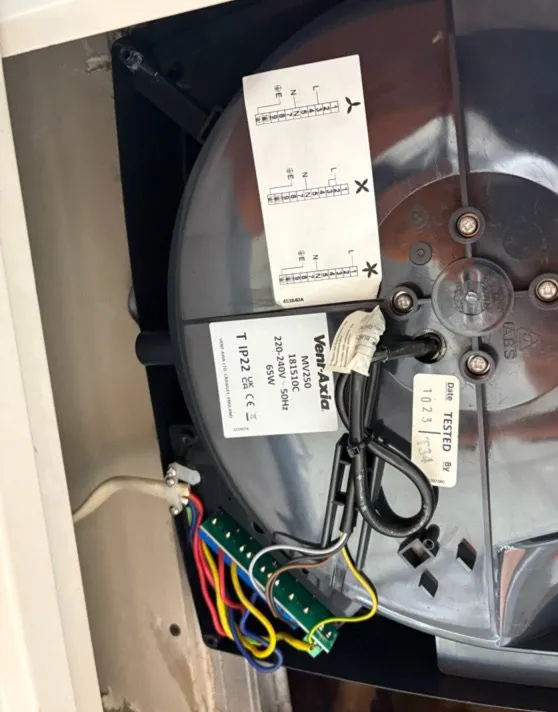
What an MEV unit does
Many newer flats do not have a separate fan in each bathroom. Instead they have one MEV unit, usually in a cupboard or above a ceiling. It is connected by ducts to vents in the bathroom, kitchen and sometimes the utility area.
The unit runs all the time at a low “trickle” speed, pulling damp air out of the wet rooms and sending it outside. Most units also have a faster “boost” speed for when someone is showering or cooking.
If the speed is set too low, the unit is quiet but does not move enough air. Steam then sits in the bathroom, settles on the coldest surfaces, often the ceiling, and mould starts to grow.
Why treat the mould and the ventilation together
Painting over mould on its own rarely lasts. The mould grows where there is moisture. If the air in the room stays damp, it comes back.
That is why this job covered both:
- the mould treatment and paint dealt with the mould already on the ceiling
- the higher MEV speed helps take more damp air out of the room
What you can do to help
- Leave the MEV running. It is designed to run all the time. Do not switch it off at the isolator because of the noise or to save power.
- Keep the vents clear. Do not cover or block the round extract vents in the ceiling, and wipe the dust off them now and then.
- Close the bathroom door while you shower, so steam goes out through the vent and not into the rest of the flat.
- Wipe down wet tiles and screens after a shower.
- Report it early. If you see black spots coming back, or the vent does not seem to pull air, tell your landlord or managing agent.
Who is responsible?
In a rented home, the landlord is normally responsible for the ventilation system and for dealing with damp and mould caused by the building. Tenants can help by using the ventilation properly and reporting problems quickly. Our guide to damp and mould in rented homes explains this in more detail.
For more on extract fans and how they stop mould, read bathroom and kitchen extractor fans. For heavier mould in a bath and shower area, see our mould cleaning case study.
Mould and ventilation in Spitalfields and Shoreditch
We treat mould and fix ventilation across Spitalfields, Shoreditch, Whitechapel and the City fringe. See our ventilation and MVHR service, our painting and decorating service and our Shoreditch area page.
Mould on the bathroom ceiling? Call 020 8227 0035 or ask for a quote.