
PAT testing (portable appliance testing) is one of the most misunderstood areas of electrical safety. Some people think it’s a legal requirement every year; others think it’s optional box-ticking. The truth sits in between.
What does the law say?
There’s no law that uses the words “PAT test” or sets a fixed annual deadline. What the law does require is that equipment is kept safe:
- Businesses and employers: the Electricity at Work Regulations 1989 require electrical equipment to be maintained so it doesn’t cause danger. A programme of inspection and testing is the usual way to show you’re meeting that duty.
- Landlords: you must make sure any electrical appliances you supply with a let property are safe. The five-yearly EICR covers the fixed wiring, not appliances, so PAT testing is the simplest way to show the appliances have been checked. Many HMO licences also make it a specific condition.
Insurers often expect it too, and a test record is valuable evidence if something ever goes wrong.
How often?
The right frequency depends on the type of equipment and how it’s used. Industry guidance takes a risk-based approach:
- equipment that’s moved around, used heavily or used on construction sites needs checking far more often
- equipment in low-risk environments like offices, such as computers and monitors, can be tested less frequently
- rental properties are commonly tested at each change of tenancy, or as the HMO licence requires
We’ll recommend a schedule that suits your premises rather than a one-size-fits-all date.
What happens during a PAT test
- Visual inspection: checking the plug, flex and appliance for damage, scorching, loose covers or wrong fuses. Many faults are found at this stage.
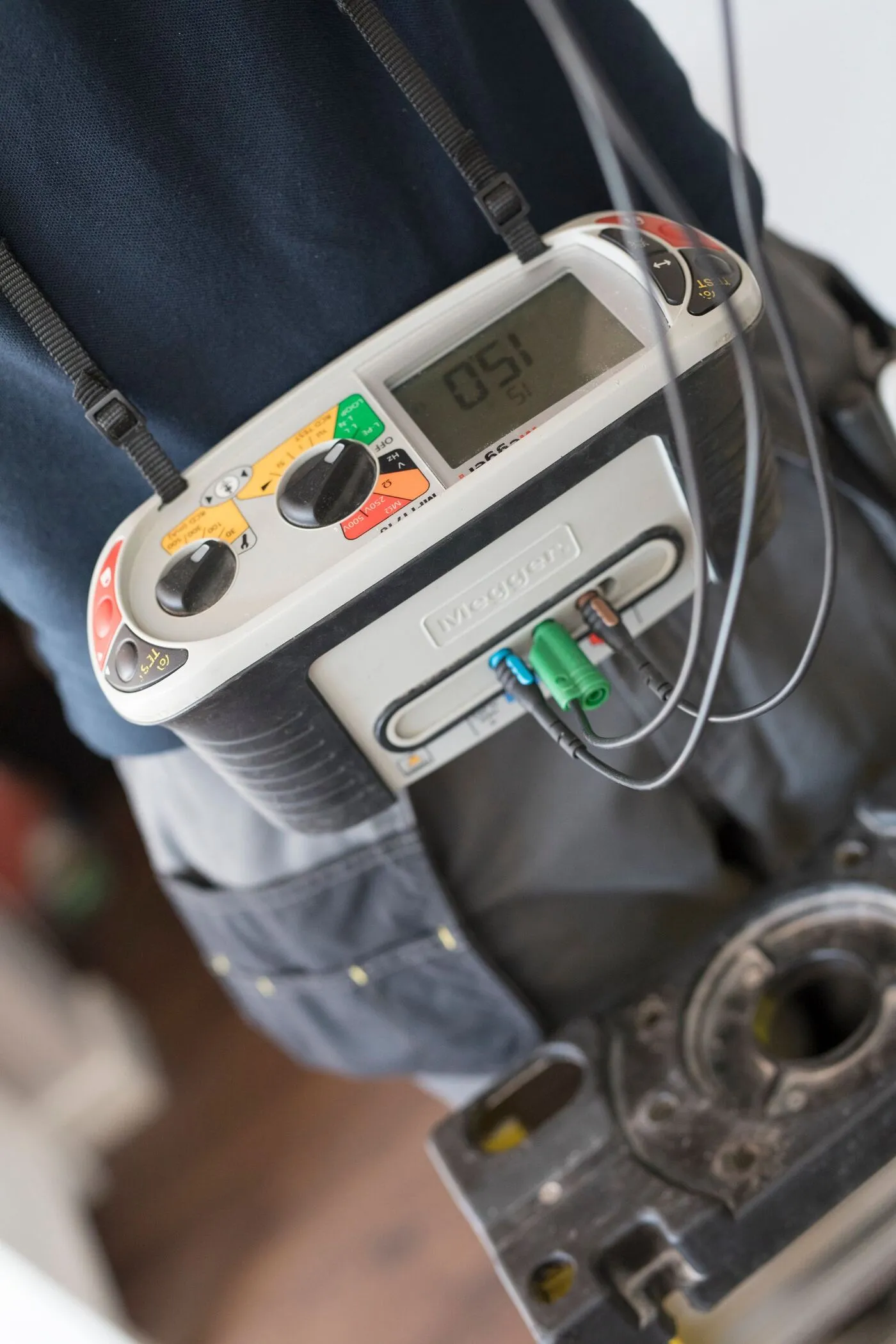
- Electrical tests: using a PAT tester to check earth continuity (on earthed appliances), insulation resistance and, where needed, polarity and leakage.
- Labelling: each item gets a pass or fail label with the test date.
- Records: a register listing every item, its result and any repairs or removals.
Anything that fails is labelled and taken out of use, and we’ll advise whether it’s worth repairing.
Between tests
Encourage staff and tenants to do quick user checks: look for damaged cables, cracked plugs, scorch marks or overheating, and report problems straight away. Most electrical equipment faults are visible long before they’re dangerous.
Book PAT testing
We PAT test offices, shops, rental properties and HMOs, and can combine it with your EICR and emergency lighting checks to cut down on visits. We cover London and Essex, with our own engineers working every day across Chigwell, Loughton, Buckhurst Hill, Woodford, Ilford, Romford, Brentwood and Epping. Call 020 8227 0035 or request a quote.