We were asked to inspect the heating in a flat in Pimlico (SW1V). Our engineer found a serious safety problem. At some point the heating had been converted to a pressurised (sealed) system, but no expansion vessel had been fitted and the pressure relief valve had been capped off. There were also leaks on the pump valve and the filling loop, which were dropping the system pressure to zero. For safety, the boiler was left switched off, and we quoted for the work needed to put it right.
What we found
1. No expansion vessel and a capped pressure relief valve
A sealed heating system needs two safety parts:
- an expansion vessel, to take up the extra water volume when the system heats up, and
- a pressure relief valve (PRV), to let water out safely if the pressure gets too high.
In this flat there was no expansion vessel, and the existing PRV had been capped off. That means there was no safe way for excess pressure to escape if the system over-pressurised. In the worst case this could lead to failure of the boiler or the pipework, with serious damage or injury.
Our engineer’s advice was clear: the boiler must stay off until this is fixed.
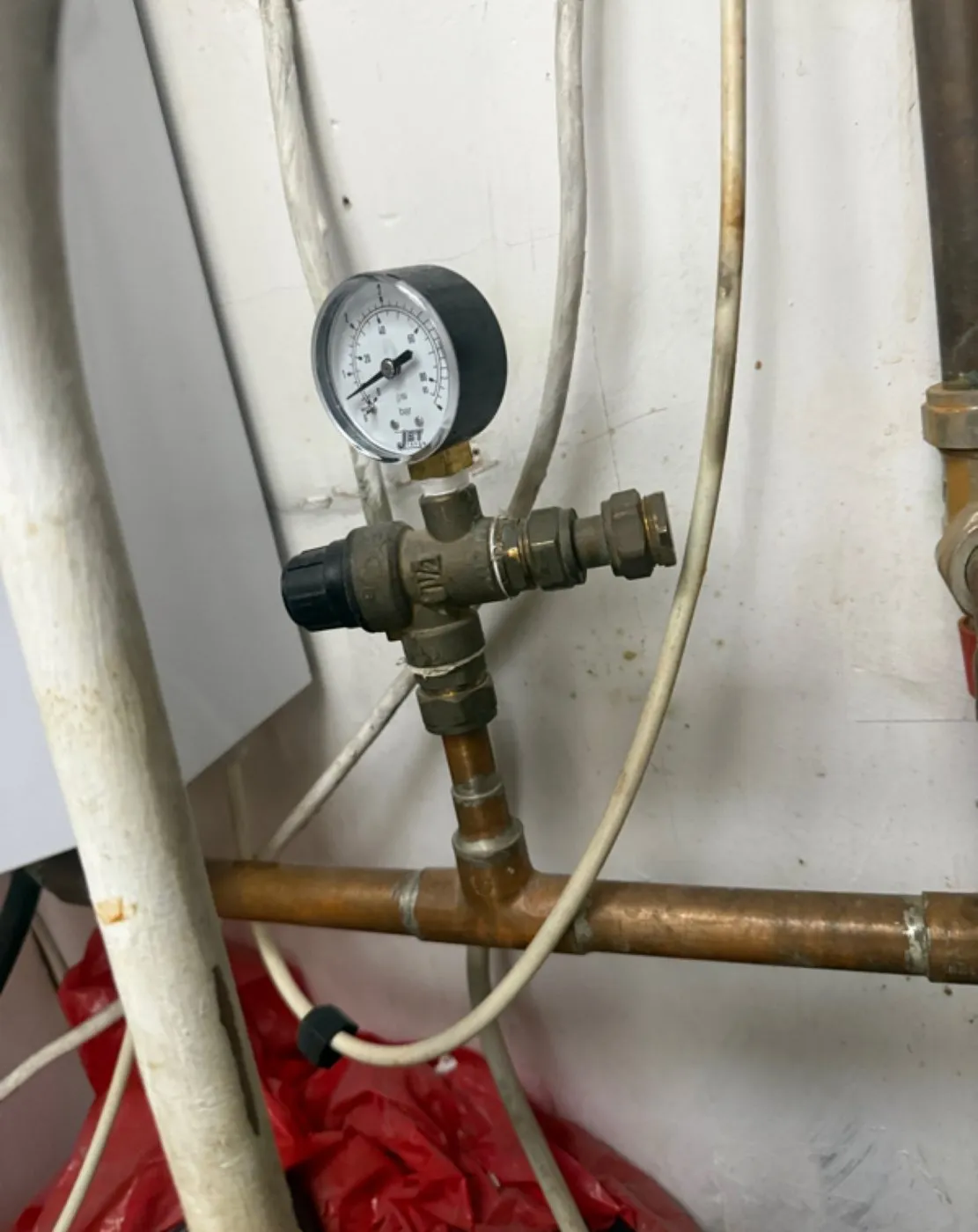
2. Leaks on the pump valve and filling loop
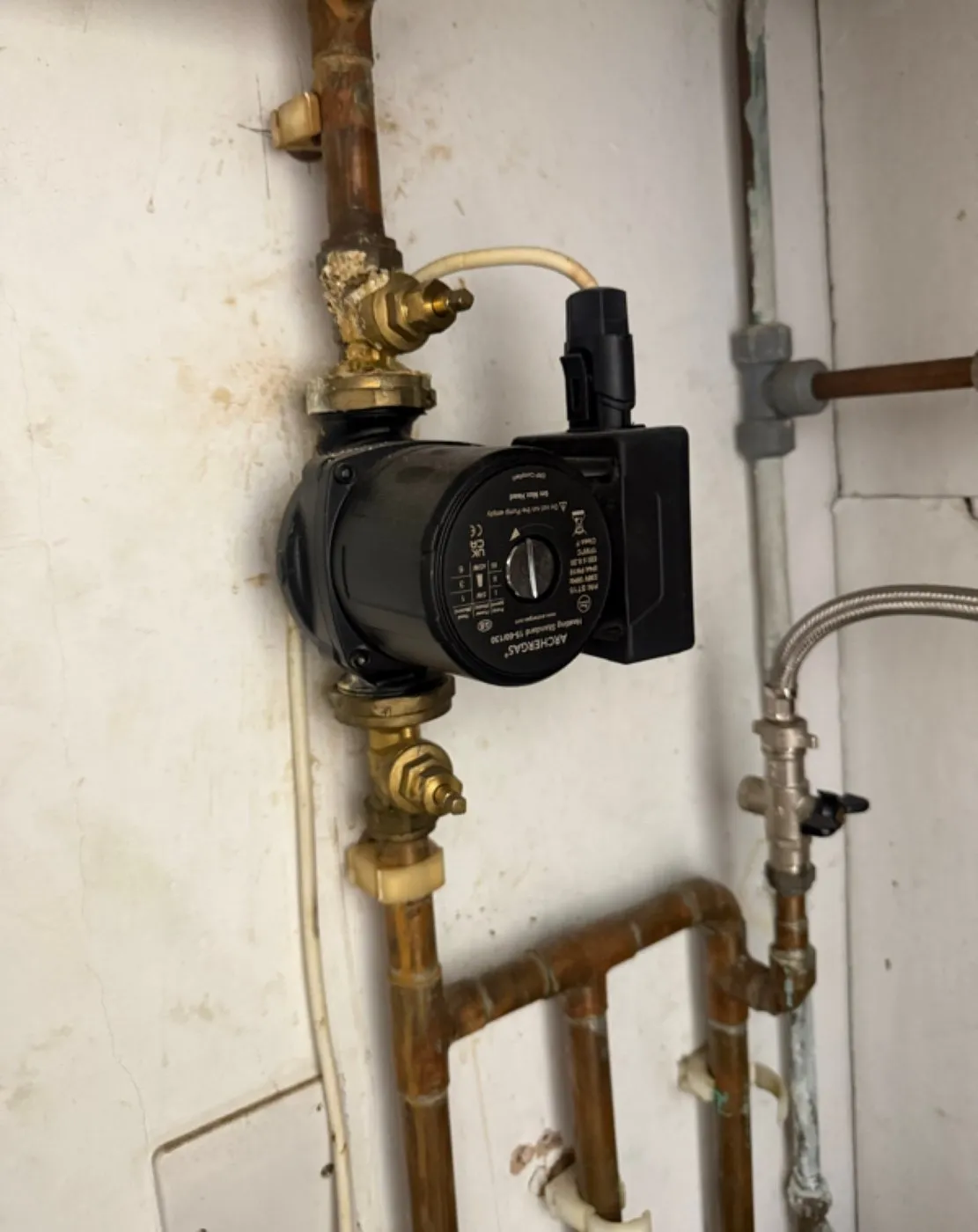
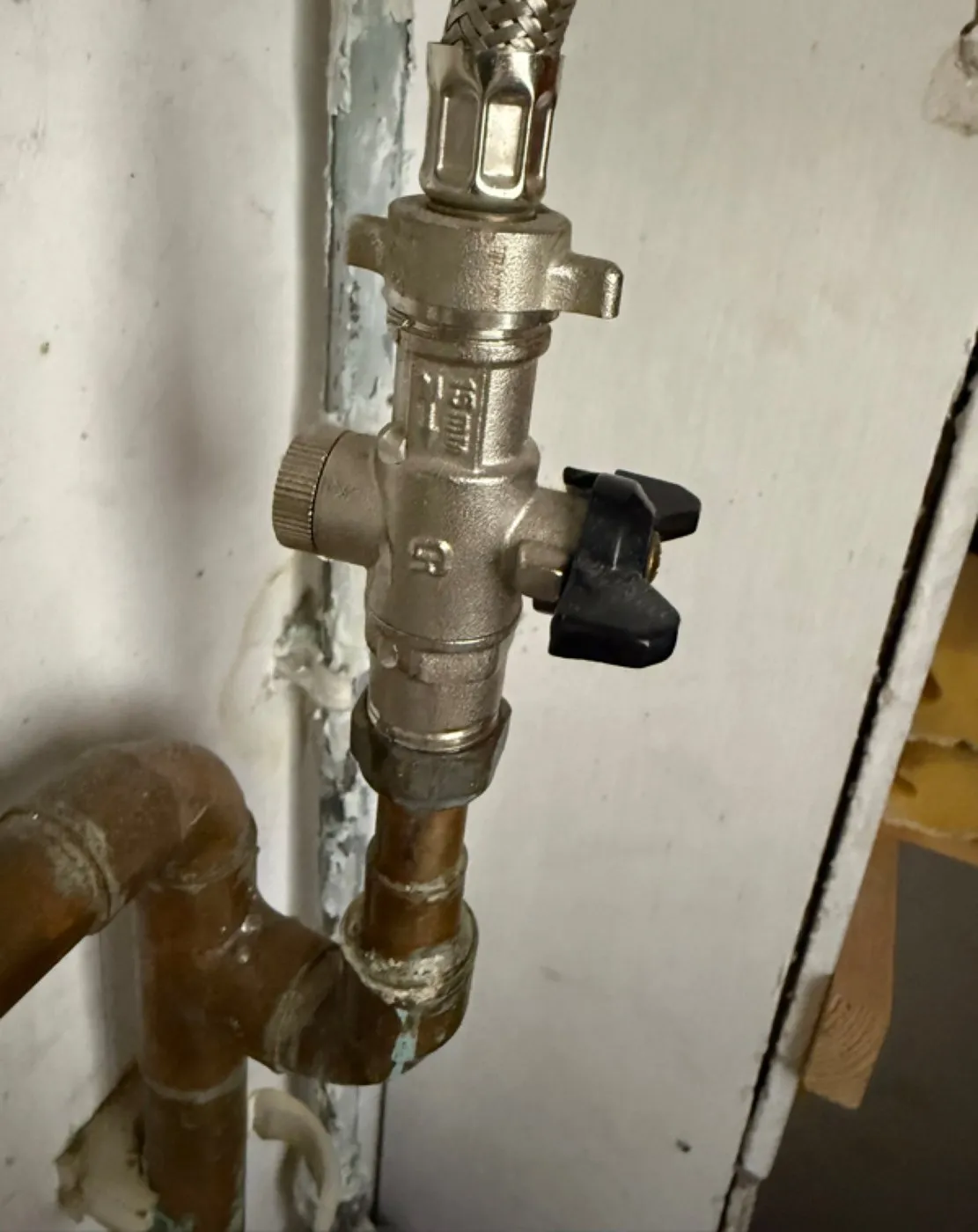
Both the pump valve and the filling loop were leaking. These leaks were causing the system pressure to drop to zero, which stops the boiler working properly. Both parts need replacing.
What we recommended
Our engineer quoted for:
- supplying and fitting a new pump valve
- supplying and fitting a new filling loop
- supplying and fitting a new expansion vessel in the cupboard
- reinstating the pressure relief valve discharge and running it to a safe discharge point, in line with regulations (there is an existing waste pipe in the boxing in the corner, which can be checked to see if it is suitable)
- refilling, pressurising and testing the whole system once the work is done
The boiler should only go back into normal use once the safety issues have been put right.
Why the expansion vessel and PRV matter
Water expands as it heats up. In an old open-vented system, a tank in the loft takes up that extra water. When a system is converted to a sealed, pressurised one, the loft tank is removed, so something else has to do that job. That is the expansion vessel.
The pressure relief valve is the last line of defence. If the pressure climbs too high, it opens and lets water out through a discharge pipe, usually to outside or to a drain. Capping it off removes that protection completely.
Warning signs to look out for on a sealed system:
- the pressure gauge rises a lot when the heating is on, then drops back when it cools
- the pressure keeps falling to zero and you have to top it up often
- water dripping from a pipe outside, or from the discharge pipe under the boiler
- damp patches or drips around valves, the pump or the filling loop
Never cap off or block a pressure relief valve, and never keep topping up a system that keeps losing pressure without finding out why.
Who is responsible in a rented flat?
In a rented property, the heating system is normally the landlord’s responsibility. If you are a tenant and your boiler has been switched off for safety, tell your landlord or managing agent straight away. If you are a landlord or agent, get a qualified heating engineer to check any system that has been changed from open-vented to sealed, especially if you don’t know who did the work.
Heating repairs in Pimlico and Westminster
We inspect and repair boilers and heating systems across Pimlico, Victoria, Westminster and the rest of central London. See our boiler servicing and repairs and plumbing and heating pages, or our Westminster area page.
If some rooms are also cold once the heating is back on, read our guide to radiator cold spots, bleeding and balancing. If your boiler is old and keeps giving trouble, see signs it’s time to replace your boiler.
Heating losing pressure, or worried your system isn’t safe? Call 020 8227 0035 or ask for a quote.