It’s usually time to replace a boiler when it keeps breaking down, parts are getting hard to find, or an engineer has flagged it as unsafe. A straight like-for-like boiler replacement normally takes one day; moving the boiler or converting from a tank-and-cylinder system to a combi usually takes two to three days.
Signs your boiler needs replacing
One fault doesn’t mean you need a new boiler. A pattern of faults often does. The common signs are:
- It keeps breaking down. Two or three call-outs in a year, often for different parts, is a sign the boiler is wearing out as a whole.
- Parts are hard to get. Older models go out of production and spares become slow or impossible to source, so every repair takes longer.
- It’s losing pressure again and again. A one-off can be a simple fix, but repeated pressure loss can point to leaks inside an older boiler.
- Rising gas bills. Older non-condensing boilers waste far more heat up the flue than a modern condensing boiler.
- An engineer has marked it “At Risk” or “Immediately Dangerous”. If a Gas Safe engineer turns the boiler off for safety, a repair may not be possible or sensible.
Safety first: if you see a lazy yellow or orange flame, soot or staining around the boiler, or your carbon monoxide alarm goes off, turn the boiler off, open the windows and call the National Gas Emergency Service on 0800 111 999.
If your boiler is under about ten years old and the fault is a single part, a repair is often the better value. Our boiler servicing and repairs team can advise.
Before the day: survey and quote
The engineer will want to know:
- How many bathrooms and showers you have, and how many people live there. This decides between a combi and a system or regular boiler.
- Your mains water pressure and flow. A combi heats water straight from the mains, so it needs a decent supply.
- Where the flue can go. Flues have to be a set distance from windows, doors, boundaries and other openings.
- The size of the gas pipe. Modern boilers often need a bigger gas supply than the old one, and an undersized pipe is a common reason a new boiler doesn’t run properly.
- Where the condensate pipe will run. Condensing boilers produce water that has to drain away, ideally inside the building to stop it freezing in winter.
We price most jobs from photos or a short video and visit for bigger jobs. You get a clear written quote before work starts.
What happens on installation day
For a typical like-for-like swap in a house or flat, the day goes roughly like this:
- Draining down and removing the old boiler. The heating system is drained, and the old boiler, flue and any redundant pipework are taken out.
- Cleaning the system. A chemical clean or flush removes sludge from the radiators and pipes, so the new boiler isn’t damaged by dirty water from day one.
- Fitting the new boiler and flue. The boiler is hung on the wall, the flue is fitted and sealed, and the gas, water, heating and condensate pipes are connected.
- Filter and controls. A magnetic filter is fitted on the return pipe to catch debris, and the new thermostat or controls are wired in.
- Refilling and inhibitor. The system is refilled, inhibitor is added to protect against corrosion, and air is bled from the radiators.
- Testing. The engineer checks gas tightness, gas pressures and the flue gases, then runs the heating and hot water and makes sure every radiator warms up.
- Handover. You’re shown how to use the boiler and controls and how to top up the pressure.
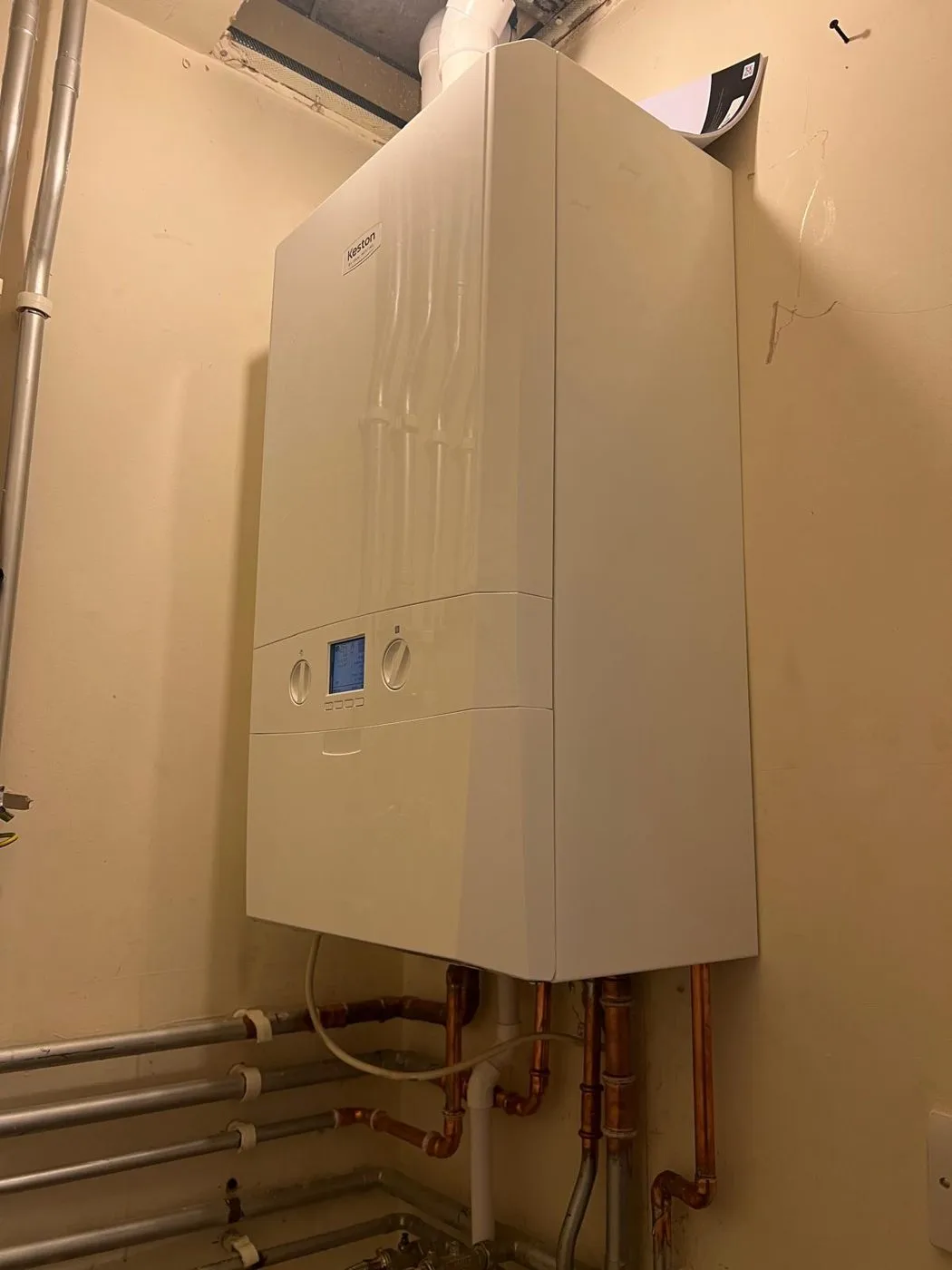 A recent boiler install in London by our Gas Safe engineer.
How long does a boiler replacement take?
| Type of job | Typical time |
|---|---|
| Like-for-like swap in the same place | 1 day |
| New boiler with a new flue route | 1 to 2 days |
| Moving the boiler to another room | 2 to 3 days |
| Converting a tank and cylinder system to a combi | 2 to 3 days |
Jobs take longer with a new gas pipe run, a new flue route through a wall or roof, loft tanks to remove, or blocks of flats where parking and lifts must be booked.
Flats: think about the flue boxing
In many London flats the flue runs through a ceiling or cupboard, hidden behind boxing. If the new boiler’s flue sits in a different position from the old one, the boxing may have to come off to fit it, and making good the ceiling is a separate small job afterwards.
Any new boxing should be removable, for example a plywood panel that unscrews. Gas engineers need to see the flue joints during every gas safety check and service, and a flue boxed in with no inspection hatch can’t be checked properly.
Controls fitted with a new boiler
In England, every new gas boiler must have time and temperature controls. If you’re fitting a new combi, the rules also require at least one extra energy-saving measure, such as a smart thermostat with automation and optimisation, weather compensation or load compensation. We’ll explain which one suits your home.
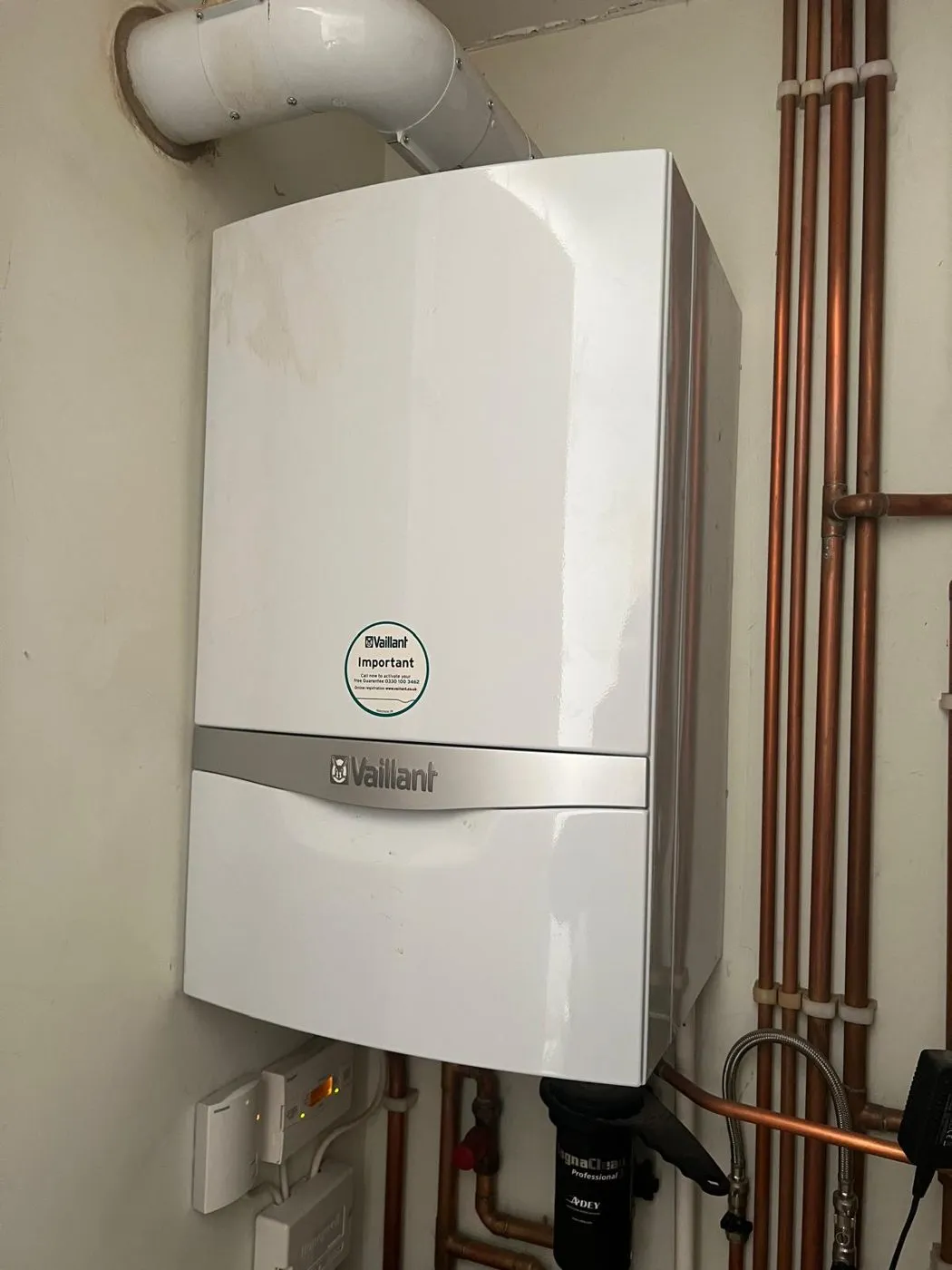 A magnetic filter and controls fitted with a new boiler: a recent install in London by our Gas Safe engineer.
The paperwork you should get
When the job is finished you should receive:
- the completed Benchmark checklist in the boiler manual, filled in and signed by the engineer
- a Building Regulations compliance certificate, which arrives by post after the installer notifies the work through the Gas Safe scheme
- the manufacturer’s warranty registration
- for landlords, a new gas safety record if you need one for the tenancy
Keep these together: most warranties need the Benchmark record and an annual service, and buyers’ solicitors often ask for the Building Regulations certificate.
Landlords and agents
In a let property, we agree access with the tenants, keep them updated and send the certificates to the landlord and agent. Our landlord safety certificates guide explains what you need to keep, and our post on landlord gas safety certificates (CP12) covers the annual check.
Where we replace boilers
Our Gas Safe registered engineers replace boilers across north and east London and Essex, from our base in Chigwell. Areas we cover include West Hampstead and Kilburn, Hampstead, Kensington, Chigwell, Loughton and Woodford.
Frequently asked questions
Can a boiler be replaced in one day? Yes, a like-for-like swap in the same position is usually done in a day. Moves and combi conversions take longer.
Will I have heating and hot water on the day? Not for most of it. The system has to be drained and refilled, so expect to be without both until the new boiler has been tested, usually by the end of the day for a straight swap.
Should I replace my radiators at the same time? Not always. If they heat up evenly after a clean, they can usually stay. Our post on radiator cold spots, bleeding and balancing explains the common faults.
Thinking about a new boiler?
Send us a few photos of your current boiler, the flue outside and the gas meter, and we’ll come back with a clear written price. See our boiler replacement service, call 020 8227 0035 (Monday to Friday, 7am to 5pm) or ask for a quote.