
Every good fit-out starts with a good strip-out. Before new ceilings, lighting, partitions and finishes go in, the old ones have to come out, safely, cleanly and without damaging what’s staying. These photos are from a high-street shop unit in London that we stripped back ready for a full fit-out.
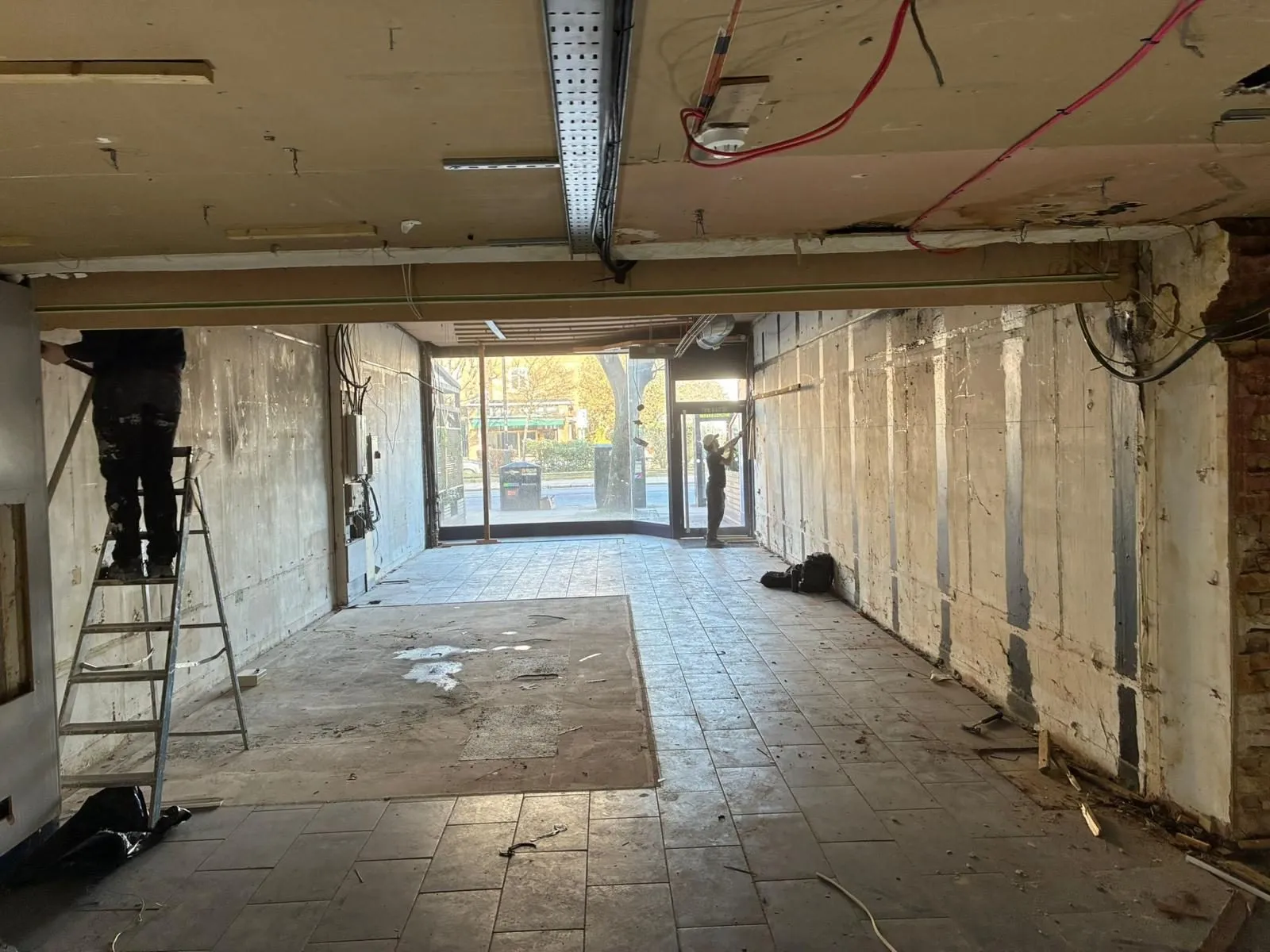
1. Surveys before anything comes out
A strip-out is intrusive work, so we start by finding out what’s there:
- Asbestos. For buildings constructed before 2000, a refurbishment and demolition asbestos survey is required before intrusive work starts. If asbestos is found, it’s dealt with by licensed specialists before the strip-out goes ahead.
- Existing services. We trace what’s live, what’s redundant and what must stay. The incoming supply, fire alarm and sprinklers, landlord’s services and anything serving neighbouring units all need to be identified.
- Structure. We note what’s structural and what isn’t, so nothing load-bearing is touched without the right approvals.
2. Making the services safe
Before any ceiling or wall comes down, our electricians isolate and make safe the circuits being removed. Redundant cabling is disconnected at source, not just cut off and left. Anything that needs to stay live, such as temporary lighting, power for the trades and fire detection where required, is kept working and clearly identified.
Doing this ourselves means the strip-out and the new electrical installation are planned by the same team. We know exactly what’s been removed and what’s been left.
3. Taking it back to the shell
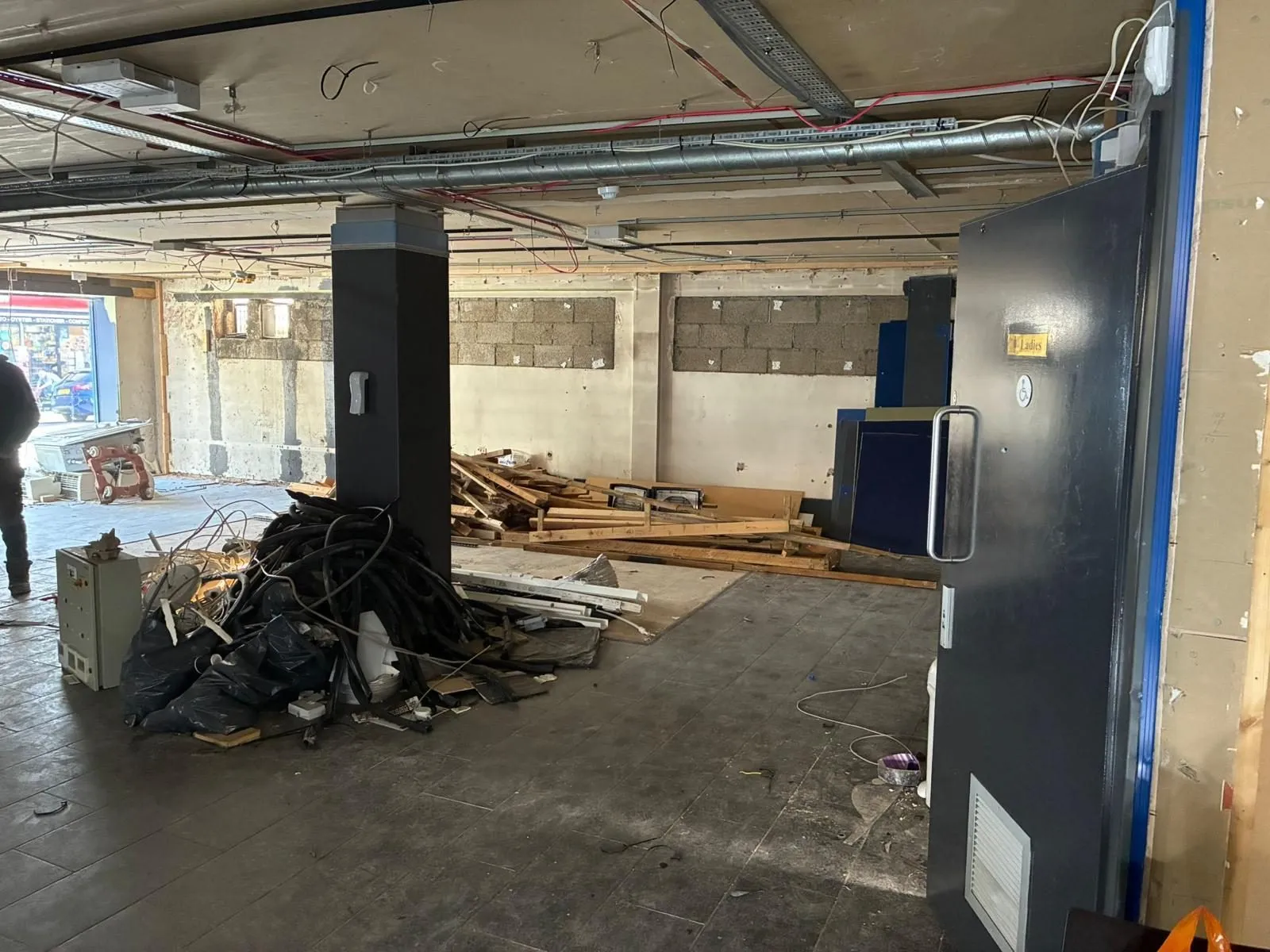
On this unit, the strip-out included:
- the old suspended ceiling, grid and lighting
- redundant cabling, containment and equipment
- partitions, shelving, counters and wall linings
- floor coverings in the areas being re-laid
- old toilet and kitchen fittings due for replacement
Work is planned from the top down: ceilings first, then walls and fixtures, then floors. That way debris isn’t dropping onto areas already cleared.
4. Waste, recycling and paperwork
Strip-out waste is sorted as it comes out. Metal, cable, timber, plasterboard and general waste are separated so as much as possible can be recycled. Waste goes off site with licensed waste carriers, and the paperwork (waste transfer notes) is kept for the project file. Keeping the site clear as we go also makes it safer and faster for the next trades.
5. Exposing what’s behind
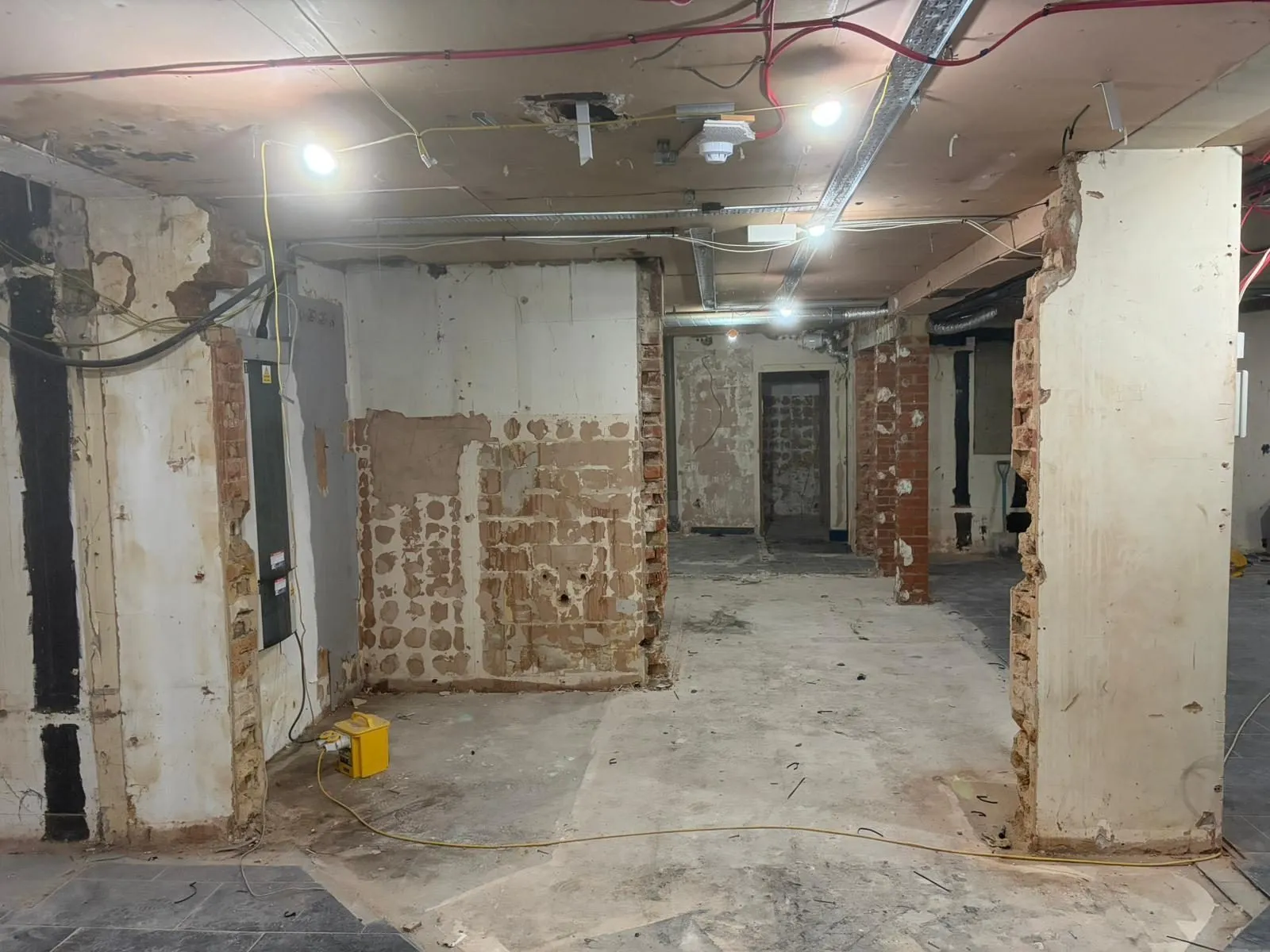
Stripping out reveals the real condition of the building: damp patches, cracked plaster, old openings, tired brickwork and redundant services hidden for years. Finding these at strip-out stage, rather than halfway through decorating, lets us agree any extra work up front and keep the programme on track.
6. Straight into the fit-out
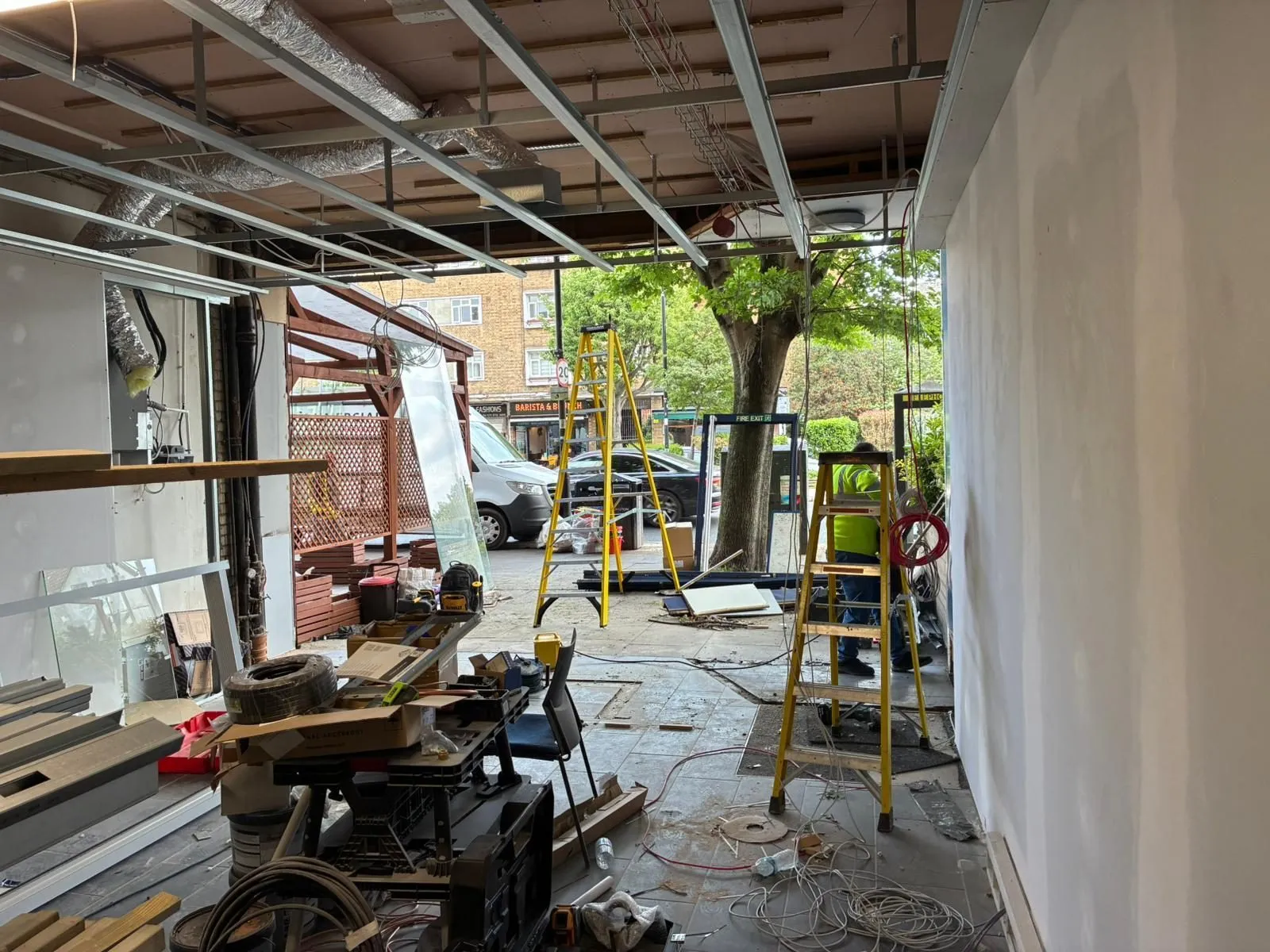
With the unit back to a clean shell, the fit-out can start straight away: new ceiling framing, partitions, first-fix electrics and data, plumbing, ventilation and fire safety. Because one team handles the strip-out and the fit-out, there’s no gap between contractors and no arguments over who left what.
Planning a fit-out?
Positive Contractors delivers strip-outs and complete fit-outs for shops, offices, estate agency branches and hospitality across London and Essex. See the finished result in our Jacksons branch fit-out case study, our fit-outs and refurbishments service, or call 020 8227 0035 to discuss your project.
We cover London and Essex, with our own engineers working every day across Chigwell, Loughton, Buckhurst Hill, Woodford, Ilford, Romford, Brentwood and Epping.